Universal vs Brand-Specific Vacuum Attachments: What Really Fits What
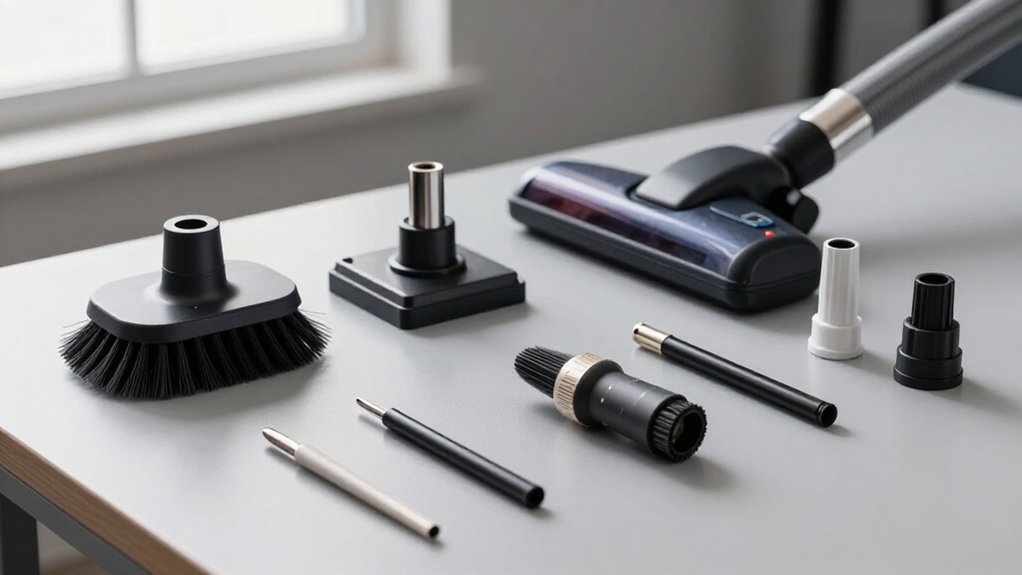
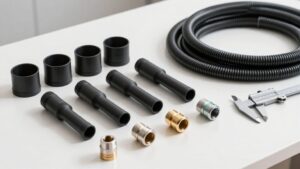
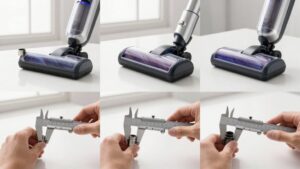
Vacuum attachments aren’t truly universal: you must match hose ID, attachment OD, connector geometry, and any locking tabs or retaining grooves. Measure before buying, because adapter rings can correct diameter but not misplaced tabs, while poor seals reduce suction and airflow.
Check the manufacturer’s model and generation, especially for Dyson V15 Click-Fit, Shark, Miele, and powered heads. Compare OEM sealing and release features with cheaper aftermarket options. You’ll find more fit, performance, and reach guidance below.
Hose Diameter, Connector Types
Hose diameter and connector type determine whether an attachment will fit and maintain adequate airflow. Measure hose ID and attachment OD; matching dimensions support a friction fit, while mismatch can leak or restrict flow. Common shop-vac sizes range from 1.25 to 2.5 inches, with 1.875 inches a versatile midpoint.
Connector geometry matters: slip, threaded, and flanged ends aren’t automatically interchangeable, even when diameters match. Brand-specific couplers may follow proprietary shapes, so verify the model and part number carefully before every purchase.
| Hose size | Connector | Compatibility check |
|---|---|---|
| 1.25 in | Slip | Match ID/OD |
| 1.5 in | Slip | Match ID/OD |
| 1.875 in | Threaded | Confirm thread |
| 2.5 in | Flanged | Confirm flange |
For best airflow, choose manufacturer’s specified interface. If you use a universal attachment, confirm the diameter range and inspect for gaps.
Adapter Rings and Locking Tabs
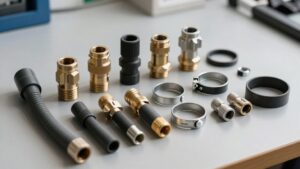
Matching diameter alone doesn’t guarantee compatibility: an adapter ring can bridge size differences, but the locking tab must also align with the wand or hose’s shape and position. Fittings range from 28 to 38 mm; many brands cluster near 32 mm. Measure the connector, not brand names or universality claims.
A correctly sized ring can let a cross-brand tool slide into place, but it won’t compensate for a tab positioned away from the retaining groove.
Before buying, verify the ring’s inner and outer diameters, tab geometry, and insertion depth against your model. If the tab doesn’t engage fully, the attachment may loosen, leak air, or reduce airflow at crevice nozzles. Don’t force a proprietary clip; choose an OEM part or a model-listed adapter instead.
Pet Hair Pickup Differences
Pet-hair pickup varies with both the attachment’s brush design and the vacuum’s available airflow. A turbo or upholstery brush can lift embedded fur when the vacuum supplies adequate suction.
- Check fit: Match the attachment’s connector and your vacuum’s model; a loose joint leaks airflow, while a proprietary interface may block interchangeability.
- Match airflow: Turbine brushes need adequate airflow to rotate. Excessive resistance or a narrow extension can reduce pickup, especially on low-power cordless models.
- Assess surfaces: Use an upholstery brush for fabric and a powered brush for carpets and stairs; strong hose suction remains essential in crevices.
Filtration matters, too. A well-sealed, high-performing vacuum retains dander and keeps exhaust cleaner. Before buying, verify dimensions, connector type, and attachment compatibility; you can’t trust universal labeling.
One-Hand Release Mechanisms
When you change tools frequently, a one-hand release lets you detach a crevice nozzle or upholstery brush without bending down or using both hands, while the hose or wand maintains airflow. On models that accept rapid changes, the latch disconnects a specific tool head while suction remains continuous through the hose or wand.
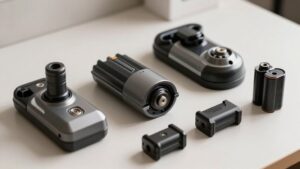
However, release convenience doesn’t make an attachment universal. The tool must match the fitting type and diameter, commonly about 28 to 38 millimeters. A proprietary clip may engage only within a particular cordless family; Dyson and Shark systems can restrict interchangeability across models. If the release feels unusually tight, loose, or fails to lock, stop using the tool. A poor mechanical fit can admit air, reduce effective suction, and impair pickup.
Check Manufacturer Fit Charts
Before buying an attachment, check the vacuum manufacturer’s official fit chart or accessory compatibility page, since no universal standard covers every model. Common fittings often cluster near 32 mm, but ranges span roughly 28–38 mm, so connector design still matters.
Use the chart to verify:
- Your exact model, generation, and hose or wand diameter—not merely the brand name.
- Whether the accessory uses a push-fit, clip-in, or proprietary interface.
- Whether powered tools require a specific electrical and airflow connection.
Dyson attachments interchange only among certain cordless families, including V8, V10, V11, V15 Detect, Outsize, and Gen5detect. Shark and Hoover tools typically remain model-specific.
Miele standard attachments often cross categories, but Electrobrush tools fit only designated models. If unlisted, contact the manufacturer before purchasing any attachment.
Replacement Brushroll Availability
Although replacement brushrolls may look interchangeable, manufacturers design them for specific vacuum models, head housings, drive systems, and airflow characteristics. You’ll need to match the make and model, not merely a similar-looking floor head. Brand, head geometry, end caps, belt or gear drive, and brush pattern can determine whether the roll mounts securely and rotates correctly.
Check your vacuum’s parts or support page for the brushroll part number. If that component is unavailable, choose a third-party replacement explicitly verified for your model; don’t rely on “universal” labeling alone. Availability varies with brand popularity and age, so niche or discontinued machines may offer fewer options.
Before ordering, confirm model details, compare dimensions and drive interfaces, and verify the listing covers your vacuum.
Poor Seals Reduce Suction
A correctly matched brushroll can’t compensate for an attachment connection that leaks air. When your dusting brush, crevice tool, or hose doesn’t seat fully, air bypasses the nozzle instead of carrying debris through it. That reduces airflow and pickup.
Before trusting a universal fitting, verify:
- Measure the attachment and hose diameters; common interfaces range 28–38 mm, with 32 and 35 frequent.
- Confirm the connector type, since clip-in and proprietary systems may not seal with push-fit adapters.
- Seat the tool and check for movement, gaps, or hissing.
A seal compounds performance loss as bag or dustbin fills and airflow declines. A listed-compatible adapter can underperform if its inner and outer diameters mismatch.
Choose a snug, airtight connection to preserve bare-floor and hose suction.
Price and Availability Comparison
You’ll usually pay less for universal kits, while OEM attachments cost more but provide better fit and model-specific performance. Check manufacturer sites, authorized retailers, and reputable marketplaces for compatible tools, then verify connector dimensions and part numbers before buying.
Brand availability varies: Miele offers broader cross-model coverage, whereas Dyson and Shark commonly restrict attachments to specific generations or models.
Brand Price Differences
Brand-specific vacuum attachments often cost more than aftermarket equivalents, with OEM filters and tools priced up to 60% higher because they’re engineered for a particular connector, airflow system, or powered interface. You should compare total value against connector precision, fit security, and function rather than price alone.
- Standard 32mm and 35mm push-fit tools usually give you broader availability and price choice, but verify inner and outer diameters.
- Proprietary Dyson, Shark, and Hoover interfaces narrow compatibility, so the correct model-specific part can command a premium.
- Universal adapters may lower upfront cost, yet leaks or poor geometry can reduce suction and undermine the savings.
Check your vacuum’s connector generation before choosing: OEM pricing reflects seals and powered interfaces, while aftermarket value depends on measured fit.
Where To Buy-Compatible Tools
Where you buy compatible vacuum tools matters because fitting standards vary by brand, model, and connector generation. Check make/model-specific accessory listings before comparing prices: no universal fit standard exists, and common diameters range roughly 28-38mm. For Dyson cordless vacuums, select listings naming your exact model—such as V8, V11, or V15—because compatibility spans only certain calibres. Shark tools require exact model confirmation, while Miele accessories often cross-fit within categories; verify exceptions for powered Electrobrushes.
Compare sellers listing compatible part numbers and attachment types. OEM tools cost more, but sealed collars and locking clips can justify premium. Aftermarket kits are cheaper and available, yet fit varies; OEM filters may cost up to 60% more. Check returns and measure connector diameter before ordering proprietary interfaces.
Car Interior Reach Comparing
You’ll compare hose lengths first, since longer hoses extend under-seat reach but can increase airflow resistance and pressure drop. Next, assess whether a compatible crevice tool fits the hose securely and reaches console seams, seat gaps, and floor channels.
Finally, compare wand lengths and connector standards, because a brand-specific wand may lock in reliably while a universal wand may require an adapter and risk air leakage.
Hose Length Comparison
Although longer hoses let you clean more of a car interior without moving the vacuum base, hose flexibility and sustained suction determine how useful that reach is.
You’ll find canister vacuums usually provide the most practical coverage: their long, maneuverable hoses reach seats, footwells, and under-dash areas.
Compare three factors before choosing an attachment:
- Length: A longer hose reduces base repositioning, but excessive length increases resistance and pressure drop.
- Mobility: Flexible construction helps you route the hose around doors and seats without kinking.
- Suction: Strong hose performance—rated 5/5 in testing—helps maintain pickup as you extend reach.
Before buying a universal hose or extension wand, measure your vacuum’s connector diameter and verify its interface. A loose adapter can leak air, while proprietary fittings may not interchange across brands.
Crevice Tool Access
How effectively a crevice tool reaches a car’s interior depends on both its geometry and its connection to the vacuum. In your car, its narrow nozzle can pull dirt from seams between seat cushions and along the edge where the console meets the seats, where wider heads cannot enter. That access doesn’t make the tool universal, however. Before comparing reach, check the vacuum’s connector type and hose diameter; common sizes include 32 and 35 mm, while Dyson, Shark, and other systems may use proprietary clips.
An adapter can bridge a mismatch, but a loose joint leaks air and reduces effective suction.
You’ll need airflow. As the bag or dustbin fills, weaker suction leaves particles in cracks. Compare models with strong suction in tool-use tests.
Wand Reach Differences
A crevice tool reaches deeper into car-seat seams when you pair it with an extension wand matched to the vacuum’s connector and hose diameter. Longer wands help you reach between seats and beneath dashboard panels, but excessive length and narrow tubing increase resistance, potentially reducing airflow on lower-power vacuums.
Compare each setup by checking:
- Connector fit: Match the wand to the vacuum’s inner or outer diameter; proprietary clip systems may require a brand-specific part.
- Hose maneuverability: A flexible hose can let you work around pillars and seat backs more effectively than a rigid, longer wand.
- End-tool choice: Use a crevice tool for seams, or a dusting brush to spread suction across wider horizontal surfaces.
Seal joints to preserve pickup at maximum reach.
Dyson V15 Click-Fit Check
The Dyson V15 uses a proprietary Click-Fit connection, so its attachments aren’t universally interchangeable with other vacuum brands or every Dyson V-series model. Before you buy, check the product listing for explicit Dyson V15 compatibility, not merely a similar-looking connector or a broad “V-series” claim. Dyson’s cordless models can use different interface standards, and model generations may change dimensions or locking features.
Confirm that a replacement head belongs to the approved V15 Click-Fit range. A matched attachment should seat securely, maintain an airtight tool path, and deliver airflow and suction. Don’t assume a motorized brush will perform identically across Dyson models: wattage and power can differ, affecting brush operation. If compatibility remains unclear, verify the part number with Dyson or the seller before ordering.
Conclusion
When you choose vacuum attachments, match the hose diameter, connector geometry, and locking method, not just the brand name. Check the manufacturer’s fit chart and confirm a tight seal; adapters that wobble can reduce suction and compromise pet-hair pickup.
For cars, compare reach and one-hand release convenience. Before buying, verify your Dyson V15’s click-fit connection and weigh price against availability and proven compatibility. A precise fit delivers better performance and fewer returns overall in practice.