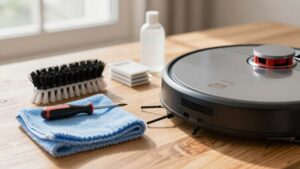
Vacuum Belt and Brush Roll Replacement Checklist: 8 Signs It’s Time
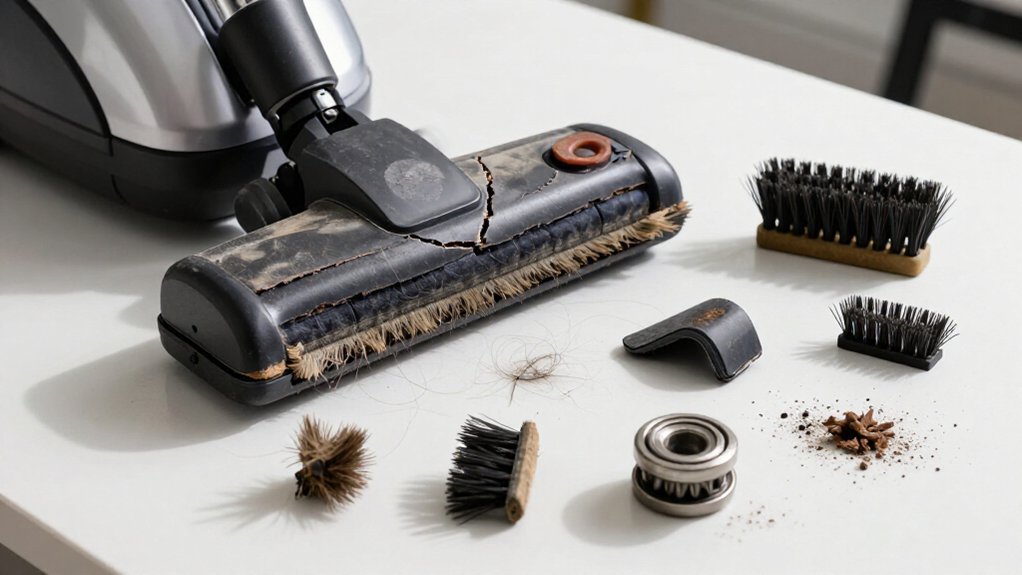
Unplug and cool your vacuum before checking eight replacement signs: a loose or mushy belt; glazing; cracks, fraying, stretching, or missing chunks; a brush roll that slows or stops; squealing; burning-rubber odor; stiff, gritty, wobbling, or noisy bearings; and flattened, missing, or uneven bristles.
Every six months, remove wrapped pet hair and threads, spin the roll by hand, and test high-pile cleaning.
If it binds or leaves debris, replace the faulty part.
More detail follows.
Pet-Hair Homes: Belt Checks
Because pet hair and string can wrap around the brush roll, inspect the belt and brush roll more often than you would in a low-debris home.
In a pet-hair home, check the belt every 6–12 months, or sooner with heavy use. Remove the brush cover and inspect for cracks, glazing, fraying, stretching, or missing chunks. A loose or mushy belt needs replacement.
Rotate the brush roll by hand; it should turn steadily without wobble or binding. Cut away wrapped hair and string, then check the end caps for packed fibers that increase drag. If the brush doesn’t spin or pickup requires repeated passes, suspect belt failure even when hose suction seems normal. Squealing or burning-rubber odor indicates friction; replace the belt before heat damage.
Unplug and Cool Vacuum
Unplug the vacuum from the wall and let the motor, belt area, brush roll, and bearings cool to near room temperature before inspection or replacement. Don’t rely on the power switch; remove the plug completely and keep the cord away from the outlet. After heavy use, wait 15–30 minutes, and wait longer if the housing, exhaust port, or belt cover still feels hot.
- Switch off, unplug, and verify no power reaches the machine.
- Put on cut-resistant gloves before handling hot parts or sharp debris.
- Use a Phillips screwdriver, flashlight, and container for fasteners.
- If you notice smoke, sparks, melting, or a burning smell, stop and arrange qualified service.
Never open a sealed motor housing; let a certified technician diagnose electrical faults or wiring problems.
Six-Month Belt Inspections
Every six months, inspect the drive belt for cracks, fraying, glazing, stretching, or missing sections after the vacuum has cooled. Unplug it, lay it on its back, remove the bottom plate, and test belt tension. A loose or mushy belt requires replacement. Spin the brush roll by hand; slipping or overly free rotation signals poor power transfer. If the brush doesn’t spin with normal suction, replace the belt. Burning-rubber odor or squealing requires immediate service to prevent heat damage.
| Check | Finding | Action |
|---|---|---|
| Visual | Damage or missing material | Replace belt |
| Tension | Loose or mushy feel | Replace belt |
| Operation | No brush rotation | Stop use; replace |
Follow model instructions when removing screws or tabs. Record the date and schedule checks for frequent use. Early detection prevents failure.
Inspect Belt for Glazing
With the vacuum unplugged, inspect the belt for glossy surfaces, hardening, and cracks. Compare its texture with a new belt; a glazed belt feels smooth, stiff, or stretched instead of matte and flexible. Replace it if you find glazing, especially with looseness or inconsistent brush-roll resistance.
Spot Glossy Surfaces
Does the drive belt look shiny or polished instead of matte and rubbery? That surface sheen indicates glazing, commonly caused by friction and overheating. Unplug the vacuum, remove the belt cover according to the model’s service instructions, and inspect the belt under good lighting. Check the entire circumference for glossy patches, cracks, frayed edges, or stretching.
A glazed belt can slip on the pulleys, causing the brush roll to rotate poorly even when hose suction remains normal.
If you find glazing, don’t continue operating the vacuum. Replace the belt with the specified part, verify its routing and tension, and spin the brush roll by hand. It should turn smoothly without binding. If it doesn’t, clear debris and inspect bristles before testing the vacuum briefly.
Check For Hardening
Before you inspect the belt, unplug the vacuum and remove the bottom or brush-roll cover according to the manufacturer’s instructions. Look at the belt in good lighting. A glazed belt has a shiny, hardened surface that looks glassy or unusually smooth. This finish shows that the rubber has aged and may no longer grip the motor pulley effectively.
Press the belt gently between your fingers. It should feel firm and tight, not stiff or rigid. If it resists flexing, treat rigidity as evidence of hardening. A hardened belt can still move, but it may slip under load. You may notice weak brush-roll speed or poor carpet cleaning despite normal suction. Replace the belt when you see glazing or feel hardening; don’t wait for failure.
Look For Cracks
Once you’ve unplugged the vacuum and removed the brush-roll cover, inspect the belt under bright light for cracks, fraying, glazing, missing chunks, or snapped sections. Cracks can let the belt slip, reducing power transfer and leaving the brush roll spinning slowly or intermittently. Look for split edges, breaks across the belt, and hardened shiny areas that indicate glazing. A belt may still drive the roll while showing damage, so don’t wait for complete failure.
Apply gentle hand tension; a loose or mushy belt may not transfer motor power reliably. Spin the brush roll by hand. If it doesn’t move smoothly, or the belt shows cracking or glazing, replace it with the exact model-specific part. Seat pulleys correctly during reassembly, then test operation briefly afterward.
Compare Belt Texture
Inspect the belt’s surface for glazing—a smooth, shiny layer caused by friction and heat. Use your fingertip to compare texture across the belt, especially where it contacts the motor pulley and brush roll. A healthy belt should feel flexible and slightly grippy, not slick. If a section feels stiff, hard, or unusually smooth, friction has likely degraded and the belt may slip during brush rotation.
Check multiple points for edge fraying, cracks, and hardening instead of judging one area. Assess tension: a glazed belt that’s loose, mushy, or no longer firm indicates stretching and reduced brush-roll speed. Even with normal hose suction, poor belt grip can reduce carpet agitation. Record your findings and follow model-specific service guidance before making maintenance decisions or ordering components.
Replace Glazed Belts
A belt can look intact yet fail when overheating leaves its surface shiny, hardened, and glazed. Unplug the vacuum before removing the brush cover. Inspect the belt across its length for glazing plus cracks, fraying, stretching, or missing chunks.
A glazed belt loses grip on the motor pulley and brush roll, so agitation may drop even when hose suction seems normal. Check tension and condition manually: replace the belt if it feels mushy or loose. Don’t try stretching it back into service.
With the belt fitted, rotate the brush roll by hand. It should turn freely and steadily, without binding or slipping. A burning rubber smell near the brush area confirms overheating. Turn the vacuum off and unplug it until you install the replacement.
High-Pile Carpet Settings
Raise the brush roll height and select high-pile mode to reduce drag on thick carpet. Check the belt for strain, slipping, fraying, glazing, or heat damage if the brush roll slows or stops.
A burning-rubber smell, squealing, or repeated passes for pickup means you should inspect or replace the belt promptly.
Raise Brush Roll Height
If you’re cleaning high-pile carpet, increase the brush-roll height until the beater bar lightly contacts the pile without crushing it. This reduces drag and helps the belt transfer motion efficiently. If the setting is too low, the brush can bog down, accelerate belt wear, and leave lint swaths behind. If it’s too high, the brush may spin without reaching embedded dirt, so weak agitation can resemble a worn belt or brush roll.
Then inspect the mechanism: confirm rollers sit correctly and the cover locks fully. Test an area; see whether pet hair and embedded debris loosen with fewer passes. If you need repeated passes, shut off the vacuum, clear the brush, and inspect. Poor agitation despite correct height points to belt or brush-roll wear.
Use High-Pile Mode
Start by switching the vacuum to its high-pile or brush-height setting before judging belt or brush-roll performance. This setting keeps the brush roll engaged with thick fibers, creating a load for diagnosis. Watch the roll: it should rotate consistently rather than slow during passes. In this mode, the vacuum should lift pet hair and crumbs without passes.
If debris remains, the belt may be slipping or stretched.
Stop testing if the head begins squealing or the vacuum emits a burning-rubber smell. The carpet increases resistance and can accelerate belt wear. Turn off and unplug the machine, then inspect the brush area for obstructions or heat damage. Confirm that the setting matches the carpet before deciding whether poor agitation indicates a worn belt or brush roll.
Check Belt Strain
Once high-pile mode exposes the vacuum to greater brush resistance, watch for a brush roll that slows or stops while hose suction remains normal. After selecting this setting, listen for squealing or squeaking and check whether the brush head feels hot; symptoms can indicate insufficient belt tension.
Unplug the vacuum before removing the brush cover. Press or flex the belt: it should feel firm and tight, not loose, mushy, glazed, cracked, frayed, or stretched. Spin the brush roll by hand. It should resist steadily; if it turns too freely or feels disconnected from the belt, strain has fallen outside specification. Extra passes for pet hair or fine debris reinforce the diagnosis. Inspect the belt for snapping damage. Replace a worn belt, then retest high-pile performance on the carpet.
Consistent Carpet Grooming Returns
Consistent carpet grooming returns when the belt maintains proper tension and the brush roll spins at its rated speed, lifting crumbs and pet hair with fewer passes. If the belt has stretched, the roll may turn slowly even when hose suction seems normal, leaving debris behind.
During maintenance, switch off and unplug the vacuum, then rotate the brush roll by hand. It should move freely and smoothly without wobble or binding. Clear hair and threads, and inspect bristles for flattening, fraying, or missing sections.
Replace the brush roll if cleaning doesn’t restore smooth rotation or adequate agitation. Replace a worn belt promptly. Inspect components yearly; replace the belt every six to twelve months, sooner under heavy use. Confirm pickup on a test area.
Burning Rubber Smell
A burning rubber smell from the vacuum head usually indicates that the brush-roll belt is slipping, overstretched, cracked, or glazed and generating excessive friction. If you notice it during cleaning, switch off the vacuum immediately and unplug it to limit heat buildup and protect internal components.
Continued operation can overheat the drive system, reduce carpet agitation, and produce additional odor as the rubber deteriorates.
With the vacuum unplugged, remove the belt cover according to your model’s service instructions. Inspect the belt for cracks, tears, missing sections, glazing, or looseness. A belt that doesn’t spin tightly and firmly around its pulleys, or fails to transfer brush-roll speed properly, needs replacement. Clear hair and string from the brush roll. If the smell persists afterward, recheck brush-roll clearance.
Inspect Brush Roll Bearings
With the vacuum unplugged, remove the brush cover and spin the brush roll by hand. Check bearing condition before installing or evaluating a belt; restricted rotation can overload the drive system.
- Feel for drag: Gritty, catching, or uneven resistance indicates worn bearings.
- Check end play: Hold each end and rock the roll. Wobble or looseness signals excessive bearing clearance.
- Listen closely: Grinding or squealing during rotation points to bearing damage, not merely belt trouble.
- Choose the repair: Follow your model’s service instructions to replace the bearings or the complete brush roll.
Afterward, confirm smooth, quiet rotation before fitting a new belt and reinstalling the cover. If symptoms persist, stop operation now and consult manufacturer support to prevent further mechanical damage.
Log Brush Roll Bristle Wear
You’ll need to replace the brush roll when its bristles are flattened, frayed, missing, or markedly shorter, especially if carpet pickup has declined while hose suction remains normal.
Check the entire roller, comparing bristle height across its width. Uneven wear, with one side shorter, can indicate a cleaning head misalignment and poor contact. Before ordering parts, remove hair, fur, and string wrapped around the roll; buildup increases load and accelerates bristle and belt wear.
Then test rotation by hand. If the roll feels stiff or won’t rotate freely, replace the brush roll rather than only the belt. Record the condition and recheck it whenever you need more carpet passes despite normal hose suction. Severe wear reduces agitation, so replacement improves overall carpet and rug pickup.
Conclusion
Use this checklist to decide whether your vacuum needs a belt or brush-roll replacement. Unplug it, let it cool, then inspect every six months, or sooner in pet-hair homes. Replace a glazed, stretched, or cracked belt, and check bearings when you notice grinding, poor grooming, or a burning-rubber smell.
Confirm the carpet-height setting before testing. If bristles look uneven or worn, replace the roll. Log each inspection so you’ll catch failures early before damage spreads.