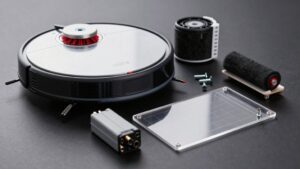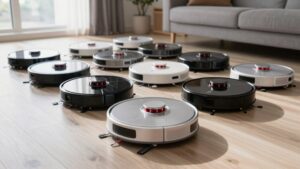
Oem Vs Compatible Robot Vacuum Parts Differences
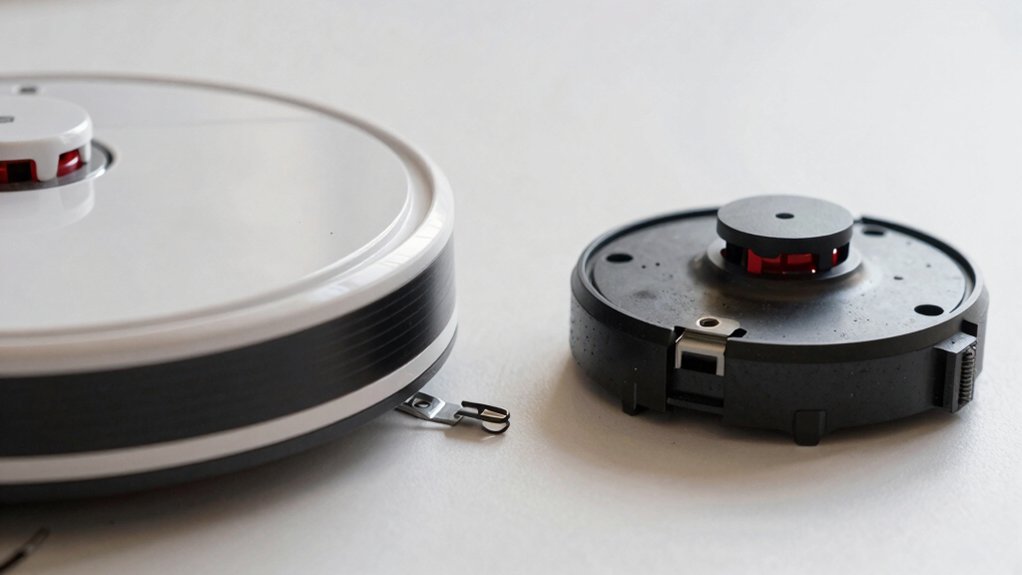
You should pick OEM for critical parts like batteries, motors, and HEPA filters because they preserve suction. They include proper BMS safety and match seals and tolerances that protect the motor and warranty.
Compatible parts can save money and work fine for non‑critical brushes or mops, but they often skimp on filter media, fit, or battery electronics. This reduces performance and raises risk. Keep going to see specific checks and when third‑party is acceptable.
Quick Overview
- OEM parts preserve suction, motor safety, and warranty by matching original seals, fittings, and specifications.
- Compatible parts often cost less but may use lower-grade filters, weaker seals, or different brush dimensions that reduce performance.
- OEM batteries include a tuned BMS for safety and compatibility; compatibles may lack proper BMS or accurate capacity claims.
- HEPA-grade OEM filters meet H13 standards (99.97% @ 0.3 µm); compatibles can increase dust leakage and motor wear.
- Use vetted third-party parts only for non-critical accessories (mops, side brushes) after checking fit, reviews, and return policy.
Quick Verdict: OEM or Third‑Party for Honiture Owners?
Wondering whether to stick with Honiture OEM parts or save with third-party replacements? You should prioritize OEM for critical systems: batteries, motors, and HEPA filters. OEM parts preserve suction, maintain motor safety, and keep warranty coverage intact.
Third-party options can be acceptable for non-critical accessories if you choose high-fit, low-risk kits; however, do not treat that as carte blanche. Many aftermarket filters and batteries compromise seal integrity and filtration, and some do not fit newer battery housings.
In tests, OEM side brushes and mops fit better on longer carpet piles and lower motor-jam risk versus many compatibles. Cost savings are real: third-party kits can be $20–$30 versus OEM’s roughly $49.99–$84.99. The tradeoff is more frequent replacement and degraded performance.
Avoid making decisions based on irrelevant topics or any unrelated comparisons; focus on part criticality and fit. Bottom line: pick OEM for safety and longevity, and use vetted third-party parts only for replaceable, non-critical accessories.
How Suction Fails : Common Causes and Quick Checks
How does suction actually die on a robot vacuum? You’ll find suction causes are often mundane: degraded airtight seals or tiny gasket leaks let negative pressure escape. This means the motor works harder but moves less air. Even 0.5 mm gaps can drop internal pressure enough to cut suction and cause motor overheating. Do quick checks for obvious leaks around dustbin edges, access panels, and hose interfaces.
Clogged or degraded filters raise backpressure and choke airflow. Replace filters on schedule rather than waiting for obvious motor failure. Inspect brush rollers and housings: worn bristles, wrapped hair, or misalignment create airflow blockages that lower effective suction at the floor. Check battery health too; low voltage can reduce motor torque and apparent suction.
Your quick checks: remove dustbin, visually test seals, swap or clean the filter, clear roller obstructions, and re-seat housings. These steps restore suction more reliably than assuming the motor’s shot.
HEPA Filters: OEM vs Third‑Party (Fit, Filtration, Replacement)
Loss of suction often traces back to seals and filters, so the filter you choose matters more than you might think. You’ll find OEM HEPA filters meet H13 standards, trapping 99.97% of 0.3 µm particles: that keeps exhaust clean, protects the motor, and reduces safety concerns for allergy sufferers.
Third‑party units can fit and look identical; however, they often use lower‑density media that lets more fine dust bypass the exhaust and settle on internal components. This can degrade long‑term performance and indirectly affect battery performance by forcing harder runs.
Replace HEPA filters every 3–4 months (sooner with pets or smoke). OEM parts preserve filtration, warranty alignment, and predictable service life. If you opt for a cheaper compatible filter, inspect fit and seal quality closely and expect potential tradeoffs: short‑term savings versus reduced purification efficiency and greater risk of dust ingress that can elevate maintenance needs and health exposure.
Batteries: Safety, Real Capacity, and Compatibility With Honiture
Why should you treat replacement batteries for your Honiture like a critical service part, not a cheap consumable? Because OEM packs include a Battery Management System (BMS) that protects against over-temperature, balances cell voltages, and limits current: all crucial for battery safety and longevity. Third-party packs often skip the BMS, which raises real risks of overheating, short circuits, and even fire. This can harm the mainboard or motor.
You’ll also see inflated capacity claims on many compatibles. Labeled high mAh doesn’t guarantee usable energy. Without quality cells and proper pack design, runtime and cycle life drop fast despite impressive numbers on the sticker. Compatibility is another pitfall: older Honiture batteries frequently won’t fit newer X7 or P7 Pro packs because manufacturers moved to higher-density layouts.
Choosing OEM avoids mismatched connectors, voltage differences, and hidden costs from damaged electronics. If you value predictable performance and battery safety, stick with a genuine Honiture pack.
Brushes, Mops, and Fit Issues : Where Third‑Party Works (And Doesn’t)
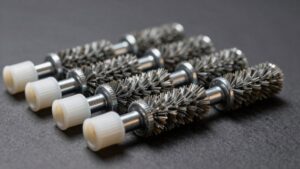
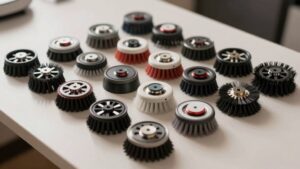
Curious whether third‑party brushes and mops will do the job for your Honiture? You can use third party brushes and mops effectively, but fit and materials matter. Side brushes from knockoffs are often ~0.5″ longer and stiffer; on long carpets, they can contact wheels and trigger shutdowns.
Main brush appearance hides differences: varying bristle density changes aggressiveness and pickup. A cheaper replacement might miss deep‑embedded debris or overwork the motor. Washable third‑party mop cloths feel similar but are slightly thinner; they hold less moisture and grip floors less reliably.
On hard floors and short carpets, third‑party mops and brushes usually offer acceptable performance at lower cost. However, durability lags OEM. For longer carpets, stick with OEM brushes to avoid fit issues and unintended collisions.
In short, third‑party parts can be pragmatic for everyday cleaning on compatible surfaces. However, validate fit dimensions and bristle specs before you buy.
Cost vs Long‑Term Value + 8‑Point Maintenance and Buying Checklist
Now that you know where third‑party brushes and mops can work and where they can cause fit or performance problems, it is worth weighing upfront savings against long‑term value: especially for components that affect suction, motor safety, filtration, and battery management. You’ll see OEM parts cost more but preserve suction, include BMS for batteries, and use HEPA/seals that avoid microleaks. That reliability can justify the price when you factor cost benefit and warranties coverage. Third‑party parts save now ($20–$30 vs $50–$85) but may mean more frequent replacements and risk on long carpets.
| Emotion | Choice | Consequence |
|---|---|---|
| Relief | Buy third‑party | Lower upfront spend |
| Confidence | Buy OEM | Long‑term reliability |
| Anxiety | Skip checks | Possible failures |
8‑point checklist: verify fit, BMS presence, seal integrity, filter grade, motor load, brush length/flex, supplier reviews, and warranty terms before you buy.
Frequently Asked Questions
Do Compatible Parts Affect Robot Vacuum Wi‑Fi or App Functionality?
Yes, compatible parts can affect Wi-Fi or app functionality. If you swap components tied to networking, like a Wi-Fi module, antenna, or MCU, you may break authentication; firmware compatibility; or signal strength. This can cause a Wi-Fi impact and app failures.
Cosmetic or generic brushes and filters rarely touch connectivity. However, any part interacting with firmware or radios should match specs. You’ll want compatible parts confirmed by tech docs or vendor support.
Are Third‑Party Parts Covered Under Honiture Warranty?
No, using third-party parts typically voids Honiture’s OEM warranty. You won’t be covered for failures tied to those parts. You’ll assume compatible risks such as improper fit, reduced performance, or electrical issues that the manufacturer won’t fix.
If you want warranty protection, stick with OEM parts or confirm Honiture’s policy in writing before installing compatibles. Keep receipts and photos if you test a third-party component so you can document any issues.
How Do Compatible Parts Influence Resale Value of the Robot?
Using compatible parts can lower resale impact because buyers often prefer OEM provenance and worry about reliability and warranty gaps. You’ll boost appeal if part compatibility is clearly documented, high-quality, and recently replaced with receipts or tests.
Be honest about changes; note performance metrics and price accordingly. Transparency lessens buyer hesitation and helps preserve value even when non-OEM parts are installed.
Can I Mix OEM and Compatible Parts on the Same Robot?
Yes, you can mix OEM Characteristics with compatible parts, but watch Compatibility Limits and Mounting Issues. You’ll want to monitor Battery Lifespan if using third-party batteries. Confirm Dustbin Capacity fits adapters.
Mixed parts may affect Software Updates and diagnostics; expect occasional warnings or reduced features. Test each swap incrementally, keep originals, and document which combinations work to avoid performance drops or voiding warranties.
Do Compatible Parts Change Noise Levels During Operation?
Yes, compatible parts can change noise levels during operation. You’ll notice noise variance when bearings, motors, or brushes differ in build quality, tolerances, or damping. Cheaper parts often vibrate more.
Think pragmatically: some manufacturers explore immersion cooling for motors to reduce thermal noise. However, consumer-compatible parts rarely include that. You should test replacements. Check specs for RPM, bearing type, and documented noise ratings to predict real-world changes.
Conclusion
Quick verdict: Stick with OEM for batteries and critical wear parts, but trusted third-party HEPA filters and brushes can save money if they fit well.
If suction drops, check brush, filter, and battery health before blaming parts. Prioritize safety-certified batteries and high-MERV filters; expect occasional fit tweaks with compatibles. Use the 8-point checklist when buying replacements to balance upfront cost against long-term reliability and your Honiture’s performance.
You may also like: Robot Vacuum Parts Compatibility Explained — a related guide worth bookmarking.