Geared vs Flat Belt Vacuums Explained: Which One Lasts Longer?
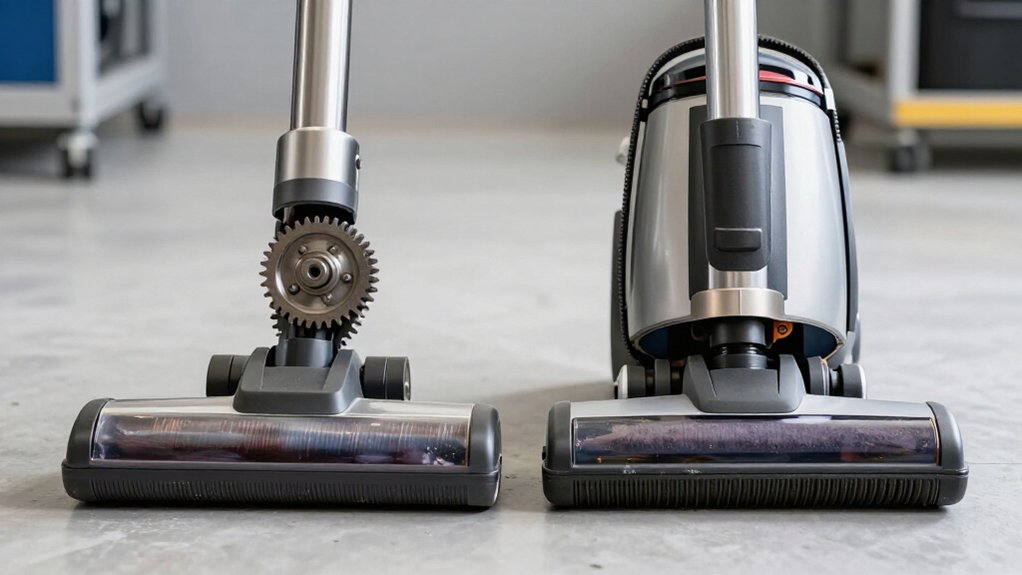
If you want longer belt life, you’ll generally get it from a geared, toothed vacuum drive rather than a flat belt.
Teeth transmit torque positively, so brush-roll speed stays steadier on dense carpet and the system relies less on tension.
Flat belts use friction, making stretching, glazing, misalignment, and debris more likely to cause slip, heat, squealing, or burning-rubber odors.
Cogged belts last one to two years; flat belts, six to nine months.
Details follow.
Gears vs Belt Tension
When you compare gears with a flat belt, remember that they transmit torque in fundamentally different ways. Gears use tooth contact and mesh force, not continuous belt tension. You get positive engagement, minimal elastic elongation, and consistent brushroll position, provided alignment, backlash, and preload are correct.
| Drive | Force basis | Practical consequence |
|---|---|---|
| Gear | Tooth-flank normal force | Minimal slip; inspect lubrication |
| Belt | Tight/slack tension difference | Friction drive; tension can drift |
| Check | Backlash and preload | Tension, wrap, and clearance |
| Risk | Shock transfer | Overload can strip teeth |
With a belt, you create pulley normal force through tension: torque scales with T1−T2 and pulley radius. As the belt stretches or relaxes, tension falls and slip becomes more likely.
For service, inspect routing and belt condition; for gears, verify mesh and lubrication rather than repeatedly adjusting tension. Choose belts when simple replacement matters; choose gears when sustained torque and positional consistency outweigh higher setup and routine repair costs over time.
Toothed Drives, Flat Loops
Toothed drives replace friction-dependent contact with positive engagement: a cogged belt’s teeth mesh with a brush-roll sprocket, helping maintain speed under heavy load without relying solely on belt tension. You’ll find this “tensionless” arrangement less vulnerable to contamination or ordinary belt wear because torque travels through the teeth. Cogged belts commonly last about one to two years, provided you clear hair and inspect the sprocket, belt path, and surrounding housing.
Flat-belt vacuums use a smooth loop pressed against the motor and brush pulleys. You’ll depend on friction and correct seating, so stretching, cracking, melting, or debris can cause slippage or failure. These belts often need replacement every six to nine months. Their contact area helps, but you’ll usually handle more frequent, simpler, cheaper service.
Brush Roll Speed Differences
Brush-roll speed directly affects how aggressively a vacuum agitates carpet fibers and lifts embedded debris. With a geared drive, toothed engagement limits slip, so the brush roll typically maintains a steadier speed as you push across dense carpet. A flat belt depends on friction; stretching, glazing, or misalignment can reduce grip and slow agitation.
Watch for these practical differences:
- Consistent rotation: Geared systems keep bristles working through thick pile and heavier debris.
- Gradual slowdown: A worn flat belt may squeal, slip, and leave more particles behind even when suction feels strong.
- Simple diagnosis: Compare brush-roll performance on the same carpet; reduced speed signals belt condition or drive load, not necessarily weak suction.
Clear wrapped fibers promptly, because resistance can further reduce effective brush-roll speed.
Access Panel Design
A well-designed access panel makes belt-drive maintenance faster and safer by exposing the belt path and brush roller without requiring unnecessary disassembly.
You should unplug the vacuum completely, lay it on its back, and remove the panel, which typically sits beneath the floorhead. Whether screws or locking tabs secure it, placement gives you visibility of belt and agitator. You’ll spot cracking, glazing, snapping, or obvious stretching quickly before a failure stops cleaning.
After removal, you can rotate the brush roller to check smooth rotation and belt slip. The opening lets you clear hair and string before obstructions create strain. A cramped panel forces disassembly, increasing service time and the chance of damaging fasteners or components. Accessible panels simplify inspection.
Check Model-Specific Belt Width
Before ordering a replacement, identify the vacuum’s exact model and belt part number, usually printed near the brush-belt area or in the manual. Manufacturers don’t use universal belt names, so match the specified width, not merely a belt that appears to fit. Correct sizing restores engineered tension and reduces slippage-related wear.
Check the belt’s intended contact section:
- Flat belts: measure the flat face, excluding molded edges.
- Geared belts: measure the toothed or banded section for sprocket engagement.
- Uncertain sizing: compare the old belt with the listing’s exact dimensions.
A slightly narrow or wide belt can contact incorrectly, transfer power poorly, and fail prematurely. Order by model-specific width whenever possible. If markings are missing, verify dimensions against the manufacturer’s parts diagram before fitting it securely.
Motor Strain and Heat Dissipation
When the brush roller meets resistance, the drive system determines how much motor power becomes useful torque versus wasted heat. A geared, cogged belt maintains positive tooth engagement, so you get consistent torque with minimal slip at the brush interface. That reduces frictional heating and helps limit strain on the brush motor during loading.
A flat belt depends on friction, tension, and alignment. If it stretches, wanders, or loses tension, repeated micro-slippage converts more power into heat, potentially producing a burning-rubber smell. A jammed roller raises load in either design, but the slipping belt heats faster and wears sooner.
Clear hair and debris, then verify belt routing and tension. Clean airflow paths matter: clogged filters or passages increase motor heat, regardless of drive type.
Repair Costs and Availability
How much you’ll spend on repairs depends largely on belt life and the damage caused by failure. Geared belts typically last 1–2 years, while flat belts often need replacement every 6–9 months. That difference can make flat systems cheaper but costlier over time through parts and labor.
Use your vacuum’s model number when ordering; manufacturers don’t standardize belt names, and an exact geared or flat match prevents misfits.
- Geared belts: fewer slippage-related failures, but assemblies may require service.
- Flat belts: inexpensive and widely replaceable, though you’ll buy them more often.
- Either system: clear the brush roll before installing parts to avoid repeat failures.
A jam can damage the belt and brush-roll components. Check routing, tension, and clearance, then confirm parts and service availability before buying.
Thick Carpet Performance Tradeoffs
On thick carpet, you’ll usually get stronger, steadier brush agitation from a geared belt because its toothed drive resists slip under load. A flat belt may lose speed as pile drag increases, forcing you to make more passes and reducing deep-pile cleaning power.
However, either system can build heat and suffer belt strain when debris restricts the brushroll, so you’ll need to clear jams promptly.
Deep-Pile Cleaning Power
Thick carpet places greater resistance on the brush roller, so cleaning power depends on maintaining agitation—not just suction. When you clean deep pile, a geared, toothed belt maintains more positive engagement as load rises, helping the roller preserve speed and lift embedded soil. A flat belt can work well, but stretching or a poor match increases slip, slowing agitation and forcing extra passes.
Look for these signs:
- Geared drive: steadier brush speed through dense fibers.
- Flat belt: effective when correctly tensioned and maintained.
- Weakening performance with hose suction: inspect brush speed first.
Geared belts commonly last about 1–2 years; flat belts often need replacement around 6–9 months. Choose the drive that matches your carpet thickness, then clear wrapped fibers and replace worn belts promptly.
Heat And Belt Strain
Maintaining brush speed through deep pile also determines how much heat the drive system generates. In thick carpet, hair, string, and dense fibers increase brushroll resistance, raising belt strain in either design. A cogged belt transfers torque through teeth, so it minimizes slip and frictional heating while maintaining more consistent brush speed.
A flat belt offers broad friction contact, but incorrect tension, wear, or overload can cause micro-slip and heat buildup at the brush head. That slip can protect the motor during a jam, yet it sacrifices cleaning speed and accelerates belt damage. If you smell burning rubber or hear squealing, stop and inspect for blockage, routing, and tension. Expect cogged belts one to two years; heavy use pushes flat belts toward six months.
Pet-Hair Pickup on Rugs
When you clean pet hair from rugs, you’ll assess brush-roll agitation and belt grip under load. Flat belts can maintain speed through broad contact, while geared belts provide positive engagement as hair increases resistance.
You’ll remove hair more effectively per pass when you keep the brush roll clear, preventing belt overheating and premature wear.
Brush Roll Agitation
Brush-roll agitation often accounts for nearly 70% of carpet cleaning because the rotating brush beats and sweeps pet hair from rug fibers before suction removes it. When you clean rugs, consistent brush speed matters more than hose suction alone. A geared drive’s teeth transfer energy directly, helping the agitator maintain dependable motion. A flat belt depends on friction; wear or poor tension can reduce brushing and leave hair behind.
- Dense rug pile: watch for flattened tracks where the brush isn’t working.
- Long pet hair: check the roll for wrapping before each session.
- Normal suction, leftover hair: inspect the belt and brush-roll rotation.
You’ll usually restore performance by clearing wrapped fibers and replacing a worn or stretched belt, often every 6–12 months. Confirm reliable rotation.
Belt Grip Under Load
Under heavy pet-hair loads, a geared or cogged belt maintains brush-roll speed more reliably because its teeth engage matching sprockets without depending on friction alone. When you push across a dense rug, pet hair and thick pile increase brush-roll resistance. A flat belt transmits torque through friction, so it can slip, stretch, and lose speed as tension or contact deteriorates.
That loss reduces agitation even when suction sounds normal. Because agitation contributes roughly 70 percent of carpet-cleaning ability, you’ll notice weaker pickup sooner.
Watch for squealing, whining, a burning-rubber odor, or a brush roll that slows under load. Stop and inspect for wrapped fibers, clogged air paths, and correct routing before use. Replace a worn flat belt with the specified OEM size when needed.
Rug Hair Removal
Why does belt design matter for pet-hair pickup on rugs? Both vacuum types spin a brush roll that agitates fibers, but their drives respond differently under load. A geared, toothed belt meshes with the brush-roll sprocket, delivering positive, consistent rotation when hair tangles in dense pile. A flat belt can clean effectively while fresh, yet heat, debris, stretching, and slip gradually reduce brush speed.
Watch for clues:
- Geared drive: steadier agitation and typically 1–2 years of belt life.
- Flat belt: about 6–9 months typically, with more passes as it stretches.
- Either design: clear wrapped hair and clogged airflow before overheating stresses components.
If suction feels normal but hair remains, inspect the belt and brush roll first. Your cleaning frequency, rug density, and maintenance determine results.
Sealed Bearings, Fewer Replacements
When a floorhead pairs sealed brushroll bearings with a toothed drive belt, you’ll spend less time opening the assembly for routine service. Sealed bearings keep lubricant contained and help block dust, while the cogged belt transfers torque without relying on friction. That positive engagement reduces slip, heat, and uneven loading, so the brushroll maintains steadier speed under carpet resistance.
You still need to remove wrapped hair and inspect for damage, but you won’t typically lubricate the bearing or correct belt tension.
Flat belts can work well, yet they depend on pulley grip and alignment. Wear, debris, or stretching encourages slip and accelerates replacement. A geared belt commonly lasts about one to two years; a flat belt may need changing every six to nine months.
Conclusion
Your longest-lasting vacuum depends less on the drive label than on how you use and maintain it. A geared, toothed system can reduce belt replacements, while a flat belt may cost less and simplify service. Compare brush-roll speed, belt width, access-panel design, sealed bearings, and parts availability.
If you clean thick carpet or pet-hair-covered rugs, weigh pickup performance against repair costs. Choose the system you’ll actually maintain; that decision usually determines service life over time.