Bagged vs Bagless Vacuum Systems: Which One Actually Costs Less Long-Term?
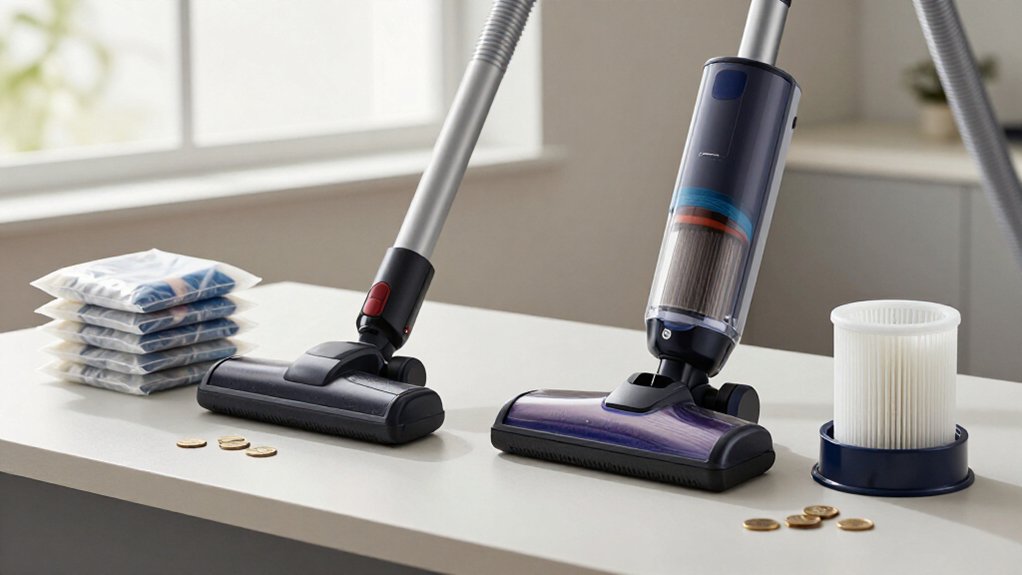
Bagless vacuums usually cost less upfront because you don’t buy bags, with five-year filter costs around $15–$40 versus $60–$120 for bags.
However, you’ll empty bins more often, wash filters, and may release dust indoors.
Bagged models contain allergens better, need fewer maintenance cycles, and can reduce cleanup—especially if you have pets or allergies.
Batteries and repairs can affect either type, while electricity costs little.
Compare accessory availability and upkeep before choosing; practical guidance follows.
Bags, Filters, Repairs, Electricity
When you compare long-term costs, don’t stop at the purchase price; bags, filters, repairs, and electricity also matter. Bagged machines often need model-specific bags, while bagless machines shift spending toward washable or replacement filters.
| Cost area | What you should budget for |
|---|---|
| Bags | A few dollars per bag; robot docks may cost $20–$50 yearly. |
| Filters | Annual replacement or cleaning, especially on bagless models. |
| Repairs | Batteries ($30–$80 every 2–4 years) and occasional motors or parts. |
Protect your budget by checking accessory availability before buying. Neglected filters can reduce suction, increase runtime, strain the motor, and accelerate repairs.
Electricity usually costs only a few dollars annually, so don’t overvalue tiny efficiency differences. Choose a model with accessible parts, realistic maintenance demands, and a warranty that limits unexpected costs.
Sealed Bags vs. Dust Bins
Sealed bags keep collected dust contained, so you won’t release as many allergens when you replace them, an important advantage if you have allergies or asthma. They also hold more debris, meaning you’ll handle maintenance less often. However, you’ll need to buy compatible replacement bags, and those recurring purchases raise your long-term cost.
Dust-bin models avoid bag expenses and often let you see the fill level through a transparent canister. That visibility helps you judge when maintenance is due, but smaller bins usually require more frequent attention. You’ll also need to clean filters regularly to preserve airflow and filtration.
For a cost-conscious choice, compare five-year bag prices with filter costs and value your time. Choose sealed bags if containment and fewer service cycles outweigh supply costs.
Airborne Dust During Emptying
Bagged vacuums usually keep dust and allergens contained, so they’re less likely to release airborne particles during disposal than bagless models. When you remove a self-sealing bag, you’re less likely to create a dust cloud, which can matter if you manage allergies or asthma. That containment may justify higher bag costs by reducing cleanup and exposure-related expenses.
With a bagless vacuum, emptying the canister can stir debris into the air, particularly when you dump it indoors. You’ll reduce exposure by emptying it outdoors, slowly, and away from face. A HEPA filter helps capture fine particles during cleaning, but it won’t eliminate the release caused by disposal. If you choose bagless to avoid buying bags, factor in this care: and the value of cleaner air.
One-Handed Cord Rewind
Once you’ve minimized dust exposure, convenient cord handling can help control everyday ownership costs. A one-handed rewind lets you retract the cable with one trigger or lever, so you won’t spend time coiling it after every session. That small convenience can protect your budget in three ways:
- Reduce wear: Retraction limits slack, tangles, and dragging that can damage the cord or plug.
- Store faster: Consistent winding helps you put away a heavier bagged vacuum without awkward handling or accidental bumps.
- Extend service life: Gentler storage may delay cord repairs or replacement while reducing frustration that can lead to careless handling.
Compare models: rewind isn’t a bag-type advantage. Check smooth operation and cord durability. You’ll save when it reduces damage, not when it fails.
Pet Hair Performance Differences
Pet-hair results depend more on the brush roll, suction, and anti-tangle design than on whether the vacuum uses a bag. A sealed bagged system contains collected hair and dander, so you’re less likely to release them while emptying it. That cleaner disposal can matter if allergies add indirect costs.
Bagless vacuums can match or beat bagged models when their tools are designed. The Kenmore 500 Series DC5070 earns great hair pickup on bare floors and good results on carpet, while the Kenmore 22614 reaches very good carpet performance. The DC5070’s Hair Eliminator also clears brush-roll tangles, potentially reducing maintenance.
Before you buy, compare tested hair scores, brush access, and filter-cleaning needs—not just bag prices. A cheaper bagless model may cost more through maintenance.
Warranty and Resale Value
After comparing pet-hair performance, you should also consider how maintenance affects warranty risk and resale value. Bagged vacuums keep debris contained, which can protect internal parts and reduce maintenance-related problems that complicate warranty claims. Bagless models can still deliver value, but you’ll need to clean filters and wash the canister regularly.
If you neglect those tasks, performance issues may fall outside coverage.
- Read the warranty: Check exclusions for neglected cleaning, filter replacement, and unauthorized repairs.
- Keep records: Save receipts and document maintenance to support a legitimate claim.
- Think resale: Bagged models may attract buyers seeking cleaner disposal and better allergen containment. Bagless units can lose value faster when buyers expect frequent upkeep.
Compare warranty length, parts availability, and resale value, too.
Clogging After Fine Debris
Fine debris can clog a bagless vacuum faster because powdery particles fill the dustbin and pack into its filters, restricting airflow. If you vacuum flour, drywall dust, or ash, you may need to empty the bin and clean filters more often. As resistance rises, suction can drop, forcing you to make extra passes and increasing wear.
That added time effectively raises each cleaning’s cost, even though you don’t buy bags.
A bagged vacuum usually contains fine dust more effectively. Its disposable bag creates a barrier, while sealed construction and HEPA filtration help keep particles away from internal components. You’ll change bags periodically, but you may spend less time clearing clogs and restoring suction.
For powdery messes, compare bag prices and sealed-bag availability before buying.
Noise Levels and Maneuverability
When you compare noise, focus more on the motor and airflow design than on whether the vacuum uses a bag. You’ll often find bagless models easier to maneuver, especially in tight spaces, while bagged systems may deliver steadier airflow as they fill.
Consider corded or cordless design, weight, and handling alongside sound levels to choose the better value for your home.
Noise During Operation
Noise levels usually depend more on the vacuum’s motor, insulation, and airflow design than on whether it uses a bag or a canister. You’ll often hear similar volume from comparable bagged and bagless models, so compare decibel ratings and listen before buying. A quieter machine can make longer cleaning sessions less tiring, but don’t pay extra solely for the bag format.
- Check the motor: Efficient motors and better insulation often reduce pitch and vibration.
- Consider filtration: Sealed systems can control airflow and prevent rattling from leaks or clogged passages.
- Budget for interruptions: Bagless vacuums may need more frequent emptying, interrupting your session; bagged models contain debris longer. Empty bagless bins outdoors to limit dusty blowback and preserve comfort without raising your long-term costs unnecessarily.
Ease Of Maneuvering
Bagless canister vacuums are often lighter and more compact, so you may find them easier to steer during quick cleanups, while bagged models can feel bulkier because of their bag compartment and housing. A visible bin also lets you monitor fullness, helping you empty it before airflow drops and you need extra passes.
Noise doesn’t follow the bag-versus-bin divide. Motor design, seals, airflow, and floor heads influence decibels more than the container type, so compare model-specific ratings and reviews. A lighter bagless unit may feel less tiring even when it isn’t quieter. Strong pet-hair performance can further reduce back-and-forth work, potentially saving your time. For long-term value, weigh easier handling against filter cleaning, bag costs, and the comfort of each model during routine use.
Best for Apartment Living
In a small apartment, you’ll benefit from a compact vacuum that stores easily and won’t disturb your neighbors. Bagless models can save on bags, but you’ll empty the canister more often and may release dust, while bagged models offer cleaner, simpler disposal.
Compare noise levels, storage needs, and filter or bag costs before choosing.
Space-Saving Design
For apartment living, a compact bagless vacuum often takes up less floor space and makes quick, grab-and-go cleaning easier. Its lighter body can fit beside a cabinet, under furniture, or in a narrow closet, helping you avoid paying for storage.
Choose your setup with these checks:
- Measure the closet, including height and door clearance.
- Compare the vacuum’s footprint with its storage accessories and cord.
- Check whether filters need regular cleaning or replacement.
A bagless canister’s bin shows when you need to empty it, so you won’t overfill it or buy bags you can’t store. However, frequent bin emptying and filter care add small maintenance costs.
A compact bagged model may occupy more room, but its sealed bag needs less handling and controls dust better than indoor spaces. Compare total storage, supplies, and upkeep before choosing.
Noise And Neighbors
When shared walls make noise a concern, choose a vacuum that limits disruptive cleaning and emptying routines. In an apartment, a bagged model often gives you a quieter experience. Its sealed bag contains debris, so you avoid dust clouds and indoor disturbance that may bother neighbors.
You’ll also empty it less often than you’d clear a bagless canister, reducing maintenance events in shared spaces.
A bagless vacuum can still make financial sense, especially if you already own one, but frequent filter cleaning adds time. If you choose bagless, empty and clean it outdoors when possible, and vacuum during considerate daytime hours.
For apartment living, compare noise ratings, maintenance frequency, and bag prices—not suction alone. Paying more for sealed containment may reduce neighbor friction, too.
Easy Waste Disposal
If you live in an apartment, a bagged vacuum usually makes waste disposal cleaner and easier. When the bag fills, you remove it, seal it, and toss it without releasing dust. That matters when your trash area is indoors or shared, especially with allergies. Bagged models combine self-sealing bags with HEPA filtration, limiting exposure during disposal.
- Choose sealed bags: You’ll reduce dust clouds and cleanup around the bin.
- Check availability: Compare local bag prices and stock before buying; scarcity can raise long-term costs.
- Balance convenience: A bagless vacuum avoids bag purchases, but you’ll empty its smaller canister more often, and debris may re-enter the air.
For apartment living, bagged systems usually win on disposal ease. Bagless models may save money, but messier disposal can erase modest savings.
Five-Year Ownership Cost Breakdown
A five-year ownership comparison goes beyond the sticker price: bagged vacuums add recurring bag costs, while bagless models avoid bags but demand more filter cleaning and occasional replacements.
Over five years, you’ll typically spend $60–$120 on bags, compared with about $15–$40 for bagless filter replacements.
But don’t ignore labor. You’ll empty a bagless canister more often, wash filters, and manage dust, while sealed bags preserve airflow and contain allergens.
If poor maintenance strains the motor, replacement parts can erase savings. Compare each model’s price, bag or filter availability, capacity, and warranty. For allergy-sensitive homes, paying more for a sealed bagged system may reduce hidden health and time costs, making it the better five-year value. Your usage pattern should drive your final decision overall.
Conclusion
Over five years, you’ll usually spend less with a bagless vacuum if you clean filters, prevent clogs, and tolerate messier emptying. Choose a bagged model if you value sealed dust control, simpler upkeep, and predictable consumable costs, especially in an apartment or with allergies.
Compare the full ownership picture: bags, filters, repairs, electricity, and your time. The cheapest vacuum is the one you’ll maintain regularly and keep running reliably for years without surprise repair bills.