Do You Need a HEPA Filter Vacuum for Allergies? What the Research Says
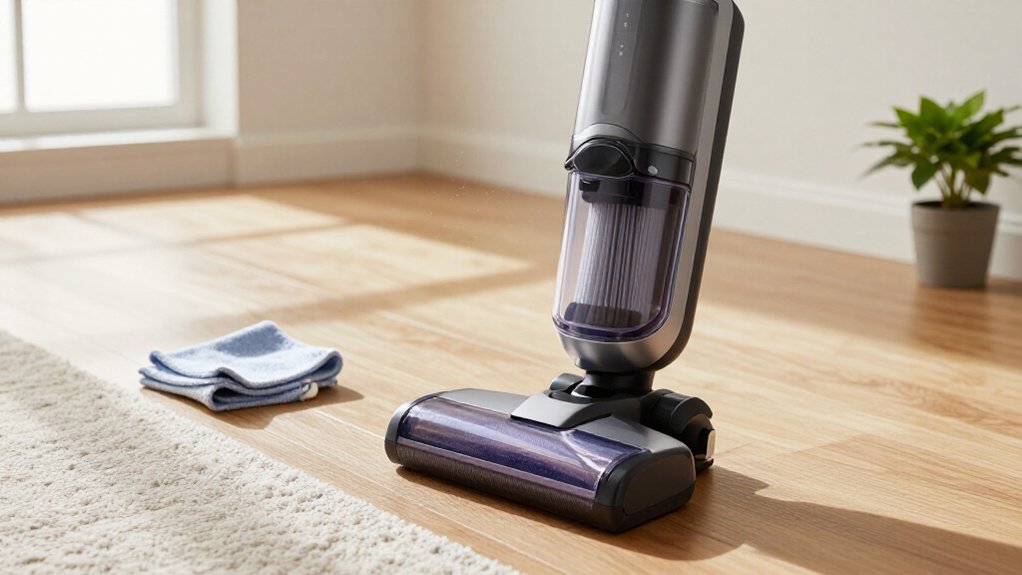
You don’t necessarily need a HEPA vacuum, but it can reduce airborne dust, pollen, and pet-dander particles during cleaning.
A genuine HEPA filter captures at least 99.97% of 0.3-micron particles, yet performance depends on a sealed system, proper maintenance, and contained disposal.
Vacuuming may temporarily disturb bedroom or upholstery allergens, so ventilate and leave if symptoms worsen.
HEPA won’t remove most odors or gases; activated carbon helps.
If allergies persist, guidance can clarify your options.
HEPA Reduces Airborne Allergens
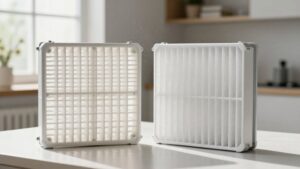
When a vacuum has a genuine HEPA filter, it can capture at least 99.97% of particles measuring 0.3 microns or larger, including many dust, pollen, and pet-dander particles collected from surfaces. For you, this means the filter acts after the vacuum’s initial collection stage, helping limit how much fine particulate matter returns to indoor air through the exhaust.
Without effective filtration, cleaning can redistribute particles and increase what you inhale, particularly if you have allergic rhinitis or asthma. A sealed system and maintenance support this protective function, while a bagged design may reduce exposure during disposal.
Use the vacuum consistently in bedrooms and other high-exposure areas, but don’t treat it as your only control measure. Combine cleaning with bedding encasements and humidity control routinely.
Captures 99.97% of Particles
A genuine HEPA filter captures at least 99.97% of airborne particles measuring 0.3 micrometers (µm), including many fine particles associated with dust, pollen, and pet dander.
That benchmark reflects filter-media performance, not necessarily your vacuum’s total emissions. Dense fibers trap particles through interception, impaction, and diffusion, with 0.3 µm representing the most challenging size.
| Feature | What it means | Why you should care |
|---|---|---|
| True HEPA | ≥99.97% at 0.3 µm | Supports fine-particle capture |
| Sealed system | Limits bypass leakage | Protects real-world performance |
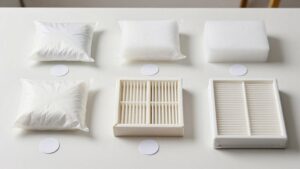
Look for a certified true HEPA filter and a sealed air path; “HEPA-type” claims may indicate lower efficiency. Maintain and replace filters as directed, because clogging can reduce airflow. This rating supports allergen control, but it doesn’t guarantee symptom relief or remove every trigger indoors.
Dusty Bedroom Carpet Example
Because bedroom carpet traps dust, pollen, pet dander, and dust-mite particles, vacuuming can disturb these allergens and temporarily increase airborne exposure.
If your bedroom carpet looks dusty or receives frequent foot traffic, it can accumulate pollen, mold spores, and dust-mite-related debris. Brushing the carpet may redistribute these particles, potentially worsening respiratory symptoms if you have allergic asthma.
A vacuum without genuine HEPA filtration may release allergy-relevant particles back into the room, whereas true HEPA filtration captures about 99.97% of collected particles down to approximately 0.3 microns. Still, cleaning can agitate settled dust. Vacuum carefully, open a window, and leave the room afterward if you notice symptoms. Frequent, consistent vacuuming helps limit buildup, but combine it with bedding encasements and humidity control for allergen reduction.
Vacuum Sealing Mechanisms
You should look for a sealed airflow pathway that directs all exhaust through the genuine HEPA filter, rather than allowing leaks at the canister, hose, or filter housing. Check that gaskets, ports, bag doors, and motor-exhaust joints fit tightly to prevent allergen-containing dust from re-entering your room.
Leak-prevention testing or third-party certification can help confirm that the vacuum’s stated filtration performance reflects actual use.
Sealed Airflow Pathways
Sealed airflow pathways determine whether a HEPA vacuum actually delivers clean-air performance. As you vacuum, air should travel from the nozzle through the dust compartment and exhaust only after passing through the HEPA stage. This closed route prevents captured allergens from returning to your room.
In a sealed design, a bag or cyclonic separator removes much of the debris first; the HEPA filter then captures particles that escape the initial stage. This matters for fine allergens, including pollen and mold spores near 0.3 microns, because even small bypass routes can undermine high-efficiency filtration. A “HEPA” label alone doesn’t prove whole-system performance.
Look for documented sealed-system testing, and replace filters as directed. If airflow weakens or exhaust feels dusty, stop and investigate before continued use.
Gasket And Port Seals
A true HEPA filter can’t compensate for gaps around the canister, hose, or filter housing. Even a certified filter can underperform when weak gaskets or loose port connections let unfiltered air escape during cleaning. Look for anti-allergen seals that keep the canister, hose, and inlet ports tightly coupled.
These seals help keep fine dust and allergens contained after air passes through the HEPA media, reducing re-entrainment into your breathing zone.
For allergy or asthma symptoms, this design matters because vacuuming can disturb settled particles. Choose a model with clearly documented gasket coverage, secure latches, and seals at every hose and canister junction. A bagged system with a self-sealing bag can add containment during disposal, while regular replacement preserves fit and function over time.
Leak Prevention Testing
Beyond inspecting gaskets and port connections, leak-prevention testing evaluates whether the vacuum actually contains particles during operation. It measures “clean emissions,” the particulate escaping while you vacuum, so performance reflects the entire air path, not merely the HEPA media rating. Leaks around the canister, motor exhaust, hose joints, or filter housing can return unfiltered dust to your room and undermine allergy control.
Before use, confirm that the canister locks securely, the anti-allergen seal sits evenly, and the filter is fully seated without gaps. Inspect and clean gaskets regularly; damage or debris can reduce contact and increase bypass.
If the manufacturer provides emissions testing or third-party certification, review it. A sealed, bagged system can also limit re-aerosolization during disposal, supporting safer cleaning for allergy-sensitive households at home.
Homes With Shedding Pets
If you have a shedding pet, dander and hair can accumulate in carpets and upholstery, then become airborne during cleaning. A true HEPA vacuum can capture about 99.97% of particles near 0.3 microns, while a sealed, bagged design helps reduce allergen release during use and disposal.
Vacuum carpets and pet-resting areas regularly, and maintain or replace filters as directed to preserve performance.
Pet Dander And Allergens
When you share your home with a shedding pet, choose a vacuum with a genuine True HEPA filter and a sealed air path to capture fine dander and dust that can become embedded in carpets.
Pet allergens often settle into carpet fibers and upholstery, where routine cleaning can disturb them and redistribute particles into the air. If you have asthma or allergic rhinitis, you may notice symptoms after exposure to dander, saliva, or urine proteins carried on shed skin and hair. Choose a model labeled True HEPA, not “HEPA-type,” because claims differ.
A bagged vacuum with a self-sealing bag can limit allergen release when you dispose of collected debris. Keep pets out of bedrooms; clean high-contact surfaces. If cleaning triggers symptoms, ask someone else to vacuum.
HEPA Filtration Benefits
A true HEPA vacuum can capture at least 99.97% of particles measuring 0.3 microns, including fine dust and some pet-dander particles disturbed from carpets and upholstery. A sealed air path helps ensure exhaust passes through the filter instead of leaking around it. In a shedding-pet household, that design can reduce re-release of microscopic allergens during cleaning.
Choose a certified true HEPA model rather than “HEPA-type” labeling, and maintain filters as directed; clogging can reduce airflow and performance. Bagged systems with self-sealing bags may also limit exposure when you dispose of captured material.
Research suggests filtration can modestly improve allergy symptoms, but it isn’t a standalone treatment. Pair vacuuming with bedroom-focused air cleaning, humidity control, and clinician-guided allergy care for better overall control.
Reducing Household Pet Hair
For homes with shedding pets, choose a vacuum that combines strong hair pickup with a true HEPA filter and sealed airflow. Pet hair can carry dander and trap allergens deep in carpets and upholstery, so effective brush action matters. A genuine HEPA filter targets particles down to about 0.3 microns and captures 99.97% of particles, limiting fine material that might otherwise return to the room.
Choose a pet-focused upright or canister with strong suction, a sealed canister, and tight attachment connections. If you vacuum often, use a bagged model with a self-sealing bag when possible; emptying bagless bins can briefly aerosolize allergens. Maintain filters and replace them as directed. Vacuum bedrooms and upholstered furniture regularly, but remember that HEPA vacuuming complements broader allergy controls.
Cleaning Upholstered Furniture
Because upholstered furniture traps dust, pet dander, and other allergens deep in its fibers, vacuum couches and chairs regularly to reduce the particles released during use. You’ll need an upholstery tool and slow, overlapping passes so suction reaches fibers, seams, and edges where allergens accumulate. Choose a true HEPA vacuum, rated to capture about 99.97% of particles down to 0.3 microns; avoid “HEPA-type” labels. Ventilate while cleaning and wait briefly afterward, because agitation can temporarily lift fine dust.
| Task | Why it helps | Your cue |
|---|---|---|
| Upholstery tool | Reaches embedded allergens | Use it slowly |
| Seams and edges | Target accumulation sites | Vacuum twice |
| True HEPA filter | Limits re-emission | Check certification |
| Ventilation | Reduces immediate exposure | Open a window |
If symptoms persist, combine upholstery cleaning with bedroom-focused controls and discuss ongoing allergy symptoms with your clinician.
HEPA Filters Miss Odors
HEPA filters capture particulate allergens such as dust, pollen, and pet dander, but they don’t remove most odor-causing gases or volatile organic compounds (VOCs). A working HEPA filter can as a result reduce inhaled particle exposure while leaving smells unchanged. This doesn’t mean the vacuum has failed.
If odors matter to you, look for a model with an activated-carbon or activated-charcoal stage. These materials adsorb some gaseous compounds, although performance varies with carbon quantity, airflow, and source. Don’t confuse odor control with allergy control: carbon doesn’t replace true HEPA filtration for pollen, dander, or mold spores.
For persistent odors, identify and remove the source rather than relying on vacuuming alone. Choose filtration based on your symptoms and environmental goals. HEPA addresses particles; carbon may address some gases.
Forgetting to Replace Filters
Over time, dust and allergen buildup can clog a vacuum’s HEPA and pre- or post-motor filters, reducing airflow and allowing more particles to recirculate. Even true HEPA media can underperform when overdue, incorrectly seated, or degraded. That may increase dust and dander exposure, especially if you have asthma or allergic rhinitis.
- Check your manual’s replacement interval; heavy use may require earlier changes.
- Watch for weaker suction, longer run times, or visible dust returning to the air.
- Install each filter snugly, and budget for replacements: about $55–$59 for some Miele models and $99 for some Dyson models.
Replacing filters won’t cure allergies, but it helps preserve the vacuum’s intended capture performance. Follow the manufacturer’s schedule, and ask a clinician about persistent symptoms despite careful cleaning routines.
Check Pollen Sense Data
When you check Pollen Sense data, look for a vacuum with a true HEPA filter rated to capture 99.97% of particles as small as 0.3 microns, including many pollen, dust, and dander particles. Pollen Sense also warns that “HEPA-type” labels may not indicate equivalent performance. Without genuine HEPA media and a well-sealed air path, your vacuum can leak captured material back into the room.
Non-HEPA models may re-release larger particles, potentially leaving allergenic pollen and most mold spores inadequately controlled. If you have seasonal allergies, hay fever, asthma, or another respiratory illness, choose a sealed system and follow the manufacturer’s filter-replacement instructions.
Vacuuming addresses surface allergens, not airborne particles, so combine it with bedroom cleaning, humidity control, and bedding encasements for better overall allergy control.
Conclusion
If allergies affect you, a vacuum with a certified HEPA filter can reduce airborne particles, including dust mite debris, pet dander, and pollen. It won’t remove every allergen or odor, however, and it works best when you replace filters as directed, vacuum slowly, and clean bedrooms and upholstery regularly.
Use Pollen Sense data to identify local pollen peaks, but don’t rely on vacuuming alone: combine it with ventilation, humidity control, and clinician-recommended allergy treatment plans.