How Often Should You Clean a Vacuum Filter? A Simple Schedule by Vacuum Type
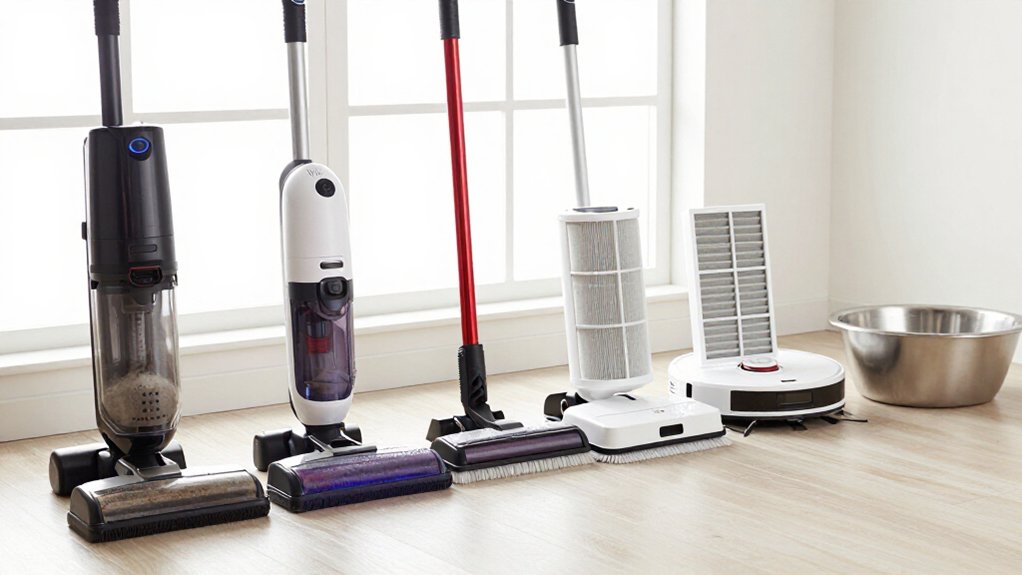
Check your vacuum’s filter label first: it’ll identify washable foam, washable HEPA, or disposable paper and HEPA media.
Rinse foam pre-filters every 1–2 months, or monthly with pets or frequent use.
Wash washable HEPA filters every 1–3 months, using lukewarm water, then air-dry them for at least 24 hours.
Don’t wash non-washable HEPA or paper filters; replace them about every 3–6 months, or as directed.
Keep checking for buildup and weakening suction; more safeguards follow.
Foam, HEPA, Paper Intervals
Typically, clean foam pre-filters every 1–2 months by rinsing them and letting them air-dry completely. If you vacuum frequently or manage pet hair, shorten that interval to monthly. For washable HEPA filters, rinse them every 1–3 months, then allow at least 24 hours of drying before reinstallation.
Moisture can damage the motor and encourage contamination.
Treat non-washable HEPA and paper or pleated cartridge filters differently: don’t wash them. Tap loose dust away with a brush or low-pressure airflow, and replace them when clogged. Replacement falls every 6–12 months for non-washable HEPA filters and every 3–6 months for paper cartridges, depending on use. If suction weakens, act immediately; a loaded filter can reduce pickup by 30–50 percent. Intervals protect airflow, motor performance, and air quality.
Check the Filter Label
Before cleaning a vacuum filter, check its label to confirm whether it’s washable, disposable, or HEPA-rated. Read the remaining instructions before you remove debris or apply water. The label identifies the filter material, compatible model, part number, installation direction, and manufacturer guidance. If it says “do not wash,” replace the filter; never rinse a non-washable HEPA or paper element. If it permits rinsing, use lukewarm water only, avoid detergent and heat, and air-dry for at least 24 hours.
- Check the type. Find foam, carbon, paper, electrostatic, or HEPA wording.
- Verify washability. Look for “washable,” “rinseable,” or “non-washable.”
- Confirm replacement rules. Follow stated months, uses, or end-of-life signs.
- Match the part. Compare the model number before ordering an OEM replacement for safety.
Use a Cleaning-Date Reminder
Set a filter-check reminder every 2–4 weeks if you have pets, children, allergies, or frequent vacuuming, since these conditions load filters faster. Use your calendar to schedule washable foam, felt, or cloth filter cleaning every 1–2 months, sooner if suction drops.
Add a washable HEPA-style reminder every 1–3 months based on use. For non-washable paper, pleated, or true HEPA filters, schedule replacement every 3–6 months rather than washing them. After each service, record its date digitally, and you’ll compare suction performance over time. Adjust the interval proactively when debris builds up quickly or airflow weakens.
| Filter type | Reminder |
|---|---|
| Foam/felt/cloth | Clean every 1–2 months |
| Washable HEPA-style | Clean every 1–3 months |
| Non-washable filter | Replace every 3–6 months |
| Any filter | Record each date and suction performance trends monthly |
Remove Filter Before Rinsing
Unplug your vacuum, locate the filter, and check the manufacturer’s instructions before handling it. Remove the filter carefully from its housing, confirming whether it’s washable or dry-clean only.
Prepare washable filters for lukewarm rinsing, but clean non-washable filters with a soft brush or gentle compressed air.
Unplug The Vacuum
Power the vacuum off, unplug it, and remove the filter before you rinse or clean it. This step cuts shock risk and keeps loosened dirt from entering the motor. Before any maintenance, disconnect the plug from the outlet; don’t rely on the power switch alone. For cordless models, remove the battery when the manual permits it and wait until all moving parts stop.
For a washable foam or felt filter, rinse it gently with lukewarm water only after removal, then air-dry it completely. For foam, drying takes at least 24 hours. Don’t reinstall a damp filter; moisture promotes mold, damages motor, and reduces airflow. If HEPA, rinse only when manual labels it washable; otherwise brush it dry. Never rinse paper or pleated cartridge filters.
Locate The Filter
Once the vacuum is disconnected and its moving parts have stopped, empty the dustbin or remove the bag before locating the filter. Check the dustbin housing, usually near the motor, for the filter slot. Identify the filter by its material or label: foam, HEPA, or paper. Remove it carefully from its slot, protecting nearby seals and electronics from damage.
Hold it over a trash can and tap it gently to dislodge loose debris before cleaning. Remove the filter completely before rinsing. Don’t rinse it while it’s seated, because moisture can reach the motor compartment. Confirm that the filter type permits rinsing before introducing water.
Set it on a clean surface and stop if you find tears, holes, or heavy residue that could release dust.
Check Manufacturer Instructions
Before you rinse the filter, check the owner’s manual or the filter label to confirm that it’s washable. Manufacturers classify filters differently, and many true HEPA or pleated paper cartridges can’t tolerate water. Washing them may damage the media, reduce filtration efficiency, and void warranty coverage. If the instructions don’t explicitly permit rinsing, treat the filter as dry-clean-only.
Use the approved method instead, such as tapping, brushing, or replacing the cartridge.
When rinsing is allowed, unplug the vacuum and remove the filter from its housing before applying water to prevent dirt entering the machine and protect the motor. Rinse gently with lukewarm water, then follow the specified drying time. Let the filter air-dry completely—often at least 24 hours—before reinstalling it. Don’t operate the vacuum with a damp filter.
Remove Filter Carefully
With the filter type confirmed, unplug the vacuum and remove the filter from its housing before rinsing or dry-cleaning it. This prevents dust from entering the vacuum or your room unnecessarily. Open the filter compartment according to the vacuum’s design, then note the filter’s position, orientation, and sealing surfaces before lifting it out.
Use both hands when needed, and avoid twisting, squeezing, or scraping the media. Pleated HEPA, paper, and cartridge filters can tear or deform, reducing capture efficiency. Washable foam, felt, and cloth filters also need gentle handling during removal.
Inspect the filter and housing for cracks, gaps, or excessive residue. You’ll preserve the gasket and retaining clips. After cleaning, reinstall the filter in its original orientation, ensuring it seats securely and seals fully.
Prepare For Rinsing
Unplug the vacuum, then remove the filter according to your owner’s manual before bringing it near water. Confirm whether the filter is labeled washable or rinsable before rinsing. Foam, felt, and some HEPA filters may tolerate water, but pleated cartridges often require dry cleaning only.
If the label is unclear, don’t rinse it. Tap the filter gently outdoors or use a soft brush, following the manual’s limits to avoid damaging filter media. For a washable filter, rinse it under lukewarm water until runoff looks clear, then place it in a well-ventilated drying area.
Allow air-drying, typically at least 24 hours, before reinstalling. Never return a damp filter to the vacuum: moisture can promote mold or reach the motor and cause damage.
Pet Hair and Allergy Needs
If you have pets, check and clean washable filters every 1–2 months, or every 2–4 weeks in high-shedding homes, to prevent hair buildup and suction loss.
For allergy control, keep HEPA filters on schedule and rinse foam pre-filters every 1–2 months. In high-risk homes, replace non-washable filters every 3–6 months, or sooner when airflow drops, and let washed filters dry for at least 24 hours.
Pet Hair Buildup
If your manual permits washing, clean a washable HEPA-style filter every 1–3 months, using the shorter interval for dander loads. Don’t wash pleated paper or true HEPA filters.
Tap, brush, or use low-pressure air only when approved, then replace them according to the manufacturer’s schedule, often every 3–6 months for pre-filters. Service sooner.
Allergy-Focused Cleaning
For allergy-focused cleaning, check washable filters every 1–3 months, or every 2–4 weeks in homes with pets or children. Foam pre-filters that catch hair and larger debris usually need rinsing every 1–2 months. Rinse them with lukewarm water, then air-dry completely for at least 24 hours before reinstalling.
If you notice reduced suction or gray buildup, service the filter sooner; clogged media can force the motor to work harder and recirculate allergens.
Don’t wash non-washable HEPA or pleated paper filters. Brush or dry-clean them only when the manufacturer permits it, and replace them as directed. Dirty filters can reduce cleaning efficiency by roughly 30–50%, weakening pickup and exhaust filtration. Mark each service date on your calendar to prevent missed maintenance and preserve cleaner air.
High-Risk Home Schedules
Pet hair and dander load filters faster, so you’ll want to inspect your vacuum every 2–4 weeks for gray buildup, reduced suction, or recirculating debris.
In a pet home, clean foam and washable pre-filters every 1–2 months, or sooner when airflow drops. For allergy control, rinse a washable HEPA filter every 1–3 months and air-dry it completely for at least 24 hours before reinstalling to prevent mold and filtration loss.
If your vacuum uses a non-washable HEPA, replace it about every 3–6 months, or when weak airflow or clogged pleats indicate earlier service. A clogged filter can cut performance by 30–50%, strain the motor, and release more allergens. Schedule checks sooner after heavy shedding, and follow your model’s instructions for filter type and disposal.
Steady Suction After Cleaning
Usually, a clean, fully dry filter helps your vacuum maintain steady suction by keeping airflow open. Washable foam, felt, or HEPA-style filters need rinsing about every 1–3 months; in pet- or child-heavy homes, clean them every 2–4 weeks. Let each filter air-dry completely, often for at least 24 hours, before reinstalling it.
For non-washable HEPA or pleated-paper filters, tap or brush away loose debris; don’t rinse them. Replace pre-filters roughly every 3–6 months and main HEPA filters every 6–12 months, or sooner if suction falls. After servicing, seat the filter firmly and verify its gasket forms a tight seal.
A clogged or damp filter restricts airflow, makes the motor work harder, and can reduce suction by 30–50%. Follow your model’s manual for exact intervals.
Check Cracks, Odors, Heat
When you inspect the filter, look for cracks, tears, or thin spots that could let dust bypass filtration and reduce suction.
Replace a damaged filter promptly; patching won’t restore filtration. If you notice musty or burned odors, check for moisture or debris. A musty smell can indicate contamination, while a burned odor can signal restricted airflow and motor strain.
Clean a washable filter, and replace it if the odor persists. Weak suction, overheating, or shutdown suggests that a clogged filter is making the motor work harder. Stop the vacuum, unplug it, and inspect the filter. Inspect filters every two to four weeks in pet or child households.
Clean washable filters monthly to quarterly, and replace non-washable filters within six months, or sooner when symptoms appear.
Using Hot Water Incorrectly
Why risk damaging the filter by using hot water? Heat can warp delicate fibers, reducing filtration and letting finer dust pass. Protect the filter by identifying its construction before rinsing.
- Use only cold or lukewarm water on filters explicitly labeled washable, including foam, felt, and high-performance pre-filters.
- Rinse gently under a light stream; don’t scrub, twist, or use detergents unless your manual approves them.
- Treat paper, pleated cartridges, and many true HEPA filters as non-washable. Tap or brush them softly instead.
- If washing is permitted, air-dry the filter completely, usually at least 24 hours, before reinstalling it.
Never guess. If the manual doesn’t clearly permit water, use dry cleaning only. A damp filter can encourage mold, restrict suction, and damage or overheat the motor.
Match Schedule to Floor Type
Match your filter-cleaning schedule to the debris your floors produce: carpet-heavy homes generally need washable pre-filters checked every 2–4 weeks, while hard-floor homes with light debris can often wait 1–3 months.
If you vacuum pet areas or litter-track zones, clean foam filters every 1–2 months. For mixed flooring, use the carpet schedule as your baseline: check every 2–4 weeks during carpet season, then extend toward 1–3 months for hard-floor-only cleaning if suction stays strong.
Treat HEPA filters separately. Unless labeled washable, brush or dry-clean them, and inspect them every 3–6 months. Act sooner if suction drops, odors persist, or dust remains after cleaning. Tap filters, rinse washable media with lukewarm water, and air-dry completely for at least 24 hours. Always follow your vacuum’s manual.
Conclusion
To keep suction steady, follow your vacuum’s filter label first, then adjust cleaning intervals for pets, allergies, and floor debris. Remove each filter before rinsing, use cool water only when the manufacturer permits it, and let it dry completely. Don’t reuse cracked, odorous, overheated, or permanently clogged filters; replace them.
Set a calendar reminder, inspect filters routinely, and match the schedule to your vacuum type. Preventive care protects airflow, performance, and overall indoor air quality.