How to Choose Robot Mop Pads by Fabric and Weave
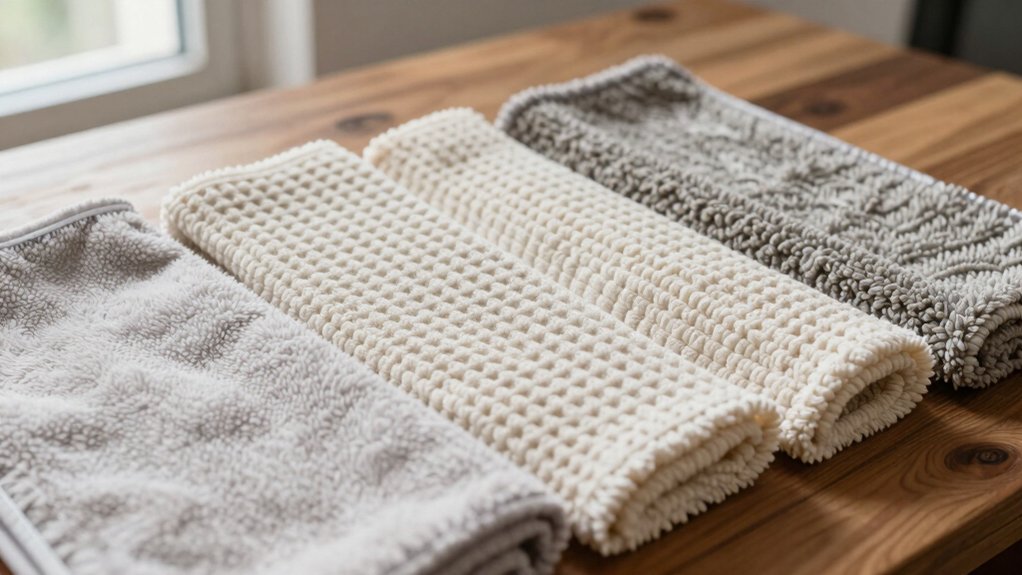
Choose robot mop pads with a high-density (≥300 g/m²) long-staple microfiber blend and a tight, moderate-pile weave. This design allows them to lift liquids and debris via capillary action without dripping or streaking. Look for colorfast, dye-stable fibers, reinforced sealed edges, and secure mounting (Velcro or magnets) to prevent fraying and detachment through 100+ washes.
Test by feel, perform a 60-second drip check, and ensure proper fit. Keep going, and you’ll find specific pad types and compatibility tips.
Quick Overview
- Choose high-density microfiber (≥300 g/m²) for better water capacity, dirt lift, and durability.
- Prefer long-staple polyester/polyamide blends (80/20) to maintain capillary channels and reduce shedding.
- Select moderate pile height with a tight weave to balance debris pickup without soggy saturation or dripping.
- Look for reinforced, ultrasonic-sealed edges and secure mounting (Velcro/magnets) to prevent fraying and detachment.
- Match pad type and cutouts to your robot system (flat, dual-spin, roller, self-cleaning) for even water distribution and performance.
Pick the Right Robot Mop Pad for Your Floor Type
How should you match a robot mop pad to your floor? Start by identifying surface type and traffic. For sealed hardwood, low-residue pads with high-density microfiber (≥300 g/m²) and long-staple fibers lift fine dust without excess wetting.
For tile and resilient floors, use 80% polyester / 20% polyamide microfiber blends to combine wet strength with quick-drying performance; this limits pad saturation and streaking. Verify pad attachment and edge sealing: ultrasonic seals plus Velcro or magnetic mounts prevent fraying and keep pads aligned on curved or irregular surfaces.
Choose colorfast, dye-stable materials rated for 100+ machine washes to avoid dye transfer and grit buildup. Confirm precise pad cut sizes matching the robot’s plate to ensure even water distribution. Mismatched pads cause puddles or dry patches at edges.
Inspect for long-staple construction and reinforced perimeters before purchase to optimize dirt lifting, absorption, and consistent contact across your specific floor type.
Why Microfiber Blend and Weave Density Matter for Cleaning
Why does the microfiber blend and weave density matter? You choose a microfiber blend and weave density to control soil removal, liquid handling, and durability. An 80/20 polyester/polyamide mix balances softness, tensile strength, and rapid drying; this allows pads to withstand repeated cycles without losing performance. Weave density at or above 300 g/m² with long-staple fibers increases contact points and creates micro-pockets that lift and trap particulates while boosting absorption. This reduces pass counts for a clean surface.
Optimized weave density also governs water release: even distribution avoids dripping or dry streaks by metering moisture through capillary action rather than pooling. Construction details, such as ultrasonic edge sealing and secure mounting (Velcro or magnets), prevent fraying and detachment under torque; this preserves fiber alignment and wet strength. High-quality pads retain colorfastness and structural integrity after 100+ machine washes. This ensures you get consistent cleaning performance over many cycles rather than rapid degradation.
GSM, Pile Height, and Fiber Mix: What They Predict About Absorbency
Wondering what pad specs actually predict absorbency? You should read gsm density first: pads ≥300 g/m² trap and hold more water, improving lift and soil encapsulation. Pile height and pile structure control flow. Structured, moderate piles pick debris without creating soggy saturation; loose, long piles reduce effective absorption.
Fiber mix matters: ~80% polyester/20% polyamide gives wet strength, quick drying, and durability through 100+ wash cycles. Long-staple fibers cut shedding and preserve capillary channels that carry fluid into the pad. A tighter weave (higher thread count) reduces seepage, yielding consistent release and less dripping during use.
| Spec | Practical effect |
|---|---|
| gsm density ≥300 | Higher water capacity, better dirt lift |
| Pile height: moderate | Optimized pickup without overflow |
| Fiber mix 80/20 | Balance of strength and drying |
| Long-staple + tight weave | Low shedding, consistent absorption |
60‑Second Spot Tests: Feel, Drip, and Velcro Fit
Having checked GSM, pile height and fiber mix for absorbency, you now need hands-on spot tests to confirm performance. For the feel test, press the pad; it should compress about 2–3 cm, indicating a dense microfiber weave and sufficient cushioning for debris pickup. Note uniform resistance across the surface. Soft edges or thin spots reveal trimming or poor weave.
For the drip test, saturate the pad, perform a quick squeeze, then observe release. A well-performing pad disperses water evenly with minimal dripping, showing balanced absorbency and moisture control. Large beads or prolonged dripping signal channeling or inadequate capillarity.
Assess Velcro fit by mounting the pad and applying several firm tugs in different directions. The pad must remain attached without edge lift or lateral shift.
Combine these spot checks with a sizing check and surface inspection: edges should align to model cutouts, and light rubbing mustn’t produce loose fibers or pilling. These tests verify real-world function beyond lab specs.
Construction Details That Prevent Pilling, Fraying, and Streaks
How do top-quality mop pads avoid pilling, fraying, and streaking? You’ll look for a high-density microfiber blend (80% polyester/20% polyamide) at ≥300 g/m². That composition and weight give strong absorption and dirt-lifting while minimizing fiber breakage, which is key for pilling prevention.
Edge sealing is critical: ultrasonic welding eliminates fringe fraying and stops threads from snagging on thresholds. Select fabrics with proven wet strength and colorfastness so the pad endures 100+ machine washes without shedding fibers or degrading pile uniformity.
A tight, uniform knit with minimal pile variation ensures even water release and prevents dry patches or dripping that cause streaks. Reinforced perimeter stitching plus secure attachment (Velcro or magnets) resists detachment and mechanical stress that leads to fraying.
When you evaluate pads, prioritize these construction details: material ratio, fabric weight, ultrasonic edge sealing, uniform knit, and robust attachment to ensure long-term, streak-free performance and reliable pilling prevention.
Match Pad Type to Mop System: Flat, Dual‑Spin, Roller, and Self‑Cleaning
Which pad type matches your cleaning needs depends on traffic, spill frequency, and desired maintenance effort. For light traffic and budget robots, flat pads, simple microfiber sheets attached to a plate, are efficient, low-cost, and easy to replace. They require high-density microfiber (≥300 g/m²) and reinforced edges to resist pilling; however, they saturate quickly and can’t handle large wet spills.
Dual spin systems use rotating pads to apply shear and active scrubbing. Choose dense, tightly woven microfiber with strong stitching for improved dried-stain removal and uniform coverage; though saturation remains an issue.
Roller systems employ a sprayed roller and extraction, giving superior liquid handling and consistently fresher surfaces. Select wrapped microfiber or low-pile weaves engineered for rapid wicking and mechanical durability.
Self-cleaning docks or real-time pad washing preserve pad performance across long runs. Prioritize pads designed for repeated machine rinsing and sealed edges. Match fabric density and construction to the mechanical action of the mop for predictable, durable results.
Frequently Asked Questions
Can I Use Pads From Different Brands Interchangeably on My Robot Mop?
Yes, you can often use pads from different brands interchangeably; however, check inter-brand compatibility first. You’ll need to confirm attachment method, pad dimensions, and mounting fit.
Fabric weave differences affect absorbency, scrubbing, and drying time. Therefore, choose a weave suited to your surface and cleaning needs. Using mismatched pads may reduce performance or cause wear on the mop head. Test one pad type before regular use.
How Often Should I Replace Disposable Versus Reusable Mop Pads?
Disposable pads: replace after one use or when visibly soiled. Heavy grime may need replacing mid-clean.
Reusable pads: wash after each use. Replace every 3–6 months with regular use or sooner if fibers wear. Monitor absorbency and scrubbing performance.
Two word discussion idea one: durability metrics. Two word discussion idea two: lifecycle testing.
You’ll prolong pad life by following manufacturer wash instructions and avoiding bleach or high heat.
Are Scented or Antibacterial Treatments on Pads Safe for Pets?
You shouldn’t assume scented safety. Fragrance chemicals can irritate pets’ respiratory systems and skin. Evaluate ingredient lists and avoid pads with phthalates, essential oil concentrates, or strong VOC emissions.
Antibacterial impact depends on the agent: quaternary ammonium compounds and triclosan pose higher risk, while safer alternatives (e.g., diluted hydrogen peroxide) degrade faster. Rinse cleanable pads thoroughly; ventilate during use. Consult your veterinarian for specific pet sensitivities.
Can High-Gsm Pads Cause Slipping on Sealed Hardwood?
Yes, high gsm pads can increase slipping risk on sealed hardwood if they hold excess moisture or reduce traction. You should choose high gsm only when pads are well-wrung and compatible with low-water modes.
Inspect pad backing and robot weight distribution: slick backings plus heavy robots worsen slip. Test in an inconspicuous area, monitor drying time, and prefer microfibers with textured weaves that channel liquid to minimize surface wetness and slippage.
Do Heated Docking Stations Damage Pad Fibers Over Time?
Yes, heated docking can degrade pad fibers over time. You’ll see gradual weakening: heat breaks down synthetic polymer bonds, reduces microfiber loft, and can alter weave tension.
Repeated cycles accelerate fiber fraying, reduced absorbency, and shorter lifespan. To minimize damage, use manufacturer-recommended temperature settings, avoid excessive docking duration, rotate pads regularly, and air-dry pads when possible.
Monitor pad performance and replace when mechanical cleaning efficiency declines.
Conclusion
Choose pads by matching fabric and weave to your floor and mop system: dense, low‑pile microfiber blends for sealed hard floors; higher GSM, looped or terry blends where absorbency or agitation’s needed; short‑pile, nonwoven mixes for rollers and self‑cleaning hubs.
Check GSM, pile height, fiber mix, and weave density in a 60‑second spot test for feel, drip, and Velcro fit. Prioritize tight construction and reinforced edges to avoid pilling, fraying, and streaking.
Related reading: Scrubbing Mop Pads — a closer look at this topic.