Hardwood Floor Cleaner Ingredient Compatibility Reference
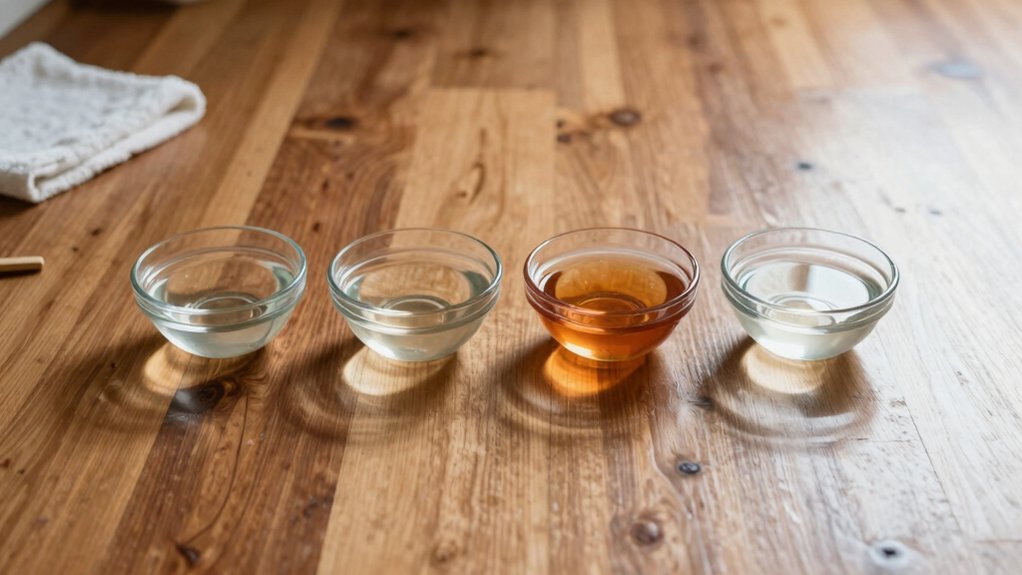
You should use pH‑neutral, residue‑free cleaners labeled safe for your finish and avoid acids, strong alkalis, bleach, acetone, glycols, and aromatic solvents that can dull or strip polyurethane, wax, or oil. Favor mild, low‑foaming nonionic or alkyl sulfate surfactants, builders/chelants to control hard water, and low‑VOC or plant‑based formulas with clear preservative/fragrance listings.
Don’t use vinegar or steam mops unless the manufacturer OKs them. Follow quick‑dry procedures; more specifics follow.
Quick Overview
- Use pH-neutral, finish-compatible cleaners labeled safe for polyurethane, wax, or oil finishes to prevent finish degradation.
- Avoid vinegar, bleach, strong solvents (acetone, aromatic hydrocarbons), and steam mops unless manufacturer approval is confirmed.
- Prefer mild, low-foaming surfactants and controlled dilution to emulsify soils without leaving residue or dulling sheen.
- Account for water hardness. Include builders/chelants (EDTA, citric acid) or pre-soften water to prevent mineral deposits and reduced performance.
- Choose transparent, low-VOC, plant-based formulas with third-party verification and accessible ingredient documentation for remediation.
Quick Answer: Safe Cleaners and What to Avoid
Which cleaners will actually protect your hardwood rather than degrade it? For a quick answer, choose pH-neutral, finishes-compatible formulations labeled safe for polyurethane, wax, or oil finishes. These prioritize finish safety by avoiding acids and alkalies. Use products free of harsh solvents, bleach, and ammonia; those agents strip or dull protective layers.
Prefer residue-free, quick-drying solutions that leave no film or streaks on unwaxed or unoiled floors. Lingering residues attract abrasion and compromise sheen. Consider plant-based or low-VOC options that carry independent safety verification (Safer Choice, EWG-listed ingredients) to reduce chemical exposure without sacrificing performance.
Explicitly avoid vinegar, unverified cleaners, and steam mops unless manufacturer guidance permits them for your finish type. When in doubt, test a small, inconspicuous area and confirm manufacturer compatibility. Document the finish type before purchasing cleaners to ensure long-term finish safety and predictable maintenance outcomes.
How Surfactants Clean Hardwood : Which Types Are Safe
How do surfactants actually make hardwood cleaning effective? You rely on surfactants to lower water surface tension so solutions spread uniformly and penetrate microscopic surface irregularities. That wetting action, paired with emulsification, suspends oils and particulate soils so you can lift them without aggressive scrubbing.
Common classes: alkyl benzene sulfonates, alkyl sulfates, and ethoxylated alcohols provide different balances of foaming, detergency, and rinseability; you select mild, low-foaming variants to prioritize surfactant safety and minimize interaction with finishes. For hardwood, formulations target low-residue chemistry and neutral-to-mild pH so films don’t form.
Operationally, you pair the right surfactant with controlled dilution and proper rinse or mop drying to achieve residue reduction. In practice, choose ethoxylated alcohols or designated low-residue alkyl sulfates when compatibility data confirms no dulling.
Monitor finish appearance after test patches. Surfactant choice plus application method determines effective, safe cleaning without compromising the finish.
Solvents to Avoid and Safe Solvent Limits by Finish
Want to avoid costly finish damage? You must treat solvent safety as a controlled variable: avoid harsh solvents and bleach that strip coatings or leave residues. For polyurethane, wax, and oil finishes, use only cleaners explicitly labeled finish-compatible and non-abrasive. Unknown solvents risk dulling, clouding, or seal degradation.
Minimize or eliminate acetone, strong glycols, and aggressive aromatic hydrocarbons; these are primary offenders that attack resins and adhesives over time. Favor low-VOC, plant-based, or water- and solvent-blend formulas to reduce odor, accelerate safe drying, and limit resin softening. Always confirm the solvent component appears in a manufacturer-approved safe category and follow their concentration limits: dilution matters as much as chemical identity.
Maintain a methodical protocol: check the label, verify compatibility with your specific finish, perform a discrete patch test, and document results. This approach preserves appearance and long-term performance while controlling solvent exposure. It also ensures finish compatibility through informed selection and strict adherence to guidelines.
pH, Water Hardness, Builders, and Chelants: What Matters
Why does pH and water chemistry matter when you clean hardwood? You must control pH impact because acidic or alkaline cleaners can degrade polyurethane finishes and attack wood fibers. Aim for pH-neutral formulations to minimize chemical stress on finishes and maintain dimensional stability of the floor.
You also must account for water hardness: high mineral content reduces surfactant efficiency and promotes deposits. Builders soften water and sequester hardness ions, restoring surfactant performance and reducing visible residue. Chelating agents (EDTA, citric acid) bind metal ions that would otherwise interfere with cleaning chemistry under challenging water conditions.
Balance among pH, water hardness, builders, and chelants determines cleaning efficacy and residue formation. Choose cleaners formulated with appropriate builders and chelants to ensure consistent performance across varying water hardness levels without harming finishes.
Test on an inconspicuous area and follow manufacturer instructions to verify compatibility with your specific hardwood finish and local water chemistry.
Fragrances, Preservatives, and Stabilizers: Residue and Health Trade‑Offs
When you choose a hardwood floor cleaner, consider that fragrances, preservatives, and stabilizers each trade off performance, residue potential, and health impact. You’ll evaluate fragrances for odor masking and consumer appeal; however, synthetic components or essential oils differ in fragrance allergenicity. Follow California Right to Know and EU lists to identify listed allergens. You should assess preservative safety: common agents (MIT, BIT) extend shelf life but carry documented irritation and sensitization risks. Therefore, opt for formulations with transparent preservative declarations and lower-risk alternatives when possible.
You’ll also review stabilizers (xanthan gum, cellulose derivatives) that control rheology. They reduce spray drift, but they can leave thin residues or alter sheen if overdosed. Chelants (EDTA, citric acid) often accompany these ingredients to maintain cleaning efficacy in hard water. In practice, balance scent intensity, preservative profile, and stabilizer concentration to minimize residue and health risk while preserving performance. Demand label transparency and third-party data for informed selection.
Checklist: Choose a Cleaner for Polyurethane, Waxed, or Oiled Floors
Which cleaner you pick depends on the finish type and the cleaner’s chemistry: for polyurethane, waxed, or oiled floors, choose a product that’s explicitly labeled for that finish, pH-neutral, water-based, low-VOC, and formulated to leave no film. You’ll avoid acidic agents (vinegar, lemon) and harsh solvents that dull or degrade finishes.
Follow manufacturer guidelines and prefer non-toxic, residue-free, quick-drying formulas to minimize moisture exposure.
| Parameter | Target |
|---|---|
| Finish label | Polyurethane / Wax / Oiled |
| pH | Neutral (≈7) |
| Solvent class | Water-based, minimal harsh solvents |
| Residue | No film; no-rinse, quick-dry |
Test in an inconspicuous area before full use. Document results and proceed methodically: apply minimal product, agitate lightly, and dry immediately. Don’t confuse this checklist with irrelevant topic content or go off topic into troubleshooting; this step is selection and prevention, not repair.
Troubleshooting: Common Problems and Quick Fixes
Now that you’ve selected a cleaner matched to your floor finish and verified label, pH, and residue characteristics, you’ll need a practical set of fixes for common problems that can still occur during routine use.
If streaking appears, verify dilution and residue potential of surfactants and builders. Switch to the Bruce formulas that list ingredients by weight (WS109/WS109R or BMSFC101/102) to compare solvent volatility and chelant content.
For dulling or film, strip with manufacturer-approved product, rinse with neutral pH water, and apply minimal cleaner next time. Check colorant disclosures to avoid dyes that leave haze.
If allergic reactions or odor complaints arise, choose fragrance-free or low-fragrance options. Consult EU fragrance allergen considerations and local OEHHA guidance for label compliance.
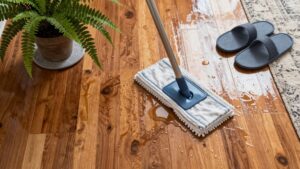
For raised grain from excess water or steam use, dry immediately and avoid steam mops on unsuitable finishes. Keep a regulatory checklist (California Right to Know, ingredient links) with product data for rapid troubleshooting and remediation.
Frequently Asked Questions
Can Homemade Vinegar Solutions Damage Synthetic Finishes Long-Term?
Yes, you can damage synthetic finishes long-term if you use vinegar solutions improperly. You’ll lower pH and gradually dull or etch some synthetic finishes. Dilution, contact time, and frequency matter.
Don’t mix essential oils into acidic cleaners because residues can soften or interact with hardwood finishes. Instead, test a small area, use mild neutral cleaners, rinse thoroughly, and avoid repeated vinegar use on sensitive synthetic finishes to preserve longevity.
Can Essential Oils Strip or Discolor Hardwood Finishes?
Yes, concentrated essential oils can strip or discolor hardwood finishes if used undiluted or left to sit. You should test oil compatibility on an inconspicuous area first.
Dilute oils in a neutral carrier and apply briefly; then wipe dry. Avoid solvent-heavy or citrus-derived oils on polyurethane or shellac finishes.
For routine cleaning, use manufacturer-approved products. Reserve essential oil use for scenting after confirming finish resistance and performing controlled spot tests.
How Often Should I Deep-Clean Versus Routine Mopping?
You should deep-clean about every 3–6 months and mop routinely weekly, adjusting by traffic and wear. Establish a deep clean routine that includes inspection, targeted stain treatment, and gentle machine or manual scrubbing with manufacturer-approved products.
Use routine mopping for daily soil control and quick drying to prevent damage. Track maintenance frequency with a simple log and increase deep cleaning if finish dulls, squeaks appear, or dirt buildup exceeds normal levels.
Is Distilled Water Necessary for Every Cleaning Session?
No, you don’t need distilled water for every cleaning session. Use distilled water selectively when mixing concentrated solutions; this helps avoid minerals that can react with cleaners or leave residues. For routine mopping, tap water is usually fine.
For sensitive finishes or precise dilution ratios tied to cleaning frequency, distilled water prevents buildup and ensures consistent results. Track outcomes and switch to distilled water when you observe streaking, spotting, or residue accumulation.
Can Steam Mopping Be Safely Used on Sealed Hardwood?
Yes, you can use steam mopping on sealed hardwood, but you should proceed cautiously. You’ll control temperature, limit dwell time, and use low-steam settings to avoid moisture penetration.
Maintain a fast pass speed, test in an inconspicuous area, and ensure sealant integrity before regular use. Over time, improper steam mopping can degrade finishes; it can also cause cupping or open seams. Monitor surfaces for long term effects and adjust methods accordingly.
Conclusion
You now know which ingredients help and which harm hardwood finishes. So pick cleaners by matching surfactant type, solvent limits, and pH to your floor’s finish. Stick to nonionic or mild amphoteric surfactants. Avoid aggressive solvents or keep them under specified ppm for oil- or wax-finished boards.
Control water hardness and chelants. Skip unnecessary fragrances and preservatives when possible. Use the checklist to verify compatibility before any full-floor application.
You may also like: Cleaning Solution Types Reference Guide — a related guide worth bookmarking.