
Wet/Dry Vacuum Buying Guide: 8 Specs That Separate a Workhorse From a Dud
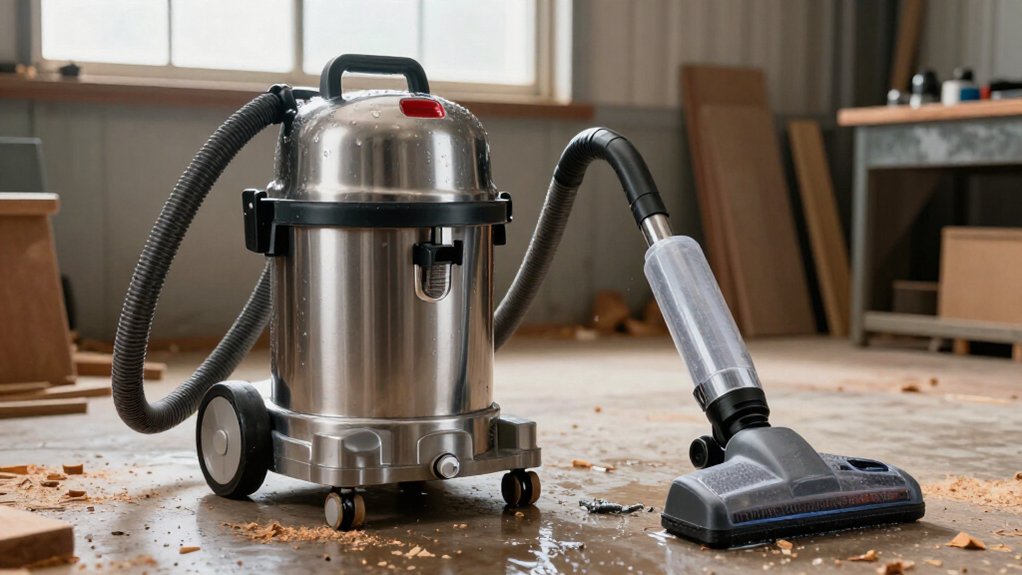
Choose a wet/dry vacuum by comparing CFM, water lift, and tank capacity—not peak horsepower alone. Favor CFM for dry debris and strong water lift for liquids.
Check whether it uses a foam filter for wet pickup and sealed cartridge or HEPA filtration for dust.
A 2½-inch hose usually resists clogs. Also inspect hose length, noise, storage, outlet seals, latches, automatic shutoff, warranty, and replacement parts.
These checks help you spot a workhorse; more details follow.
CFM, Water Lift, Capacity
When comparing wet/dry vacs, look past peak horsepower and check CFM, water lift, and capacity. CFM tells you how much air moves through the nozzle each minute, so higher airflow generally carries dust and debris through the hose. Water lift measures suction: higher inches indicate more muscle for heavier or thicker material. Compare numbers, not motor labels alone.
A 6.5-peak-HP Craftsman can list 190 CFM, while a 6.0-HP Vacmaster Beast lists 102 CFM and 82 inches of water lift.
Capacity determines how long you’ll work before the float shuts suction. Treat advertised gallons cautiously; manufacturers may overstate liquid capacity by roughly eight gallons. Check tested capacity, then account for space consumed by the filter and float. Choose enough tank volume for your workload without sacrificing maneuverability.
Assess Wet Versus Dry Cleanup
Start by treating a wet/dry vac as two machines sharing one tank: wet pickup needs a proper foam filter and float shutoff, while dry pickup needs sealed filtration and strong airflow.
Before you buy, match each mode to the mess you expect. For water, prioritize water lift, which shows how forcefully the vac moves liquid and sludge. A model such as the Vacmaster Beast, with 82-inch water lift, gives you more muscle for heavy wet debris.
For dry cleanup, use CFM as your throughput measure: the Craftsman 16-gallon model reaches 190 CFM, helping dust and chips travel through the hose instead of settling or clogging. Finally, don’t trust tank claims alone; check tested collection limits and choose capacity for expected spill or dust volume.
Filter Type and Lifespan
Your wet/dry vac’s filter determines whether it maintains suction, protects its motor, and keeps captured dust out of the air. You’ll use foam for wet pickup; choose a cartridge or paper bag for dry debris. For fine or hazardous dust, select a sealed, certified HEPA system: H13 captures ≥99.95% at 0.3 µm; H14 captures ≥99.995%. Verify the part number, dimensions, gasket, and cage fit.
| Filter | Typical lifespan |
|---|---|
| Paper bag | 1–6 months; weeks with fine dust |
| Pleated cartridge | 6 months–2 years |
| Foam | Months–years; replace sooner after oil exposure |
| HEPA | 1–5 years with prefiltration |
Remove paper and fine cartridges before wet pickup. Rinse washable filters as directed, dry them, and replace torn or clogged media.
A blocked filter raises motor heat; maintenance preserves suction and service life.
Hose Diameter and Length
Choose a wider hose—typically 2½ inches—for faster debris pickup and fewer clogs, while a 1⅞-inch hose offers a practical middle ground. Match hose length to your cleaning path because extra reach can reduce nozzle suction, and keep the hose unkinked for steady airflow.
Check swivel fittings and tool adapters for smooth handling and compatibility, and move the vacuum by its handle instead of dragging it by the hose.
Diameter And Suction Power
A 2½-inch hose moves bulky debris faster and clogs less often than a narrower 1¼-inch hose, making it the better choice for heavy shop cleanup. Match diameter to the vacuum’s airflow and your debris: a small hose can bottleneck flow even when the motor carries a high rating. Compare CFM and water lift, not peak horsepower alone.
For example, Craftsman’s 16-gallon model delivers 190 CFM, helping it pull material efficiently. When you need stronger pickup force, check water lift: Vacmaster Beast’s five-gallon unit produces 82 inches through its 1 7/8-inch hose. Use the widest compatible hose and nozzle for chips, leaves, and grit; switch to a smaller setup only for tight attachments. That pairing preserves airflow and reduces clogging, giving you suction where the work demands it.
Hose Length And Reach
When the vacuum has to stay parked, hose length determines how much floor you can cover without dragging the canister. A longer hose extends your working range, but it also adds airflow resistance, especially with a narrow hose. Check the full reach against the jobs you tackle: long runs suit cars, stairs, and large floors, while shorter hoses can preserve stronger nozzle performance.
For bulky debris, choose a wider diameter. The Craftsman 16-gallon’s 2½-inch hose should move material faster and clog less than the Vacmaster Beast’s 1⅞-inch hose. Even though the Craftsman claims 190 CFM, a restrictive setup can reduce practical suction at the nozzle. A larger hose generally holds airflow better over extended distances. Prefer kink-resistant construction and dual-swivel fittings.
Flexibility And Maneuverability
Although a 2½-inch hose moves bulky debris faster and clogs less than a 1¼-inch hose, diameter alone doesn’t determine usability. A low-kink hose with dual-swivel ends flexes as you work, tracks around obstacles, and reduces binding at corners. That movement matters when you’re cleaning behind benches, across vehicle interiors, or around framing. Keep the larger diameter when bulky debris is common; don’t sacrifice flow merely to gain flexibility.
Length determines reach. Choose enough hose to cover your work area without dragging the vacuum by its hose; that strain can crack or tear it and eventually reduce suction. For tight spaces, prioritize a flexible setup that preserves hose diameter. Measure corners, aisles, and vehicle interiors first, then buy sufficient length to work without repositioning constantly.
Fittings And Compatibility
Hose diameter directly affects debris flow: a 2½-inch hose, such as the one on the Craftsman 16-gallon, typically clears bulky waste faster and clogs less than the Vacmaster Beast’s 1⅞-inch hose. Because CFM depends on unrestricted airflow, match the hose and nozzle to the vacuum’s intended path; an oversized or mismatched fitting can undermine suction.
Choose enough length to reach your work area without constant bending, but don’t leave excess coiled on the floor. Twists and kinks restrict flow, while dual-swivel fittings help the hose turn smoothly. Before buying crevice tools, dusting inserts, squeegees, or car-detailing nozzles, verify both connection style and diameter. A snug seal prevents leaks that waste suction.
Check replacement parts, too, because proprietary fittings can limit future accessory choices and raise replacement costs when you eventually need a longer hose or adapter.
Quiet Operation, Built-In Storage
At roughly 85 dB, a wet/dry vac can demand hearing protection, so choose a low-noise motor with strong CFM and water lift to finish faster. Look for integrated holders that keep crevice tools, utility nozzles, and dusting inserts secure while you work.
A built-in cord wrap and hose management system reduces snags, spills, and unnecessary motor time.
Noise Reduction Technology
Even “quiet” wet/dry vacuums can reach about 85 dB or more, so you should still wear hearing protection during extended use. A sound-dampening label matters less than stable airflow: choose a model with a pleated cartridge or HEPA-capable filter and tight seals. This setup helps prevent suction surging, which can make operation seem louder and keeps pickup consistent.
For rooms, modular powerheads and accessories can help you finish faster, reducing exposure to high-volume noise. If you clean schools or healthcare spaces, prioritize easy filter access and stable airflow so maintenance doesn’t interrupt the job.
Built-in storage reduces hassle: secure hose clips, wand slots, and nozzle holders keep attachments ready. You won’t set tools down, search, or repeatedly reconnect them, trimming runtime and noise.
Quiet Motor Design
Choose a wet/dry vacuum with a well-sealed motor housing and efficient airflow path to reduce turbulence and operating noise. At roughly 85 dB, many wet/dry vacuums reach a level where you should wear hearing protection, so check sound measurements. Don’t judge quietness by peak horsepower alone. Compare CFM and water lift: stronger airflow can let the motor work efficiently, but it won’t guarantee a low-decibel machine.
Look for a pleated cartridge filter and a tight seal around the filter and motor. Better filtration limits dust leaks, while a dust bag around the filter helps keep the tank cleaner during repeated jobs. You’ll spend less time clearing clogs or reseating filters, which keeps suction smoother and avoids stop-start noise.
Use secure onboard storage for inserts.
Integrated Tool Storage
A quiet motor won’t help much if loose tools rattle, snag the hose, or disappear between jobs. Choose a wet/dry vac with secure, integrated accessory storage, either inside the canister or in a dedicated compartment. Holders should keep nozzles and brush inserts tight when you roll over thresholds, preserving quiet operation and preventing lost parts.
Check access before buying. You should reach each tool without removing the hose or opening panels; faster access makes switching from dry dust to wet spills less frustrating. Also inspect whether storage keeps loose attachments away from the cartridge or HEPA filter area. That separation helps prevent contamination and protects airflow.
Treat storage as a functional specification, not a cosmetic extra. It reduces setup time and keeps your attachments ready.
Cord And Hose Management
For quieter, steadier operation, inspect the hose for dual-swivel fittings that reduce kinks and maintain airflow as you work. These fittings let you steer the hose without twisting it, preserving suction. Choose a firm hose lock at the canister; it seals better than a push-on connection, limiting air leaks that create noise and weaken performance.
Move the vacuum by its handle, not the hose. Dragging can crack or tear the hose, then reduce airflow. Check cord storage, too: a wrap or reel should feed smoothly during setup and retract securely during cleanup, so you won’t snag, yank, or reposition the machine.
For uninterrupted work, prioritize onboard accessory storage inside the canister or tight external mounts, so tools stay secure onsite.
Outlet and Hose Connections
At the canister, inspect the hose connection before judging suction performance. A locking collar or hose-lock fitting usually holds more securely than a simple press-on joint. Test for wobble, then listen for leaks; a poor seal at the canister outlet can noticeably cut CFM during both dry and wet pickup.
Prefer dual-swivel fittings, with one swivel at each hose end, because they reduce kinks that choke airflow as you work.
Match diameter to the job. A 2½-inch hose moves bulky debris faster and clogs less often than a 1¼-inch hose, though the narrower size may suit tight spaces.
Finally, check outlet and accessory compatibility. Your crevice tool, utility nozzle, and car-dusting attachment should connect directly when possible. Cross-compatible Air-Tip designs can expand options without adapters.
Warranty and Replacement-Part Availability
Before you compare warranty lengths, check exactly what each plan covers: motor, tank, filters, hose, accessories, and labor. A longer term matters most when you run wet pickups or heavy dust cycles, but exclusions can erase that advantage. Confirm coverage for commercial use before you buy.
Then audit the parts catalog. You’ll be able to order filters, HEPA cartridges, foam wet filters, hoses, nozzles, float valves, seals, and gaskets. Stocked pleated cartridges and standard wet, foam, or HEPA options help preserve suction and air quality. For modular systems including Milwaukee’s Modular Wet-Dry Vacuum line, verify that replacement powerheads, canisters, and filters are sold separately. Repairable components can keep failure from forcing a replacement. Save the part numbers and links with your receipt for reference.
Watch for Flimsy Latches
A shop-vac lid should lock firmly enough to withstand vibration from a 2½-inch hose and repeated canister removal. When you test a model, press each latch and tug the lid. It should feel rigid, close evenly, and keep the gasket compressed.
- Choose positive-locking latches over quick press-on closures.
- Roll the vacuum over a threshold; the latches shouldn’t loosen.
- Check for lid-to-tank gaps that can reduce measured CFM.
- Confirm the seal stays tight around HEPA or foam filters.
A leak can undermine fine-particle capture, while a shifted canister can let debris blow back out. High-airflow machines put greater stress on seals; a 16-gallon Craftsman rated at 190 CFM offers context.
Favor reinforced hardware and a repeatable release, not plastic tabs that flex after each dump.
Check Automatic Shutoff
Once the lid seals tightly, check how the vacuum handles a full tank. Before buying, confirm the specifications explicitly mention a float shutoff valve, not merely imply one. During wet pickup, this moving float closes the intake when water reaches the safe level, protecting the motor from liquid.
Test these points:
- Does the float move freely and stop suction before water reaches the motor?
- Can you access and clean the float without tools?
- Does the manual identify motor-protecting automatic shutoff?
- After switching from dry to wet mode, does suction return normally?
A reliable shutoff prevents damage during spills and flooding. It also helps you diagnose sudden lost suction instead of assuming the filter failed. If you switch tasks often, verify this feature before paying.
Conclusion
Choose a wet/dry vacuum by matching specs to your workload, not by flashy horsepower claims. Check CFM and water lift together, then confirm capacity suits your cleanup.
Verify the filter handles both debris and moisture, and inspect hose size, storage, connections, and shutoff protection. Finally, test latch quality and price replacement parts before buying.
A solid warranty helps, but durable design matters more when you’re working on demanding jobs, day after day, without surprise downtime.