Vacuum Features That Matter for Pet Owners: What’s Worth Paying Extra For
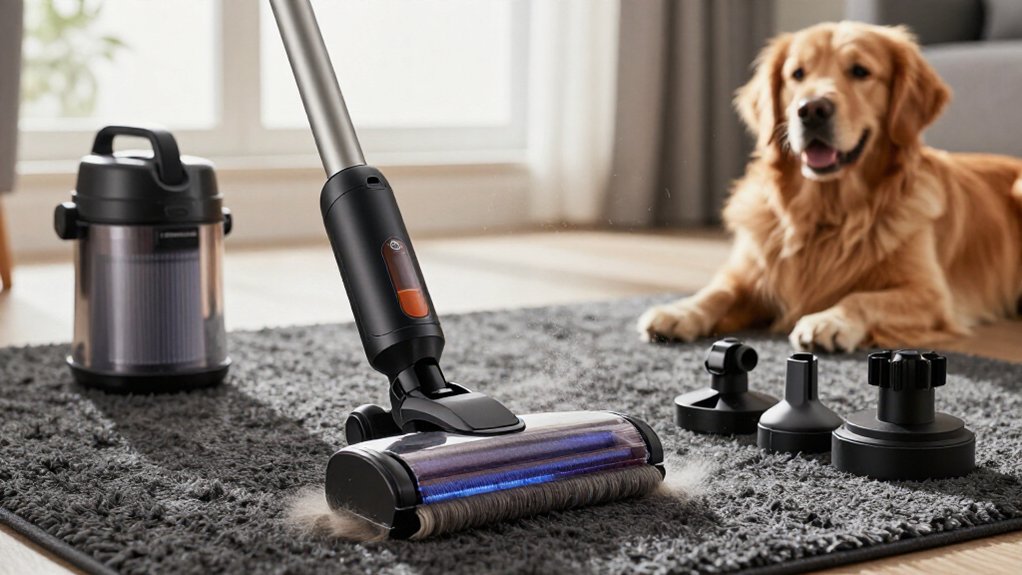
You’ll get more value from a sealed HEPA system, a tangle-resistant motorized brushroll, and a pet tool than from headline suction alone.
Choose strong airflow and stiff bristles for multiple pets or thick carpets, while LED headlights help you spot hidden fur.
Expect small bins to fill quickly, and don’t overlook cord length for stairs and furniture.
Check replacement-filter costs, too.
The right combination keeps dander contained and hair moving; details below help you spend wisely.
HEPA Filters, Sealed Systems
If your pet sheds heavily, or you live with allergies, choose a vacuum with HEPA-rated filtration inside a sealed system, not just a standalone HEPA filter. The sealed airflow path keeps fine particles contained while you clean, improving air quality more reliably than basic bagless designs. If you have asthma or allergies, compare particle-filtration scores: RTINGS considers 8.0 or higher effective for allergen control.
Premium cordless vacuums can meet that standard, but their bagless bins may release dust when you empty them, so do it outdoors. Some models provide sensor-driven particle feedback, showing when dust or dander levels remain high and helping you know when to make another pass. Check filter-care requirements, too; washable pre-filters can reduce upkeep, but neglected filters can undermine performance daily.
Captures Dander, Prevents Leaks
A vacuum captures more pet dander when its airflow combines a prefilter, cyclonic separation, and fine filtration, rather than relying on one filter alone. The prefilter catches larger flakes and protects the finer media, while cyclonic action sends heavier clumps into the bin. That staging helps maintain airflow as you clean beds, upholstery, and carpets where your pet sheds.
Look beyond filter labels for leak prevention. A fully sealed air path, tight gaskets, and a secure dustbin keep captured particles from escaping around the motor or through loose joints. This matters more than a basic bagless vacuum that can re-release dander during operation or emptying.
If you have allergies, choose a bagged model or low-dust disposal design, plus washable prefilters you’ll clean regularly. Carbon can reduce pet odors, but it won’t capture protein allergens alone.
Tangle-Free Brushroll Benefits
When pet hair wraps around a brushroll, it can slow the roller, reduce agitation, and leave more fur behind. A tangle-free, self-cleaning design keeps the brush spinning, so you get steadier pickup and fewer interruptions in high-shedding areas. That matters most on carpets, where stiff bristles need consistent agitation to lift embedded fur.
Compared with a basic roller, an anti-wrap head may use vanes or fins to catch hair before it chokes the brush. You’ll spend less time cutting away wads and more time vacuuming. A removable brushroll adds another practical advantage: you can clear stubborn debris quickly without lengthy disassembly. For the best single-pass results, choose anti-tangle construction with carpet-appropriate bristles.
Pay extra if heavy shedding makes frequent brushroll maintenance your daily burden.
LED Headlights on Floorheads
LED headlights help you spot hidden pet hair and dust, especially on dark carpets and along edges. You’ll also see missed debris under furniture, where shadows can hide it.
They won’t increase suction, but they’re a useful upgrade when you’re comparing floorheads and want fewer repeat passes.
Spot Hidden Pet Hair
Hidden pet hair becomes easier to catch with an LED-lit floorhead, which makes fine strands stand out on carpets, bare floors, edges, and under furniture. You’ll verify cleanup sooner rather than relying on memory or room-wide rechecks. That visibility helps you judge whether the floorhead delivers strong single-pass pickup: high-performing models can leave virtually no hair after one pass.
| Area | What LEDs reveal | Your next move |
|---|---|---|
| Carpet | Fine embedded fur | Slow your pass |
| Bare floor | Strands and debris | Adjust brush mode |
| Edges | Missed hair lines | Add overlapping passes |
If you spot leftovers after the first back-and-forth sweep, you’ll slow down, overlap, or change height and brush settings. That real-time feedback complements agitation and filtration, making the LED worth paying extra for in shedding households.
See Under Furniture
That same visibility matters most under beds, sofas, and cabinets, where pet hair collects beyond normal sightlines. An LED floorhead illuminates fur, dust, and litter that dim spaces hide, so you can steer toward what you’d otherwise miss.
Pair those lights with a slim head or body: the 2.85-inch Anker eufy RoboVac G30 Verge, for example, can reach farther beneath furniture than a bulky upright head. As you vacuum, watch the beam to confirm a powered brush is contacting the floor and cleaning along edges rather than gliding over them. If one back-and-forth pass leaves the floor visibly clear, you’re done; leftover fur tells you to make another pass. LEDs won’t improve suction, but they make under-furniture results easier to see and judge accurately.
When LEDs Add Value
When you’re chasing pet hair across carpets or dim, furniture-adjacent areas, LED headlights on the floorhead can reveal fine strands and dust that ordinary lighting misses. That visibility helps you spot missed streaks during each pass, especially where dander and hair collect along edges or beside furniture. Since even strong pet-hair vacuums may need two or three passes, LEDs reduce guesswork and help you judge when an area is truly clean.
They’re most useful on carpet, where fine strands can remain after cleaning, and in rooms with little light. LEDs won’t increase suction or replace a tangle-free brush roll, HEPA filtration, or a motorized pet tool. Still, they let you verify pickup in time. Pay extra if you clean shaded edges or live with shedders.
Multiple Pets, Thick Carpets
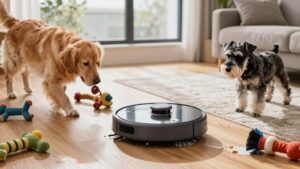
With multiple pets and thick carpets, you’ll need high-airflow suction and a motorized brushroll with stiff bristles to lift embedded hair.
Choose tangle-resistant or self-clearing brushrolls over basic designs, which can stall or lose performance. A sealed HEPA system also traps the extra dander your pets leave behind.
High-Airflow Suction
If several pets are shedding onto thick carpets, prioritize high airflow paired with a motorized powerhead, not suction alone. Thick-pile fibers trap fur, so a powered, bristled roller agitates debris more effectively than straight suction or a soft roller. Look for strong air movement through the head; it helps lift matted hair and leaves less behind after one pass. In fur-heavy areas, vacuums may collect only about 70% of pet hair in a pass, making sustained airflow valuable.
Compare corded uprights or canisters for consistent whole-house power with cordless models for spot cleaning. Choose adjustable airflow if you clean delicate rugs or hard floors. Finally, favor efficient particulate capture and a bin: fine debris can recirculate or restrict performance, while multiple pets fill capacity quickly.
Tangle-Resistant Brushrolls
For multiple pets and thick, high-pile carpet, choose a motorized powerhead with stiff bristles rather than a soft roller. Those bristles reach embedded fur more effectively, while tangle-resistant vanes or fins catch hair before it winds tightly around the roller.
That matters when several dogs or cats shed daily: a jammed brushroll stops spinning and your pickup suffers.
Pay extra for a self-cleaning design, plus jam protection or a brushroll-off switch. These features reduce interruptions and help protect thicker rugs.
If you clean both hard floors and carpet, a dual-brushroll head can combine a soft roller’s gentler pickup with a stiff roller’s carpet traction, though it may cost more. Even with the right head, expect two or three passes to clear visible pet fur.
Sealed HEPA Filtration
A tangle-resistant brushroll keeps fur moving, but sealed True HEPA filtration keeps the dander and fine dust it stirs up from returning to your air. With multiple pets and thick carpets, you’ll stir up more embedded debris, so filtration matters as much as suction. Choose a closed system, not merely a vacuum labeled “HEPA”; seals prevent captured allergens from escaping around the filter.
For allergy or asthma concerns, use RTINGS’ 8.0-plus Particle Filtration score as a practical benchmark. Bagged machines contain dust better during disposal, while bagless cordless models can release a cloud when you empty them.
Empty the bin outdoors, clean washable pre-filters regularly, and replace filters on schedule. That care helps preserve airflow and keeps your home’s air cleaner after every pass.
Upholstery Tool for Sofas
An upholstery pet tool uses added agitation to lift embedded cat and dog hair from sofa fabric better than a standard floorhead. A turbo or Hair Screw nozzle loosens fur from cushions, while a compact head handles seams and piping more precisely.
| Option | Best for |
|---|---|
| Turbo brush | Cushion fur |
| Compact scraper | Seams and corners |
If loose hair reaches the floor, pair this tool with a floorhead that won’t jam; motorized and air-driven designs handle tangles differently. For regular shedding, connect it to your sealed HEPA system, which captures lifted dander instead of redistributing it. Pay extra when your pets claim the sofa daily; otherwise, a simple upholstery nozzle may cover occasional touch-ups.
You’ll reduce extra passes and finish furniture cleaning faster with fewer interruptions.
Small Bins Fill Quickly
Small bins, often 1 liter or less, fill quickly with pet hair, so you’ll empty them more often than you would with a pet-free home. Strong suction won’t change that; shedding can pack the canister before you finish a room, with multiple pets.
Frequent emptying also matters for cordless bagless models, since dumping dusty hair can send particles back into the air.
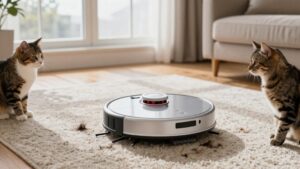
If you’re comparing vacuums, favor a larger bin, an easy-release canister, and a wide opening that won’t trap tangled fur. A self-emptying robot, such as the Roborock Q5+, stores debris in a 2.5-liter dock bag for weeks, reducing interruptions.
You’ll pay more, but that convenience may outweigh the cost in a heavy-shedding home. With a small-bin model, check disposal access and effort before buying.
Overlooking Cord Length
Check the cord length before buying, because pet-hair cleanup often requires quick, repeated passes around furniture and along room edges. A short cord forces constant repositioning, wastes time, and leaves fur along edges. A longer cord maintains a steady pattern around furniture, stairs, and under sofas. Because even powerful vacuums may need two or three passes, easy reach helps you finish today’s shedding before missed spots accumulate.
Before choosing, compare:
- Main routes: reach from living room to bedrooms.
- Furniture: avoid unplugging beside couches.
- Edges: keep the nozzle moving along walls.
- Stairs: choose reach that prevents stretching.
- Under sofas: check the cord won’t limit access.
That small upgrade can matter more than a cheaper model when your pet sheds daily throughout the house all year.
Check Replacement Filter Costs
Replacement filters deserve a place in your vacuum budget, especially if your pets shed heavily or track in fine dust. Dander and fine particles can clog HEPA or sealed HEPA-style filters faster than they would in a pet-free home, weakening suction and particle trapping. Check the manual before buying: an “outstanding” filtration claim matters less if filters cost a lot or need frequent replacement.
Compare each model’s yearly filter expense using the manufacturer’s prices, and check availability before you commit. Avoid generic replacements unless you’ve confirmed their fit and filtration rating. Cordless, bagless vacuums depend especially on timely filter changes to maintain allergy protection. If you have allergies, prioritize filtration, such as an RTINGS-style score of 8.0 or higher, but budget for cycles.
Conclusion
When you compare vacuums for pet care, focus on features that improve daily cleanup, not flashy extras. A sealed HEPA system protects your air, while a tangle-free brushroll saves time. LED lights help you spot hidden fur, and upholstery tools tackle sofas.
If you’ve got multiple pets or thick carpets, prioritize suction and capacity. Check cord length, bin size, and filter costs before buying. The right vacuum leaves less dander and fewer chores behind overall.