How to Choose a Vacuum for Pet Hair: 8 Features That Actually Matter
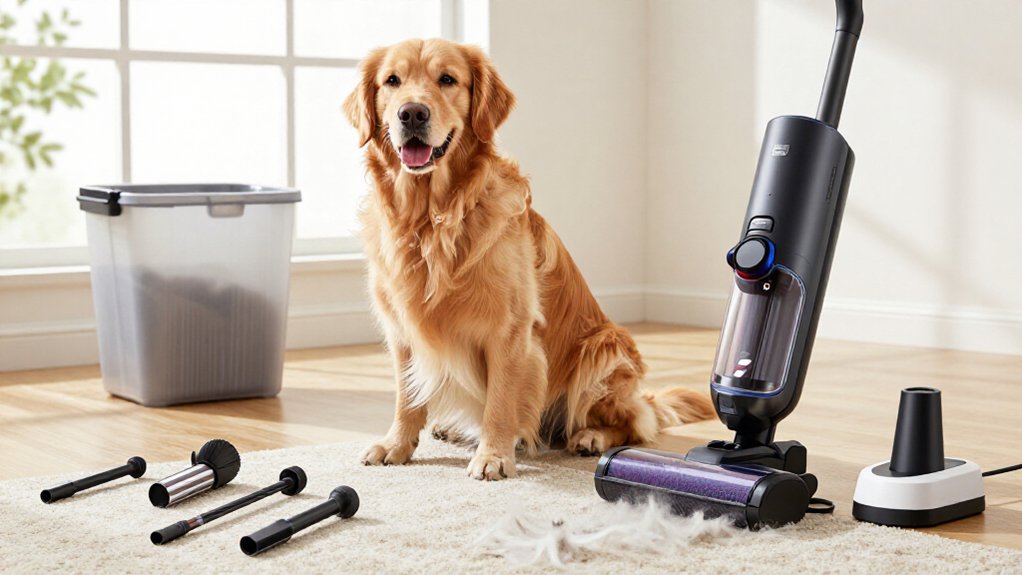
When choosing a pet-hair vacuum, you’ll want an anti-tangle motorized brushroll with V-shaped bristles, rubber blades, or an easy-release, removable roll.
Match pickup to your shedding level and flooring, especially soft or multi-surface heads for hard floors.
Look for genuine HEPA filtration and a sealed air path.
Then compare cordless runtime, bin size, weight, attachments, filter costs, battery replacement, and noise.
These checks help you find one for home; details ahead can sharpen your choice.
Prioritize Anti-Tangle Brushroll
A brushroll is where pet hair either gets collected—or becomes a maintenance problem. Choose an anti-tangle design with V-shaped bristles, comb structures, rubber blades, or silicone paddles. These features guide long fur toward the suction path and help detangle it as the roll spins. By limiting wrapping, they help preserve airflow and continuous pickup instead of leaving hair packed around the brushroll.
Look for a removable roll or self-cleaning mechanism, which lets you clear buildup quickly and more hygienically. Easy-release access matters because regular detangling prevents performance from declining. Prefer a motorized head with firm bristles when you need stronger agitation, while basic soft rollers may struggle with embedded fur. Models such as the Dyson V15 Detect and Shark AZ2002 show the practical payoff.
Assess Shedding and Floors
Your pet-hair pattern and floor mix should determine the vacuum you choose. Estimate whether your pet leaves light scatter or thick concentrations, and how often you clean. Frequent heavy shedding favors strong pickup and a sensor or boost mode that increases power when it detects debris. Use pet-hair pickup scores as a guide: 7.5+ indicates good single-pass clearing; 8.0-9.0 typically leaves barely visible hair after one back-and-forth sweep.
For wood, tile, laminate, or vinyl, choose a soft-roller or multi-surface head that lifts fur without flinging debris or risking microscratches. Carpets and rugs need agitation: an air-driven turbo brush suits low or medium pile, while thicker carpet requires a motorized powerhead.
Mixed floors benefit from one that shifts without head changes, reducing misses.
Verify Sealed HEPA Filtration
For homes with allergy-sensitive people or pets that shed heavily, verify that the vacuum uses a genuine HEPA filter and a sealed air path, not just a “HEPA-like” foam filter. True HEPA filtration captures at least 99.97% of particles at 0.3 microns, while sealed gaskets prevent dander from bypassing the filter and returning to your room.
| Check | What to confirm | Why it matters |
|---|---|---|
| Filter | Genuine HEPA rating | Traps fine dander |
| Air path | Sealed seams and bin gasket | Stops bypass |
| Upkeep | Replace every 6–12 months | Preserves performance |
Before buying, check the manual for parts and inspection guidance. Clean washable prefilters regularly, examine latches and gaskets, and favor independent particle testing.
A sealed HEPA system won’t remove visible hair alone, but it protects breathing air today, too.
Cordless Versus Upright
Choose a cordless stick if you value easy reach and quick pickups, but remember that runtime, sometimes just 10 minutes on max power, and bin capacity can limit larger jobs.
Choose an upright if you need consistent suction and greater capacity for wall-to-wall carpet, though you’ll handle more weight, cord limits, noise, and maintenance. Your floor mix and cleaning routine should guide the trade-off between mobility and deep-cleaning power.
Cleaning Reach And Mobility
Where pet hair collects matters as much as how much suction a vacuum delivers. A cordless stick gives you freedom to move from sofa to stairs without dragging a cord, making spot cleaning easier. Its light, flexible body can reach under furniture and convert to a handheld for upholstery, car seats, or scattered tufts.
For larger carpeted areas, an upright usually offers steadier walk-behind mobility and a wider cleaning path. However, its weight and fixed shape can make stairs and tight furniture zones frustrating. If your home has multiple levels, choose an upright with a detachable lift-away pod, or consider a canister or stick that’s easier to carry.
In mixed-floor homes, select a vacuum head that transitions between carpet and bare floors without attachment changes. The best choice is the one you’ll comfortably use where your pet sheds most.
Runtime And Cord Limits
Mobility only helps if your vacuum can finish the job before its power runs out. Cordless sticks simplify pet-hair cleanups, but their runtime applies to lower settings. On maximum power, a Dyson V15 Detect may last just under 10 minutes, so a shedding session can stall halfway. If you choose cordless, prioritize adjustable runtime: the Honiture X7 claims up to 60 minutes, and the P7 Pro up to 80. Treat those figures as estimates, especially when you clean stairs, upholstery, or rooms.
For long carpeted areas or deep cleans, an upright corded model offers cleaning time without batteries. Check cord reach: Bissell’s CleanView Swivel Rewind Pet provides 27 feet, which can limit outlet changes. Match the format to your floor plan and cleaning routine.
Suction Power And Capacity
A vacuum’s pet-hair performance depends on both suction and brushroll action, not motor power alone. For embedded fur, compare independent hair-clearance results: scores of 7.5 or higher are good, while 8.0 to 9.0 usually leave barely visible hair after a back-and-forth pass.
You’ll generally get stronger, sustained cleaning from an upright, especially across carpet and thick rugs, where a motorized brushroll lifts stubborn strands.
A cordless stick can suit cleanups and mixed floors, but check its real runtime at power level you’ll use; maximum suction may last under 10 minutes on models. Capacity matters, too. A roughly 0.5-liter cordless bin fills sooner than a 0.75-liter option, while an upright’s larger capacity supports longer sessions. Choose the form that matches your surfaces.
Storage And Maintenance Needs
For quick, frequent cleanups, cordless sticks are easier to store and grab, but their battery limits can restrict longer sessions; some models run for under 10 minutes on their highest setting. Choose a cordless model if you mainly tackle daily fur on floors, stairs, or furniture and can recharge between sessions.
Its small, bagless bin may hold 0.5 liter or less, so empty it outdoors to avoid a dust cloud.
An upright takes more room and typically weighs 8–21 pounds, but it supports sustained carpet cleaning without charging. Look for a tangle-resistant or self-cleaning brushroll, accessible brushroll doors, and a motorized pet tool.
Whichever you choose, clean the brushroll regularly and maintain its filters; simpler upkeep helps you keep pace with shedding during busy weeks.
Match Attachments to Messes
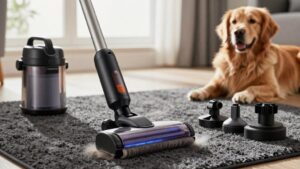
Match each attachment to the mess, and you’ll clean more effectively with less effort. Use a motorized pet-hair tool for upholstery, a crevice tool for tight gaps, and an upholstery brush for couches, beds, and stairs.
Choose a hard-floor head for bare surfaces, especially if it combines soft rollers with edge-cleaning reach.
Pet Hair Tool
Which mess are you tackling? For embedded hair on upholstery, stairs, bedding, or couch seams, choose a motorized pet-hair tool with stiff bristles. Its agitation reaches fabric fibers that suction alone often misses, making cleanup more effective and less frustrating. A compact direct-drive or anti-tangle brush can also help where hair collects heavily.
Match the floor head to your surfaces. On carpet, use a tangle-resistant motorized head, such as a V-shaped comb design, so long strands don’t wrap around the brushroll and weaken pickup. On bare floors, choose a removable or self-cleaning roller that captures hair without scratching. Check that the tool fits comfortably under furniture and stores onboard; easy access makes quick cleanups more likely, which matters when shedding is constant every day.
Crevice Tool
A narrow, deep crevice tool helps you pull pet hair from baseboards, couch seams, stair edges, and around vents, places a standard floor head can’t reach. Choose one with extended reach so you won’t strain or leave corners untouched. An LED tip can reveal fine strands hiding in dark gaps, helping you confirm each pass worked.
Before buying, check that the crevice tool comes in the package and connects securely to your vacuum. Its usefulness depends on hose reach, too: a limited hose can make distant corners awkward or impossible to clean. A lift-off model with roughly seven feet of extension can give you more freedom. Match the tool to your home’s tightest messes, and you’ll remove trapped fur instead of repeatedly pushing it deeper.
Upholstery Brush
Once you’ve cleared seams and edges with a crevice tool, use a dedicated upholstery brush for fur embedded in couch, bed, and car-seat fibers. Choose a motorized hair-screw or turbo tool that lifts hair instead of pushing it deeper into fabric. A tangle-free brush roll helps maintain suction when long hair wraps around the head, so you won’t stop constantly to cut it free.
Prioritize a HEPA filter and fully sealed air path to trap dander and reduce re-exhaustion as you clean. If your vacuum offers particle monitoring, it may increase power when fur concentrations rise without over-agitating delicate upholstery. Check the box before buying: a dedicated furniture tool matters more than a basic crevice attachment. Work slowly, keeping the brush flat and.
Hard-Floor Head
On wood, tile, laminate, or vinyl, choose a hard-floor head with a soft roller or dual-roller design that lifts pet hair and fine dust without scattering debris or scratching delicate surfaces.
If you’ve got mixed flooring, choose a motorized main head that shifts between carpet and bare floors so you’ll avoid tool swaps. Match the attachment to the mess: use an upholstery tool or hair-screw turbo tool where fur collects on sofas, stairs, or bedding.
Long hair can wrap around rollers, so anti-tangle features, such as V-shaped or comb-assisted brushrolls, help maintain contact and reduce hands-on cleaning. A sealed True HEPA system also matters: it traps the dander and fine dust you loosen instead of releasing them back into your room.
You’ll have a setup that makes cleanup less frustrating, especially during seasonal changes. Empty the bin promptly and check the roller regularly to keep pickup consistent through busy weeks and heavy shedding at home.
Weight and Storage Needs
Weight affects how often you’ll actually use a vacuum, especially on stairs or during longer cleaning sessions. A 15-pound Bissell CleanView Swivel Rewind Pet may feel cumbersome, while the 17-pound Levoit LVAC-300 cordless stick can tire your arm despite having no cord. Choose the lightest model that handles your floors, and consider how far you’ll carry it.
Storage matters as much. Uprights usually stand neatly in a closet, but sticks and lift-away designs offer flexible cleaning angles and may need wall mounts or floor space for their parts. A detachable pod can spare you hauling the machine up stairs or onto upholstery.
If space is tight, check bin size, too: a Dyson V15’s approximately 0.5-liter bin requires frequent emptying, so leave room for routine.
Check Filter Replacement Costs
Check the filter replacement schedule before you buy, because a vacuum’s upfront price doesn’t reveal the cost of maintaining clean, allergen-trapping airflow. A true HEPA filter can help capture pet dander, but its cartridge isn’t free. Compare the model-specific replacement price and recommended interval across brands; two vacuums may both claim HEPA while carrying very different long-term costs.
Check whether the vacuum uses a clearly defined multi-stage system, such as seven-stage HEPA, so you can estimate how many elements you’ll eventually buy. If it has a washable pre-filter, confirm which components you can wash and which require replacement. Budget for filters separately from pet tools, because attachments don’t offset recurring filtration costs. This small calculation can protect your air quality and your budget too.
Beware Proprietary Batteries
If you’re choosing a cordless vacuum for pet hair, don’t overlook its battery policy: proprietary packs can be expensive to replace, limit compatibility with other models, and lose runtime as they age. Because pet-hair cleanup often requires turbo mode, advertised runtime can shrink sharply; some premium bagless vacuums run for under ten minutes at maximum power.
- Check whether the pack works across the brand’s model family and whether replacement batteries remain readily available.
- Compare runtime figures on standard, low, and eco settings, not just the headline number.
- Price the battery, charger, and likely future replacement before you buy.
- Favor swappable packs when you need longer cleaning sessions or own multiple cordless tools.
That check can spare you surprise costs and frustrating mid-cleaning shutdowns later.
Measure Decibel Levels
Noise matters more than many shoppers expect, especially when pets startle easily or you clean for long periods. Check the vacuum’s published decibel (dB) rating before buying. For context, the Honiture X7 Pet Vacuum lists ≤68 dB, a comparatively quieter option for extended hair cleanup.
Compare ratings at similar power modes: higher suction usually raises noise, particularly on Dyson or Lift-Away models. Look for a vacuum that picks up fur without constant maximum power. Use these checks:
- Compare dB ratings measured under matching conditions.
- Favor low-noise designs with published testing details.
- Pair noise data with airflow and pickup evidence.
- Consider sealed HEPA filtration and motorized brushes.
Louder isn’t stronger. Effective airflow and a capable brush shorten cleaning. Check reviews if dB data’s missing.
Conclusion
Choosing a pet-hair vacuum doesn’t require chasing every feature. Start with your floors, your pet’s shedding pattern, and the messes you clean most. Then prioritize an anti-tangle brushroll, sealed HEPA filtration, useful attachments, manageable weight, and reasonable operating costs.
Compare battery, filter, and noise details before you buy, and measure storage space at home. A well-matched vacuum can reduce daily frustration while helping you keep your living space cleaner and more comfortable for everyone, too.