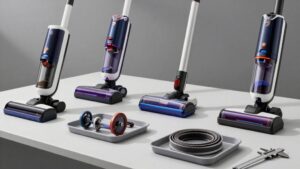
Brush Roll Compatibility Chart for Vacuum Brands: Match Sizes Fast
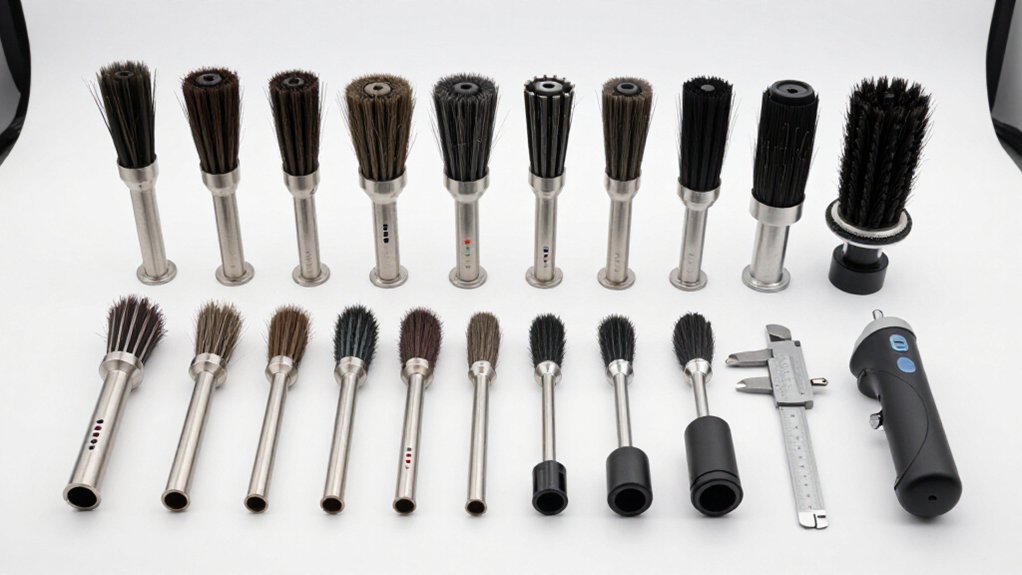
To match a vacuum brush roll, measure the fully seated assembly from end cap to end cap, not just the bristles, and record dimensions.
Confirm your exact model and submodel, then compare shaft profile, end caps, bearing size, alignment, drive gear, and belt type.
iRobot, Dyson, Shark, and Bissell parts are rarely interchangeable.
Check clearance, wobble, and groove seating before installation.
Wet-pickup machines and Dyson V16 Piston Animal systems require approved rollers.
More checks follow.
Measure Roll Length First
Start by measuring the brush roll end to end while it’s fully seated and free of obstructions. Use a rigid ruler or caliper, and measure the entire working span from one end cap to the other. Don’t measure only the bristles, fins, or tufted section; those areas may be shorter than the roller’s listed length.
If the roll has an adjustable or removable cap assembly, note whether your measurement includes the end caps. Compatibility charts often specify total roller length, so record that value in inches or millimeters. Use the measured length to narrow chart results, then verify the candidate’s belt or drive type and alignment.
Length alone can’t confirm fit: an incompatible drive arrangement may prevent installation or cause belt tracking problems later.
Brand-Specific Brush Roll Sizes
Brush rolls aren’t universal: iRobot/Roomba, Dyson, Shark, and Bissell typically use model-specific assemblies with distinct lengths, shaft profiles, end caps, and drive designs. Confirm your vacuum’s model and submodel before choosing a replacement; brand families rarely share interchangeable rolls.
| Brand | Typical size/use | Matching action |
|---|---|---|
| iRobot/Roomba | Series-specific extractors | Select i3/i4, j7, or s9/j9 parts |
| Dyson | Model-specific bars | Confirm generation and OEM number |
| Shark/Bissell | 8.5-12-inch rolls | Verify Navigator, Rotator, or DuoClean family |
Measure shaft-to-shaft length, diameter, groove placement, belt type, and brush-row layout before ordering parts. If dimensions aren’t published, search the OEM part number in the manufacturer’s catalog. Don’t trust a size claim; confirm the exact model family carefully.
For robots, choose the extractor kit; replace brushes every six months. Upright rolls last 12–24 months.
End-Cap and Bearing Terms
After confirming the brush roll’s model, length, and shaft profile, check its end caps and bearings.
Each end-cap holds the roller axle and interfaces with the vacuum’s housing. A sealed bushing or ball bearing inside or beside it lets the roll spin smoothly while limiting friction and wear.
Match the end-cap shape, diameter, bearing size, press-fit dimensions, and retainer type to the original assembly. An incorrect part can create wobble, scraping, or early bearing failure, even when roller length matches. If rotation looks uneven after installation, inspect end-cap alignment and confirm that the bearing suits the axle diameter before troubleshooting suction. Replace damaged bearings rather than forcing a loose fit. Use the vacuum’s model number and OEM parts diagram to verify specifications before installation.
Bristle Pattern Differences
You’ll find that straight or angled bristles, soft or stiff materials, and single- or multi-pattern layouts change agitation and debris transfer. Spiral arrangements can improve coverage and guide pet hair toward the suction path, reducing wrap.
Match bristle height, spacing, and stiffness to your floor type, or you’ll risk poor pickup and debris scatter.
Straight Vs Angled Bristles
Bristle pattern affects how a brush roll contacts the floor and moves debris into the suction path. Straight bristles maintain uniform floor contact, giving consistent agitation across carpets and rugs. They lift and move particles in the same direction, supporting predictable cleaning.
Angled bristles create an offset sweeping action that guides debris inward. Their tips act like a directional comb, improving pickup of pet hair and grit. On hard floors, this geometry can drive fine dust from micro-grooves toward intake.
If your roll uses carpet-optimized fins, angled bristles complement the lift action and reduce outward scattering. Choose based on surfaces and debris: straight bristles suit carpet agitation, while angled bristles favor directional collection and hair handling. Confirm the replacement pattern matches your vacuum model.
Single Vs Multi-Pattern
When a brush roll uses a single pattern, its consistent bristle or fin layout delivers predictable agitation but may be optimized for only one carpet height or debris type. You’ll get focused performance, yet pickup can decline on mixed flooring, low-pile edges, or changing debris loads. A uniform layout may also tangle or clog sooner when pet-hair density varies.
A multi-pattern roll combines varied rows or zones to change the cleaning action across its width. Deeper fins can agitate carpet fibers, while shorter sections help control scattering and route loosened debris toward suction. This geometry can lift dirt from multiple directions and maintain more consistent results across pile heights.
Before choosing a replacement, compare the original row orientation, zone layout, and model-specific part number. Confirm dimensions, row pattern, and model fit; size alone doesn’t guarantee compatibility with your vacuum.
Soft And Stiff Bristles
Beyond row layout, bristle stiffness determines how a brush roll interacts with each surface. Choose soft bristles when you’re cleaning hardwood, tile, or baseboards; they lift dust gently and reduce scratching or scuffing. Choose stiff bristles for carpet and pet hair, because firmer agitation combs through fibers and moves embedded grit into the suction path.
Don’t judge compatibility by “soft” or “stiff” alone. Compare bristle density, length, spacing, and tufted-section width with your vacuum’s original roll and the manufacturer’s model listing. A denser, shorter layout can improve edge cleaning, while longer or staggered bristles may reach deeper into carpet pile. Confirm that the replacement also matches shaft-to-shaft length, endcaps, and belt alignment. If your floor mix varies, select the pattern that suits the dominant surface.
Spiral Bristle Arrangements
A spiral bristle arrangement winds tufts around the roller so the rotating tips engage carpet pile progressively, lifting embedded dirt and pet hair into the suction path.
Pattern geometry affects floor behavior. Helical rows may use short, angled bristles for agitation, or longer, shallower tufts for gentler contact limiting dust scattering on tile. Raised fins can accompany the spiral, but they must clear nozzle and belt.
When comparing replacements, don’t match diameter and length alone. Check spiral starts, tuft direction, bristle height, and row spacing. Confirm shaft-to-shaft length, endcaps, pulley position, and belt groove.
If performance drops, inspect for flattened, broken, or missing tufts; worn geometry can reduce agitation although suction remains normal. Choose the closest pattern for your floor mix and housing clearance.
Pet Hair Pickup Patterns
Spiral geometry affects pet-hair pickup, but bristle density, fin depth, and material determine how effectively a replacement lifts and channels hair. Choose densely packed nylon tufts when you need to loosen and de-tangle hair before suction carries it away. For embedded hair, deeper fins or raised sections grip carpet fibers and lift debris instead of pushing it down.
Silicone or mixed-material bars can reduce wrapping while nylon bristles capture loose and microscopic particles.
Check edge coverage, too: tightly arranged side-brush bristles sweep hair from baseboards and furniture legs into the intake path. On floors, patterns with controlled retraction can limit re-wrapping by changing contact behavior. Match pattern plus shaft length, diameter, endcaps, and belt alignment; physical fit alone won’t guarantee consistent pet-hair pickup performance.
Check Belt-Path Clearance
Before ordering a replacement brush roll or belt, check that the belt path provides enough clearance for the belt to sit fully in its grooves without rubbing the housing or end plates. Measure the gap around the pulley, brush roll, housing, and end plates. Confirm centered seating through a rotation.
Compare belt type and thickness: round belts last 3–6 months, flat belts 6–9 months, and cogged or V-belts 1–2 years. A thicker belt reduces clearance; a thinner one loosens the drive. Too little space causes rubbing, slipping, heat, odor, rapid wear, and early failure. Too much lets the roller spin slowly or stop intermittently, reducing agitation despite suction.
Use your vacuum model number and diagram; setups aren’t interchangeable because paths or seating dimensions differ.
Wet-Pickup Brush Roll Restrictions
Wet-pickup brush rolls only work safely on the surfaces and fluids approved for their specific machine, such as sealed wood, tile, laminate, ceramic, vinyl, or linoleum. Use the manufacturer-approved roller for your exact model; similar size doesn’t guarantee sealing, fluid control, or contact behavior. Confirm the machine’s wet-floor rating before installation.
Systems lift or retract rollers during carpet changeovers to prevent smearing, but that feature depends on the machine’s control logic. Check fluid limits and debris guidance. Wet systems may handle wet or dry debris, hair, or both, but performance varies by design.
Wet-floor cleaners aren’t universal replacements for all standard vacuum brush rolls. Inspect rollers for leaks, residue, or abnormal behavior during or after cleaning; stop use if seals or housing appear damaged.
Dyson V16 Roller Match
Once you move from wet-pickup restrictions to a Dyson V16, size alone won’t establish compatibility. The correct match is the V16-compatible roller brush designed for the Piston Animal system. Small differences in brush geometry or drive behavior can change pickup and increase vibration, even when another Dyson roller appears similar.
For mixed floors, choose the intended V16 brush type, not a roller from another cordless line. Its deeper fins help lift embedded carpet pet hair and dirt. When carpet pickup drops, verify the model designation before ordering and confirm that the roller spins freely. Clear away hair or string, which commonly obstructs rotation. Use Dyson’s parts listing or an authorized seller to select the complete assembly and preserve intended contact pressure and carpet agitation.
Check for Warped Shafts
Check the brush-roll shaft for bending before blaming the replacement’s size or compatibility. Spin the roller by hand and watch for wobble or uneven contact. Side-to-side movement indicates a warped shaft, which may require replacing the roller, not merely the brush.
- Inspect both shaft ends for straightness; galled or deformed areas can mimic an incorrect size.
- Compare shaft length and end-cap geometry with the replacement; mismatched dimensions can increase strain.
- After installation, monitor belt slipping or a burning smell; an out-of-true roller overloads the belt.
- If wobble persists, replace the damaged roll or have a technician inspect the bearing seating.
Correct alignment matters: a bent shaft can reduce agitation, accelerate wear, and make a correctly sized replacement perform poorly under load.
Confirm Drive Gear Type
After ruling out a warped shaft, identify the drive gear type before ordering a belt or brush roll. Inspect your existing belt and brush-roll pulley, then match the profile:
- Round: A tube-shaped belt depends on correct tension; mismatch causes slippage and weak agitation.
- Flat: Its broad contact area resists slipping, but it still requires the correct pulley path and width.
- Cogged: Teeth must engage the brush-roll sprocket. Don’t substitute a friction belt, such as round or flat.
- V-belt: Match the groove’s three-sided profile; an incorrect shape can rotate poorly and wear early.
Confirm the motor pulley, brush-roll groove, and belt route together. Use the vacuum’s model number and OEM diagram when available. If the profile differs, don’t rely on length alone: order the specified belt and roll assembly.
Conclusion
Before ordering a replacement brush roll, measure the original and verify its end caps, bearings, shaft, bristle layout, belt path, and drive gear. Confirm brand and model compatibility, especially for wet-pickup machines and Dyson V16-specific rollers.
If the shaft’s warped or clearance is tight, don’t install the part. Compare dimensions against the chart, then check rotation before reassembly. A precise match protects your motor, improves cleaning, and prevents premature belt or bearing failure too.