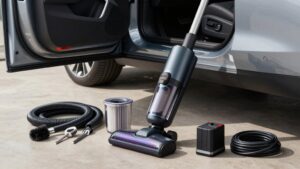
Corded vs Cordless Car Vacuum: Which One Actually Wins for Quick Cleanups?
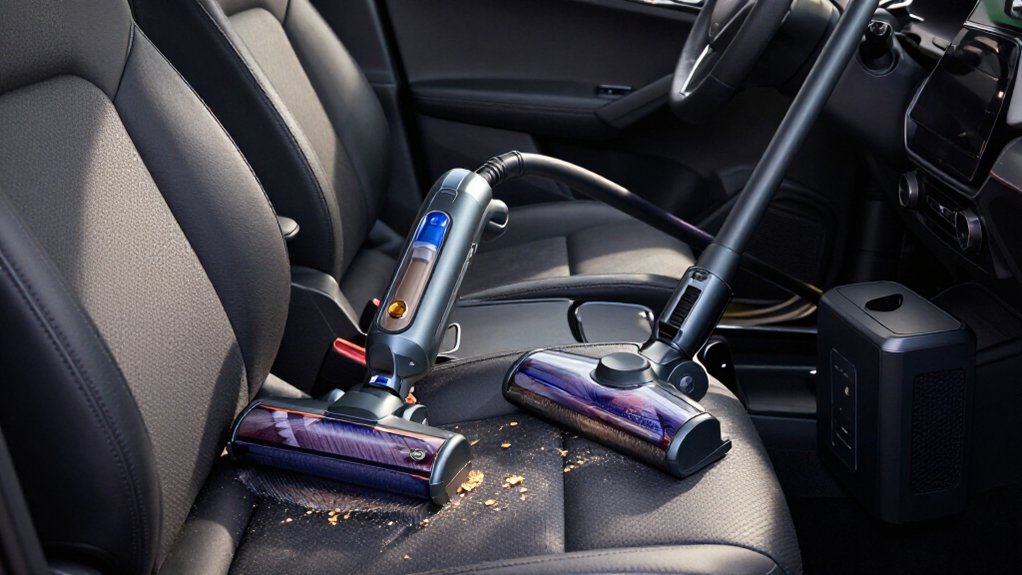
For quick cleanups, a cordless car vacuum usually wins: you can move around the vehicle without hunting for an outlet, and one charge handles crumbs and surface debris.
Choose corded or 12-volt power when you need sustained suction for ground-in grit, pet hair, or several vehicles.
Cordless models trade convenience for limited runtime, charging delays, smaller bins, and possible heat or noise.
Check wet-dry ratings and attachments.
Keep comparing storage, emptying, and attachments to find the fit for your routine.
Cord Reach vs. Runtime
A corded vacuum won’t run out of power, but its reach ends where the cable or outlet does. If your car sits near an outlet, you can clean continuously across a driveway or parking area; limited reach forces you to reposition or use an extension lead.
A cordless model lets you move around the vehicle freely, but its runtime depends on charge capacity and cleaning mode; a quick touch-up usually fits within one session, while several vehicles may not.
| Situation | Corded choice | Cordless choice |
|---|---|---|
| Nearby outlet | Continuous cleaning | Fast setup |
| Far from outlet | Cable repositioning | Full mobility |
For practical planning, measure your outlet-to-vehicle distance before choosing. Choose corded for uninterrupted deep passes; choose cordless when mobility matters more. A hybrid setup covers both as needed.
12-Volt Plugs vs Batteries
When you need consistent power for a quick cleanup, a 12-volt car vacuum has the edge because it runs from the vehicle’s power instead of a rechargeable pack. You won’t wait for a charge, swap packs, or manage suction that fades as the battery drains. That makes it practical for repeated touch-ups, provided your vehicle’s outlet is accessible.
A cordless model gives you more freedom from the car, but its 15–40-minute battery life depends on power mode; turbo drains it fastest. After depletion, recharging can take roughly two to 16 hours, delaying the next session. High-voltage lithium-ion models compete more closely by sustaining stronger suction, though only until the pack runs down. The Worx Cube illustrates this trade-off: its roughly 30 inH₂O low and 50 inH₂O high settings balance output against runtime. That matters most when you need another cleanup soon. Choose 12 volts for predictable availability; choose cordless for untethered convenience.
Floor-Mat Pickup Test
Power source only tells part of the story; the floor-mat pickup test shows how well each vacuum handles real vehicle grime. You’ll see a gladiator-style challenge using pet hair, crushed cereal, and dirt, rather than a clean-surface demonstration. Cordless models handle loose crumbs and surface debris well, while corded machines maintain stronger suction for embedded grit and stubborn hair.
A motorized brush can narrow that gap, but battery power may taper during the run.
To compare results fairly, testers measure suction in inches of water with a vacuum meter, sealing inlet openings with painter’s tape and leaving a pencil-sized hole. Noise testing at arm’s length helps you judge whether stronger pickup creates a trade-off. Choose the winner by debris removed, not headline power.
Dustbin Emptying Speed
Once the floor-mat test is over, emptying speed becomes part of the cleanup—not an afterthought. You’ll notice that a small cordless bin can fill quickly, so its release design matters as much as capacity. The Black+Decker Dustbuster earns an advantage with “breeze” dumping: you can empty it in few steps, with minimal dirt lingering around the filter.
By contrast, the Worx Cordless Cube’s debris-release mechanism can clog, forcing you to use your fingers to clear the compartment. That extra contact turns a quick task into a messier delay.
For your routine, judge the chamber by more than volume. A well-compartmentalized design directs debris out cleanly and reduces filter cleanup afterward. Corded vacuums hold more, but if disposal takes extra steps, capacity won’t guarantee speed.
Wet-Dry Capability
Fast emptying helps with dry debris, but spill cleanup raises a different question: can the vacuum safely handle liquid? A wet-dry model lets you tackle crumbs, pet hair, and accidental spills without switching tools. However, don’t assume every car vacuum handles moisture: dry-test results for Fanttik and Dustbuster say nothing about wet recovery. Check the manufacturer’s wet-rated specifications before you buy.
For occasional spills, a cordless wet-dry vacuum offers grab-and-go convenience, but battery power can fade during prolonged pickup. A corded model maintains steadier suction, making it a better choice for larger or repeated wet messes. You’ll need to rinse the collection chamber and dry it thoroughly to prevent odors. If spills are rare, choose portability; if they’re routine, prioritize power and wet capability.
Filter Replacement and Warranty
Because compact car vacuums often have smaller dust and filter capacity, around 0.6 liters, you’ll typically need to empty and service them more often than higher-capacity corded models. That makes filter access and replacement cost important in quick-cleanup use. Some compact models clog quickly; the Fanttik Slim V10 APEX can lose performance when its filter loads with debris.
Choose a cordless vacuum with a washable, easy-to-remove filter, and confirm that replacements are available for your model. The B+D Dustbuster’s filter handling can reduce downtime, while the Worx Cordless Cube may require finger-clearing and extra effort.
Compare warranties carefully. Prioritize coverage that clearly includes filter components or provides affordable replacement options. Corded designs may need servicing less often, but you should check availability, pricing, and exclusions before buying.
Motor Heat During Use
Watch motor heat closely when you run either vacuum at maximum power, especially during repeated quick cleanups. A 30-second maximum-output test shows higher suction typically creates greater motor stress and heat. Cordless models face an added complication. As the battery drains, suction can fade, so you may hold turbo mode longer to recover performance. That sustained, battery-limited load can heat the motor and trigger throttling.
A corded vacuum maintains steadier power, but it heats when you push suction continuously. For either type, use turbo only where debris demands it, keep filters and air paths clear, and pause between vehicles if the housing feels hot. If performance slows, stop rather than forcing extra passes. Managing heat protects quick-cleanup reliability and helps you finish without battery drain.
Noise and Storage Tradeoffs
When you compare noise, cordless models aren’t automatically quieter: the Dustbuster averaged 82.1 dBA versus 78.8 dBA for the Worx Cordless Cube at maximum power.
For storage, you’ll save space and setup time with a cord-free unit, but you’ll need to keep its battery charged and empty smaller bins more often. Choose based on whether your quick cleanups prioritize quieter operation, compact storage, or fewer interruptions.
Noise During Quick Cleanups
For quick cleanups, cordless vacuums save storage space and setup time, but they’re not necessarily quiet. A Black+Decker Dustbuster measured about 82.1 dBA, a level you may find disruptive for frequent spot cleaning. The Worx Cordless Cube averaged roughly 78.8 dBA, so cordless convenience doesn’t mean silent operation.
Because you often use maximum power to finish quickly, short sessions can sound surprisingly intense.
Corded vacuums may be loud, but you shouldn’t assume a larger machine creates more noise. Testing showed that larger didn’t always equal louder, so compare measured decibel ratings rather than judging by appearance. For crumbs, accept moderate noise if speed matters. If you’re cleaning near children or passengers, choose the model with the lower rating and wear hearing protection if needed.
Storage Space Requirements
Noise isn’t the only tradeoff affecting quick-cleanup convenience: cordless vacuums usually take less storage space because you won’t need to coil a power cord, but they add charging and battery-storage requirements.
That smaller footprint helps you grab a cordless vacuum from a shelf or trunk, but plan a dedicated charging spot. After depletion, charging can take roughly two to sixteen hours, and its average 0.6-liter bin may require frequent emptying.
A compact design, such as the Fanttik Slim V10 APEX, can also clog and demand filter clearing, adding upkeep.
Choose corded storage if you value fewer battery chores: you won’t reserve space for a dock, but you’ll need room near an outlet. For roadside use, cordless wins; for minimal maintenance, corded may fit better.
Best for Pet-Hair Removal
For pet hair, you’ll get stronger, steadier fur removal from a corded vacuum, while a high-powered cordless model offers easier reach around seats and tight spaces. Look for a motorized brush or crevice tool, since suction alone won’t lift embedded hair effectively.
The Black+Decker Dustbuster offers a practical quick-clean balance, while the Fanttik Slim V10 APEX adds flexibility but clogs and fills faster.
Suction Power For Fur
Among cordless alternatives, the Fanttik Slim V10 APEX removes fur effectively, but it clogs quickly, has limited debris capacity, and runs under 14.5 minutes on maximum power. That short runtime can weaken suction before you finish a heavily shedding vehicle.
The Worx Cordless Cube offers substantially stronger measured suction, reaching 50 inches of water, yet its 78.8-dBA noise and clog-prone release reduce its advantage. For fur touch-ups, choose the Dustbuster; for intensive sessions, favor corded power or accept brief pauses.
Brush Attachments Matter
Suction power only goes so far when fur is wedged into seat seams, A/C vents, or textured upholstery, so a useful brush attachment can matter more than a higher peak rating.
Choose attachments by the surface, not the headline suction figure. A soft-bristled brush lifts clinging fur from upholstery, while a crevice tool reaches seams and tight cupholders. Flip-down brush designs are particularly practical because you can switch from loosening hair to collecting it without changing tools.
- Seat seam: Picture bristles combing fur loose, then suction lifting the loosened clumps.
- A/C vent: Short bristles dislodge hairs without forcing them deeper.
- Cupholder: A compact brush handles clingy strands, but check its channel; manual clearing can interrupt work when debris jams during cleanup.
Corded Vs Cordless Reach
Which matters more when pet hair coats the cabin: freedom to reach every gap or suction that stays steady? A cordless vacuum lets you move from doors to seat crevices and cupholders without hunting for an outlet.
A corded model, however, usually maintains stronger, steadier suction, while cordless power can fade as the battery drains. For dense, embedded hair, you may need fewer passes with corded power.
Consider nozzle width, too: a narrow nozzle can struggle with Cheerios-sized debris, despite reaching tight spaces. The Black+Decker Dustbuster’s 16 inches of water and wide mouth handled trapped hair and dust without clogs. Worx Cordless Cube reached 30 inches low and 50 high, yet it proved weaker overall. Choose cordless for access; choose corded for sustained removal.
Glovebox Storage Winner
A compact cordless car vacuum wins for glovebox storage because you can grab it without managing a cord or finding an outlet.
- Choose a lightweight body: the Worx Cordless Cube weighs 3.96 pounds with its battery, while a Dustbuster weighs just 2.42 pounds.
- Add a crevice tool: you can reach crumbs hiding beside seats, beneath controls, and inside door pockets without unpacking bulky attachments.
- Check the dust chamber: compact designs save space, but small bins fill quickly, so you’ll empty them more often after sand or pebbles.
A corded vacuum may deliver stronger, steadier suction, but its cord, outlet dependence, and larger frame defeat glovebox storage. For quick crumbs, choose cordless; reserve corded power for deep cleaning at home when storage space isn’t limited.
Conclusion
When you’re choosing between a corded and cordless car vacuum, match the tool to your cleanup routine. Choose corded power for unlimited runtime, stronger sustained pickup, and wet-dry flexibility, if a 12-volt outlet is convenient.
Choose cordless freedom for fast, quiet grab-and-go jobs, especially with pet hair or glovebox storage in mind. Compare bin emptying, heat, noise, and floor-mat performance before buying. For most quick cleanups, cordless wins; frequent deep cleaning favors corded systems overall.