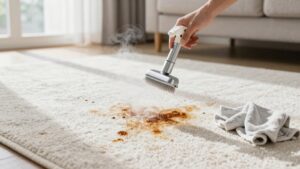
Carpet Cleaning Solution Types Reference Guide
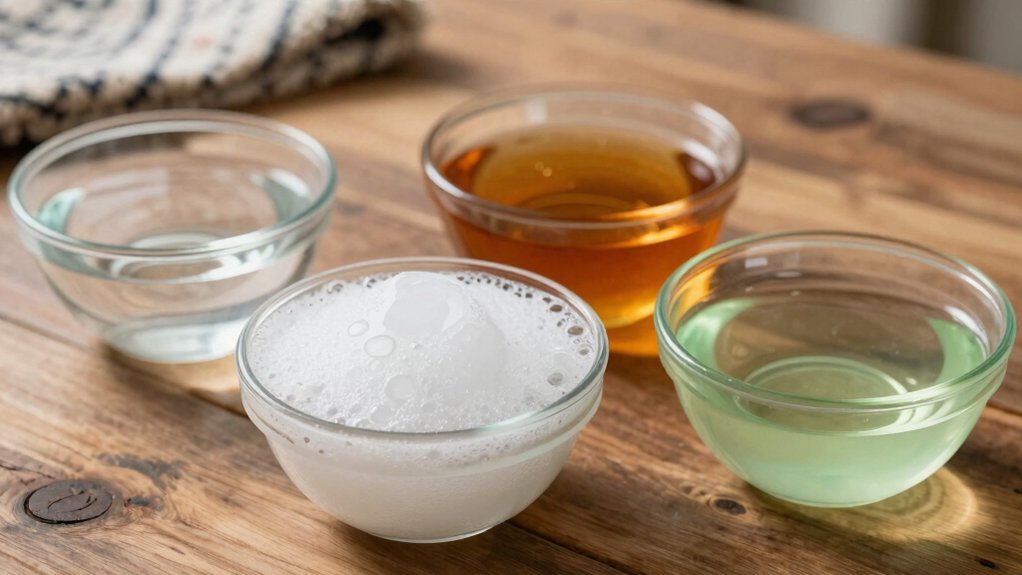
You’ll first identify soil type and fiber.
Vacuum off particulates, feel for oily slickness or protein tack, and confirm fiber tolerance.
Then match chemistry: solvent/alkaline boosts for grease, enzymatic spotters for protein, solvent spotters for ink/adhesive, and neutral or low-alkaline for mixed soils and sensitive fibers.
Use pre-sprays and traffic-lane cleaners with controlled dwell.
Choose low-foam extraction or encapsulation rinses, and finish with appropriate acidic rinses to prevent backing browning and residues.
Continue for application specifics and troubleshooting.
Quick Overview
- Classify soils (particulate, oily/grease, protein) first to choose alkaline, solvent, or enzymatic cleaners respectively.
- Match carpet fiber chemistry (nylon, wool, olefin) to allowable pH and solvent compatibility to prevent damage.
- Use high-alkaline or solvent-boosted pre-sprays and traffic-lane cleaners for heavy oily soils; these are ideal for high-traffic areas.
- Select low-foam, rinseable extraction formulas for rinsing residues. Alternatively, encapsulation polymers can be used for low-moisture, quick-dry cleaning.
- Apply controlled wetting and follow with an acidic neutralizing rinse when needed: this prevents backing browning and residue.
Identify Carpet Soil Type and Fiber
How do you ensure a successful cleaning job? First, identify soil types present and perform fiber identification. Inspect visually and by touch: dry particulate soils like sand and dust sit on pile and detach with agitation; oily/grease soils feel slick and smear; protein soils tack when damp.
Use a quick vacuum test to confirm particulate dominance before wet work. Vacuuming prevents embedding and improves extraction. Determine fiber type (nylon, wool, olefin) from manufacturer labels or burn/fiber tests; fiber chemistry dictates acceptable pH range and solvent compatibility.
Match dominant soil type to pre-spray formulation and extraction strategy: alkaline or solvent-boosted chemistries for grease, neutral-to-alkaline for mixed soiling, and adjust dwell time and agitation accordingly. Avoid applying wet cleaning before removing particulates.
Accurate identification of soil types and fiber identification is the critical control point that prevents mismatched chemistry and poor outcomes.
Match Stains to Spotters, Enzymes, and Specialty Removers
Once you’ve identified the soil types and fiber chemistry, match specific stains to targeted spotters and enzymes to avoid ineffective treatments and fiber damage. You’ll use stain specific protocols: enzymatic cleaners for protein-based soils (food, pet accidents, blood) applied as spotters or pretreatments to hydrolyze proteins before extraction.
For blood, start with a biocidal cleaner to reduce contamination. Then, use an alkaline protein spotter and warm-water extraction to remove residues. Ink and adhesive residues demand blotting and rinsing or solvent-based stain removers; avoid alkaline overuse that can set dyes. Acidic rinses are stain specific tools to prevent browning or yellowing on jute-backed carpets and to manage wet-backing risks.
For set-in red wine or grease, choose specialty heavy-duty spotters rather than general-purpose solutions. Your spotter selection should be deliberate: match chemistry to stain class, test inconspicuously, apply minimally, and neutralize or rinse thoroughly to protect fiber and backing integrity.
Choose Pre‑Sprays and Traffic‑Lane Cleaners for Commercial Jobs
Why prioritize pre-sprays and traffic-lane cleaners on commercial jobs? You’ll remove the bulk of embedded soil before extraction, minimizing post-cleaning soiling and improving overall pre spray effectiveness.
- Choose high-alkaline traffic lane cleaners for greasy, heavy-traffic paths to aggressively loosen compacted soils; follow with enzyme-enhanced or low-residue synthetics for complete removal.
- Apply pre-sprays with a 10–15 minute dwell time; avoid overwetting and groom heavily soiled zones to maximize soil suspension prior to extraction with professional machines.
- Match pre-spray chemistry to carpet fiber and soil type to prevent browning or color transfer; ensure consistent results across varied commercial spaces.
You’ll rely on pre-sprays engineered for machine use because they deliver faster cleaning with less residue than post-wash rinses alone. Implementing targeted pre-treatment and traffic lane cleaners gives you predictable, efficient outcomes and reduces repeat service calls.
Which Chemistry to Use for Extraction, Encapsulation, or Low‑Moisture
Which chemistry you choose determines cleaning performance, drying time, and long-term appearance retention when comparing extraction, encapsulation, and low‑moisture methods. You’ll select extraction chemistry that’s low-foam and high-performance to rinse residue, minimize wick-back, and handle water-soluble soils.
For encapsulation chemistry, use polymers that crystallize soils into micro-crystals for easy vacuum removal; this reduces post-cleaning resoiling and speeds drying. Low moisture formulations rely on detergents or polymers engineered for rapid soil suspension with minimal water, enabling quick turnaround and lowering over-wetting risk to backings.
Match chemistry to soil type: use alkaline or solvent‑boosted pre-sprays for oily/greasy soils. Then pair with compatible extraction formulas to emulsify and remove oils. Always align pH and active ingredients to the method and soil (protein vs. oily) to avoid fiber damage and ensure effectiveness.
Selecting the correct class—extraction chemistry, encapsulation chemistry, or low moisture formulations—determines results and long-term appearance retention.
pH, Backing Risks, and Safety Tips to Avoid Browning and Residue
Wondering how pH and backing type affect browning and residue? You need to control pH and address backing composition to minimize browning risks and residue buildup. Test fiber pH tolerance first; synthetics accept broader ranges. Naturals need milder chemistry. Alkaline cleaners (pH 8–12) remove grease, but they can trigger yellowing or back-end staining on jute-backed carpets when the backing wets.
- Test and choose: measure fiber pH and select cleaners within safe ranges; avoid high-alkaline solutions on natural or jute-backed fibers.
- Rinse strategy: apply an acidic rinse after extraction. Acidic rinse benefits include neutralizing alkali residues, reducing re-soiling, and reversing backing-induced browning.
- Application control: limit wetting of jute backing; use controlled extraction and ensure rapid drying to prevent migration of tannins and dyes.
Follow these steps to reduce browning risks and residue while protecting dyes and backing integrity.
Frequently Asked Questions
How Often Should Carpets Be Professionally Cleaned for Warranty Compliance?
You should schedule professional cleaning every 12 to 24 months to meet most carpet warranty frequency requirements. You’ll follow manufacturer guidelines precisely. Professional cleaning intervals often specify hot water extraction at least annually for high-traffic areas; every 12 to 24 months for general residential use.
Keep receipts and certified cleaner reports to prove compliance. If pets, kids, or heavy use occur, shorten intervals to maintain warranty coverage and carpet performance.
Are Carpet Protectors Like Scotchgard Safe for Pets and Children?
Yes, many modern carpet protectors like Scotchgard are formulated for pet safety and product safety when used per instructions. You should ventilate during application. Keep pets and children away until treated fibers fully dry. Follow manufacturer precautions and MSDS guidance.
If pets lick treated areas or show irritation, rinse and consult a vet. For highest safety, choose products labeled non-toxic and follow recommended dwell and cure times precisely.
Can Steam Cleaning Remove Musty Odors Permanently?
Steam cleaning can eliminate many steam odor sources, but it won’t guarantee permanent removal if odors stem from deep mold, rot, or structural issues. You’ll get effective surface and embedded soil extraction, sanitization, and moisture-driven odor breakdown. However, persistent microbial growth or trapped contaminants require remediation, drying, or replacement.
For permanent removal, diagnose the origin; apply targeted biocides; ensure thorough drying; and address affected sublayers or materials.
What Equipment Rental Options Are Best for DIY Deep Cleaning?
Rent a truck-mounted extractor or a high-quality portable carpet cleaner for DIY rental equipment. Both deliver powerful suction and hot-water extraction for deep cleaning methods. Choose models with adjustable PSI, rotating brushes, and separate solution/recovery tanks.
Add a pre-spray applicator and a spotting tool. Inspect hoses and heat capability. Test on an inconspicuous area and follow manufacturer flow rates and dwell times to ensure effective soil and allergen removal.
How Long Should Carpets Be Left Undisturbed After Extraction?
You should leave carpets undisturbed for 6–24 hours after extraction to allow adequate carpet drying time and guarantee extraction residue removal. Factors like pile density, humidity, ventilation, and carpet padding affect exact timing; high humidity or thick padding can push drying toward 24–48 hours.
Use air movers, dehumidifiers, and open windows to accelerate drying. Walk only when fibers feel dry and no tacky residue remains to prevent re-soiling and fiber damage.
Conclusion
You’ve now got the framework to pick the right chemistry: identify soil and fiber, match stains to spotters or enzymes, deploy pre‑sprays for traffic lanes, and pick extraction, encapsulation, or low‑moisture systems based on soil load and turnaround needs.
Always check pH limits and backing compatibility to avoid browning or residue. Follow label directions, rinse when required, and use PPE. Do this and you’ll preserve carpet appearance, performance, and warranty compliance.
Related reading: Floor Cleaners That Remove Grease in — a closer look at this topic.