Ecovacs Deebot Mop Pad Compatibility Chart
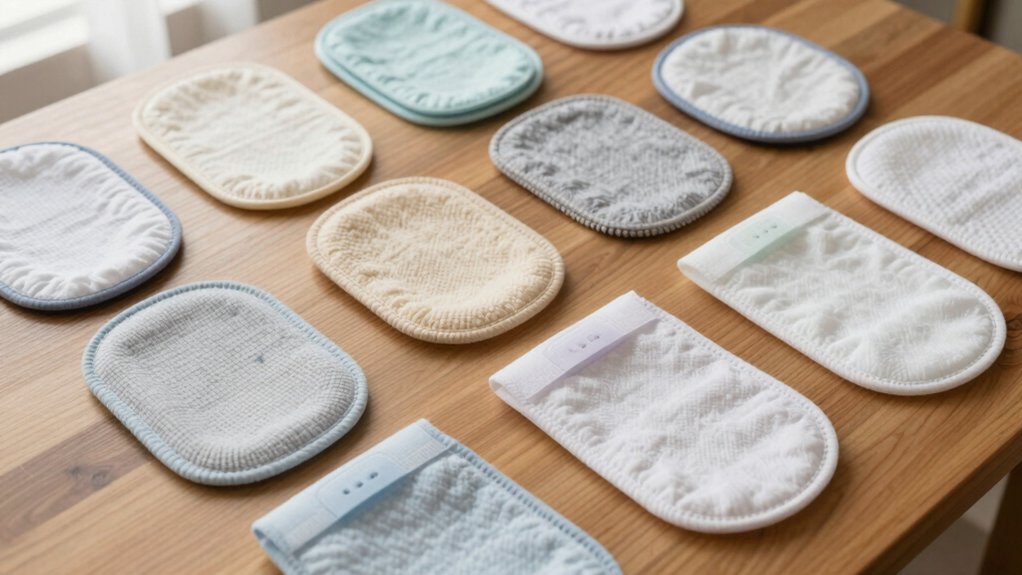
You’ll find most DEEBOTs use two pad families: single‑use disposable microfiber (widely model‑agnostic) and reusable washable microfiber (usually line‑specific for N8/N10/T8/T series and compatible plates).
Attachment matters: Velcro plates favor washable pads. Clip‑on or oscillating systems may need model‑specific refills. Check your model’s accessory plate before buying to avoid fit or performance loss.
Verify on ECOVACS or authorized retailers for warranty-safe replacements. Keep going to see the per‑model matrix and care tips.
Quick Overview
- Disposable microfiber pads (25-pack) are generally model-agnostic and fit most DEEBOTs using Velcro or simple clip mounts.
- Washable/reusable pads are often line-specific (N10/N8/T8 families) and require matching carrier plates or Velcro plates.
- Check your robot’s pad attachment type (Velcro, clip-on, oscillating) to confirm pad compatibility and proper fit.
- Inspect pad wear, fiber integrity, and secure attachment before use. Replace when absorbency or tufting degrades.
- Buy replacements from ECOVACS product pages or authorized retailers. Use model selection filters to verify fit.
Who This Guide Is For and How to Use It
Who needs this guide and how do you use it? You do if you buy or service Ecovacs Deebot robots and need precise mop-pad fit, replacement strategy, or accessory planning. Use the chart to cross-check T series, N series, T8/T9/N10 families, X1/X2 Omni, T30/T20 Omni, and related accessories against disposable (25pcs) and washable/microfiber (3pcs) options.
The guide flags tool-free installation and model-specific notes: for example, T8 washable pads aren’t compatible with OZMO Pro; so opt for T8 disposable pads with that accessory.
You’ll apply this when choosing eco-friendly alternatives versus standard disposables while balancing lifecycle impact and ongoing cost. Note non-OEM entries and model-agnostic replacement parts to avoid fit issues. Also consider warranty considerations: using non-OEM or incompatible pads can affect support claims.
Follow the chart steps: identify your model, match pad type, confirm accessory compatibility, and document part codes for procurement.
Deebot Mop Pad Compatibility : Quick Answer (Disposable vs. Washable)
Wondering which to pick: disposable or washable mop pads? You’ll weigh convenience against lifecycle cost. Disposable pads ship with many DEEBOTs and are model-agnostic replacements, busting compatibility myths about narrow fit. Washable pads target specific lines (N10/N8 PRO/N8/T8 family) and offer repeated use with easy washing.
Both install without tools. The choice hinges on maintenance tradeoffs: disposables reduce post-use upkeep; washables reduce per-use cost.
| Feature | Disposable | Washable |
|---|---|---|
| Initial inclusion | Often included | Sold separately |
| Cross-model fit | High (model-agnostic) | Limited (specified families) |
| Reusability | Single-use | Multiple washes |
| Maintenance burden | Low (dispose) | Higher (wash/dry) |
| Long-term cost | Higher | Lower per use |
In market terms, recommend disposables if you prioritize simplicity and low maintenance overhead. Choose washables if you target sustainability and lower operating cost across compatible DEEBOT models.
How Deebot Mop Pads Attach (Velcro Plate, Clip‑On, Oscillating)
Curious how Deebot mop pads stay put and deliver scrubbing action? You’ll see three primary attachment systems across Ecovacs lines: Velcro plates, clip-on brackets, and oscillating connections. Each trades off speed, stability, and compatibility; it also influences mop pad disposal choices. Disposable pads work best with some clip-on setups, while reusable pads pair with Velcro.
- Velcro plate: secure, reusable mounting surface that lets you remove and reattach pads during sessions. It’s simple, durable, and ideal for washable pads.
- Clip-on: snap-on pads attach to brackets without tools. They speed pad swaps for different rooms and make disposable pad disposal straightforward.
- Oscillating: attachment that couples the pad to the robot’s oscillating action, enhancing scrubbing on hard floors. These often require model-specific pads for reliable motion transfer.
Use the correct pad type for your Deebot model to ensure fit, consistent scrub performance, and expected lifecycle costs.
Compatibility Matrix: T10, X1, T30, T20, T9, T8, N10/N8 Families
How do the T10, X1, T30, T20, T9, T8 and N10/N8 families stack up for mop pad use? You’ll find a model-family focused compatibility matrix that prioritizes cross-family fit rather than custom, model-specific pads. Pads referenced aren’t OEM; brand/model names only indicate fit. Compatibility centers on pad type: disposable pads are widely supported across these families.
While washable options depend on the chosen accessory plate, they affect pad durability expectations. Market-aware shoppers will weigh convenience against lifecycle costs. Brand awareness influences perceived reliability but not mechanical fit. Availability varies by pad type within the DEEBOT ecosystem; so check listings before buying.
| Family Group | Typical Pad Type |
|---|---|
| T10 / X1 | Disposable / Washable |
| T30 / T20 | Disposable-focused |
| T9 / T8 | Mixed support |
| N10 / N8 | Disposable / accessory-dependent |
Pad Materials Explained: Disposable Microfiber, Washable Microfiber, Specialty Pads
Which pad material suits your cleaning routine best? You’ll weigh disposables for convenience, washables for lifecycle cost, and specialty pads for targeted fit. Consider pad availability and price trends when selecting.
- Disposable microfiber: You get single-use convenience with common 25-piece packs. They’re cheap per pack and widely available. They simplify maintenance; however, recurring purchases track with market price trends.
- Washable microfiber: These reusable pads clip on without tools and survive multiple wash cycles. The upfront cost is higher; however, improved lifecycle economics and steady pad availability make them cost-effective where long-term performance is needed.
- Specialty pads: Designed for model-specific ecosystems (OZMO Pro, DEEBOT/T-series). They may be non-OEM alternatives. Check compatibility charts (N8/T8/T9/N10/T10 families). Specialty options trade broader availability for targeted functionality and sometimes premium pricing reflective of niche demand.
Choose by Performance: Absorbency, Scrubbing, and Stain Removal
Want pads that actually remove dried spills and heavy grime, not just spread moisture? You’ll prioritize three performance metrics: absorbency, scrubbing, and stain removal. Choose pad materials with ultra-thick microfiber layers for superior water retention. They keep the cleaning face damp longer, reducing streaks and improving pickup on large runs.
For mechanical action, pick three-layer constructions where a high-density terry cleaning layer provides the abrasion needed to dislodge baked-on residues without damaging sealed floors. Stain removal combines water-locking inner layers and the scrubbing face to lift dirt, oil, juice, and sticky residues into the pad for later extraction.
Market offerings split between washable reusable pads and disposable 25-piece packs; both undergo compatibility testing against N10/N8 PRO/N8/T8 FAMILY and related T-series to confirm fit and performance. Match pad selection to your cleaning frequency and disposal preference to optimize results across Deebot models.
Install & Care: Tool‑Free Fitting, Washing Tips, Extending Life
Performance matters, but even the best pad won’t last or fit properly without correct installation and care. You get reliable, tool free installation on compatible DEEBOTs: snap or Velcro mounts align pads quickly so you can swap sizes for specific models without hardware. Follow targeted washing tips to preserve fiber integrity and cleaning power.
- Pre-rinse and machine wash cold on gentle cycle; avoid bleach and fabric softeners that degrade microfiber and absorbency.
- Air-dry or tumble low; high heat damages backing and elastic connections used in tool free installation systems.
- Inspect mounts and pad edges after every 10–15 uses; trim loose threads and rotate pads by wear pattern to extend life.
Select pads matched to your DEEBOT model for correct fit and performance; improper compatibility can compromise sealing and scrubbing. With consistent washing tips and correct, tool free installation, you’ll maximize durability and sustain optimal floor contact without frequent replacements.
Troubleshooting Fit and Performance Problems (Common Fixes)
Having trouble with fit or cleaning power? Start by confirming pad compatibility against your DEEBOT model: T9, N8 series, N10 variants, T8/T8+, Omni/X1/TX and others listed are supported by model-agnostic pads, but non-OEM labeling is only for reference. Inspect seating: misalignment or incomplete attachment is the usual culprit. Remove the pad, align tabs with the carrier plate, and press until it mirrors the original refill’s tool-free installation.
Check wear: repeated washes can fray fibers and reduce mopping efficiency. Replace when tuft integrity or absorbency drops.
For performance, verify the pad isn’t bunched or blocked by debris on the carrier and that the plate pivots freely. Clean hook-and-loop surfaces and inspect fasteners for deformation.
Use maintenance tips: air-dry pads fully, avoid fabric softeners, and limit high-heat drying. If problems persist after correct installation and care, swap to a fresh pad to isolate pad versus machine issues.
Where to Buy Replacements and Verify Compatibility Before Purchase
If you’ve ruled out seating, wear, and debris as causes, next confirm where to buy the correct replacements and how to verify compatibility before you purchase. You’ll want straightforward purchasing guidance and compatibility verification to avoid returns. Start at official ECOVACS listings for model-agnostic Disposable Mopping Pad (25pcs) pages. Check manufacturer Washable Pad variants for N10/N8 PRO/N8/T8 family fits.
- Check model selection on the product page; confirm Disposable 25pcs vs Washable 3pcs matches your DEEBOT series (OZMO T8/T8 AIVI, N8 PRO/N8 PRO+, N8/N8+, T9/T9 AIVI, N10PLUS, X1/X1 PLUS, T10/T10 PLUS, etc.).
- Cross-reference non-OEM guidance for Omni and Pro lines (T30 Pro Max, T30 Pro Omni, X5 Pro Omni, X2 Omni, X1 Omni, T10 Omni, T20 Omni, X1 PRO Omni); treat it as advisory, not guaranteed.
- Prefer authorized retailers or ECOVACS storefronts for warranty-friendly purchases and clearer compatibility verification.
Frequently Asked Questions
Can I Use Aftermarket Pads Without Voiding My Warranty?
Yes, you can often use aftermarket pads, but warranty impact depends on cause. You’ll want to check your manufacturer’s fine print: using non-OEM accessories typically won’t void coverage unless they cause damage or are explicitly prohibited.
Keep receipts, document installation, and avoid modifications. If a fault arises, the vendor may deny warranty claims tied to aftermarket pads; otherwise, routine issues should remain covered. Stay market-aware and follow stated usage guidelines.
Do Pads Affect Carpet-Sensing and Automatic Lift-Off?
Yes, pads can affect carpet sensing and automatic lift off behavior. You’ll find thicker or non-conductive aftermarket pads may dampen sensor readings; this can delay or prevent lift-off. Moisture-retentive pads can trigger false carpet detection or cause the system to keep the mop lowered.
Stick to manufacturer specs for consistent sensor thresholds. If you experiment, monitor lift timing and sensor alerts to ensure reliable carpet detection and safe automatic lift-off.
Are There Eco-Friendly or Biodegradable Disposable Options?
Yes, you can choose eco friendly alternatives and biodegradable options for disposable mop pads. You’ll find nonwoven pads made from plant fibers (bamboo, cotton blends), compostable films, and cellulose-based scrims that maintain absorbency and durability.
Market trends favor certified compostable materials (EN 13432/ASTM D6400) and low-impact manufacturing. Check compatibility with your Deebot model, drying/storage recommendations, and verify certifications to ensure true biodegradability and performance.
How Often Should I Replace Pads Versus Deep-Cleaning Them?
You should replace pads every 3–6 months depending on use, and deep-clean them weekly or after heavy soiling. Follow a replacement schedule based on traffic: high-traffic homes swap monthly; moderate every 3 months; light use up to 6 months.
Cleaning methods include rinsing with hot water and machine-washing on gentle with mild detergent. Avoid fabric softeners, and sanitize occasionally with diluted vinegar. Track wear and odor to adjust intervals.
Can Pads Be Used With Scent or Disinfectant Solutions?
You can use mild scent or disinfectant solutions with pads compatibility in mind, but always follow cleaning guidelines. Check manufacturer specs: some pads and coatings resist chemicals; others degrade. Use diluted, non-bleach formulas and test a small area first.
Avoid oil-based fragrances and high-alcohol concentrates that can strip fibers or damage attachment hooks. Rinse and air-dry pads after use to preserve longevity and warranty compliance.
Conclusion
You’ve got the compatibility basics and know how Deebot mop pads attach, perform, and wear. Match pad type (disposable vs. washable) to your model’s attachment: Velcro plate, clip‑on, or oscillating interface. Pick materials for absorbency or scrubbing.
Install and maintain pads tool‑free, launder per care tips, and troubleshoot fit issues quickly. Buy replacements from verified sources or OEM listings to avoid mismatches. That keeps cleaning optimal and operating costs predictable.
You may also like: Ecovacs Deebot Maintenance Kits For — a related guide worth bookmarking.