Carpet Pile Types and Vacuum Performance Explained
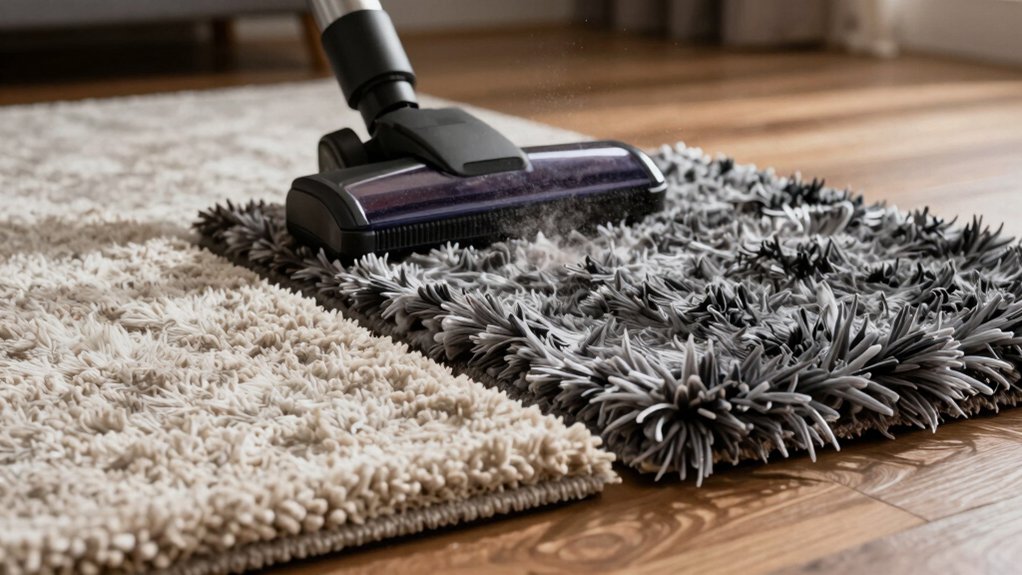
You need the right pile to get efficient, safe cleaning: Pile geometry controls airflow, agitation and snag risk. Choose low or dense loop (including Berber) for high-traffic areas and easy vacuuming. Use textured cut-pile for soil-hiding with reliable cleaning. Avoid high-pile plush or Saxony unless you have adjustable suction and soft brush settings.
Match brushroll stiffness and head height to pile; use more passes on deeper piles. Keep maintenance regular for best results. More practical guidance follows.
Quick Overview
- Loop piles (Berber/level loop) resist footprints and vacuum marks; they require low clearance and minimal brush agitation for best cleaning.
- Low-pile and dense cut-pile carpets allow high airflow and stiffer brushrolls for deeper soil removal with fewer passes.
- High-pile plush needs reduced suction and soft-bristle or brush-off mode to prevent fiber pull and pile distortion.
- Cut-and-loop and textured cut-piles hide soil well; however, they often need more passes and occasional deep cleaning to remove embedded dirt.
- Match vacuum height, suction, and brush type to pile geometry. Adjust if fibers lift: raise brush or reduce suction; or if soil remains: lower height or increase passes.
Quick Verdict: Best Carpet Piles for Rooms (Vacuum‑Friendly)
Which carpet pile will give you the best mix of cleanliness, durability, and easy vacuuming? You’ll find loop piles: Berber and level loop lead for high-traffic rooms because they resist footprints and vacuum marks. They stay presentable with routine cleaning.
Low-pile loop and dense cut-pile options vacuum easily and trap fewer allergens, making them the practical choice where indoor air quality matters. Frieze and textured cut-pile offer a compromise; they hide dirt well and clean reliably without the maintenance demands of plush styles.
Avoid plush and Saxony if you want minimal appearance maintenance. Their high pile shows marks and needs more frequent, thorough care. Cut-and-loop constructions add pattern and texture while retaining solid vacuum performance thanks to loop segments that resist crushing.
When selecting, weigh cost comparison and review durability testing reports so you can specify a pile that meets your cleaning schedule, traffic level, and long-term performance expectations.
How Carpet Pile Affects Vacuuming: Suction, Brushrolls, and Snag Risks
How does pile construction change the way a vacuum works on your carpet? You’ll find that pile geometry directly alters airflow, agitation, and snag risk. Don’t fall for suction myths that claim raw power alone solves cleaning: high suction helps, but without proper height adjustment and compatible agitation, you’ll either leave soil deep in fibers or crush pile appearance.
Match brushroll quirks to pile type. Stiff, dense brushrolls lift low to mid loop carpets effectively, improving soil removal without repeated passes. Those same brush designs can catch and pull long cut fibers on high pile or plush textiles. You’ll want softer bristles or a brush off mode.
Adjustable height and controlled airflow matter most. Set a low clearance for loop and Berber to avoid marks, and a higher setting for plush to reduce snagging. Choose vacuums where suction, brushroll design, and height work together: that combination, not a single spec, determines performance.
Pile‑By‑Pile Guide: Loop, Berber, Cut (Plush, Saxony, Twist), and Cut‑And‑Loop
Now that you know how pile geometry changes suction, agitation, and snag risk, let’s look at specific pile constructions so you can match vacuum features to each one. Loop pile uses uncut loops; it is engineered for loop durability in high-traffic corridors. You’ll prioritize suction control and minimal brush intrusion to avoid snags. Higher density improves resistance to crushing.
Berber is a loop variant with multi-colored flecks. Wool Berber gives softness; nylon or olefin versions add bleach-cleanability. Treat Berber like loop pile but expect variability in pile height and snag susceptibility.
Cut piles differ. Plush is dense and uniform but shows footmark visibility; you’ll prefer adjustable height and moderate agitation. Saxony has twisted fibers that mask footprints better than Plush. Twist has heavy twist and excellent wear resistance suited for busy zones.
Cut-and-loop combines both elements to hide footprints and stains with patterned texture. It tolerates more aggressive cleaning but still benefits from proper suction and head-height settings.
Vacuum Settings & Troubleshooting: Suction, Brush Height, Passes, and Stains
Because carpet performance depends on matching machine settings to pile, you should set suction, brush height, and cleaning technique with the pile type in mind to avoid damage and maximize soil removal.
Adjust vacuum settings: low-pile loops need higher airflow and minimal agitation, while high-pile plush requires reduced suction to prevent fiber pull and pile distortion. Set brush height so bristles just contact the surface without digging into backing. Raise brushes for loop piles to avoid snagging.
Follow pass guidelines: 2–3 passes for low-pile, 5–6 passes for high-pile or textured cut-pile to equalize soil pickup. Pre-treat stains before vacuuming: blot persistent spots and apply an appropriate stain remover, then vacuum once residue is dry. For pet homes, use a motorized brush you can switch off for delicate loop carpets to prevent damage.
Use systematic troubleshooting: if fibers lift, lower suction or raise brush; if soil remains, increase passes or check airflow and filters.
Buying & Maintenance Checklist: Pick the Right Pile, Vacuum, and Care Plan
Having matched suction, brush height, and technique to your carpet’s pile, you’ll next pick the right pile, vacuum, and care plan so performance stays consistent over time. Choose pile types with cleaning performance in mind: loop pile or low-pile cut for high-traffic areas, dense loop or textured cut-pile for pets and shedding, and avoid high-pile plush where durability and maintenance are priorities.
Match pile density and face weight to a vacuum with adjustable suction and a compatible power head to avoid under-cleaning or fiber damage. For odor control, combine prompt waste removal, enzymatic cleaners, and routine deep-clean cycles.
- Select pile: prioritize dense loop/textured for durability and hide-soil needs.
- Match vacuum: adjustable-suction upright/canister with beater-bar for dense piles.
- Schedule: daily quick passes in traffic zones; weekly in bedrooms.
- Maintain: use brush-roll-off for plush; deep-clean seasonally; treat spills immediately.
Frequently Asked Questions
Can Carpet Pile Type Affect Indoor Allergy Symptoms?
Yes, carpet pile can affect indoor allergy symptoms. You’ll find that dense, low piles trap fewer allergens and let your vacuum performance remove dust and pet dander more effectively; this reduces carpet allergy triggers.
High, shaggy piles hold more dust, pollen, and mites. This makes vacuums less efficient and symptoms worse. Choose low-pile, tightly woven carpets and use high-efficiency vacuums with HEPA filtration to control allergens.
Are Area Rugs With Different Piles Safe to Layer Together?
Yes, you can layer area rugs with different piles, but you’ll need to manage pile safety and stability. Use a quality non-slip rug pad cut to match larger rug dimensions. Ensure low-pile rugs sit atop high-pile ones to avoid trip hazards. Secure edges with rug tape if needed.
Regularly inspect for uneven wear, loose fibers, and moisture trapping. Vacuum appropriately for each pile to maintain longevity and indoor air quality.
How Do Pets’ Claws Influence Pile Longevity Across Types?
Pets’ claws accelerate pile wear; they snag fibers, split yarns, and abrade tufts, reducing pile longevity especially in loop and cut-pile blends. You should trim nails, use scratching posts, and choose dense, low-loop or tightly twisted nylon/polyester to resist damage.
Apply protective finishes or rugs in high-traffic zones, and inspect seams regularly. With proactive grooming and material selection, you’ll markedly extend pile longevity despite claw activity.
Can Radiant Floor Heating Damage Certain Carpet Piles?
Yes, radiant floor heating can affect some carpet piles. You’ll find natural fibers and thick, dense piles more prone to moisture-related shrinkage or distortion. In contrast, synthetic low-pile carpets tolerate heat better.
Consider underlay compatibility, maximum surface temperature, and installation specs to preserve vacuum performance and carpet maintenance routines. You’ll monitor humidity, avoid excessive temperatures, and choose materials rated for heated floors to prevent premature wear or pile degradation.
Do Carpet Warranties Cover Vacuum-Related Pile Crushing?
Yes, but it depends. You’ll need to check carpet warranty specifics: many warranties exclude normal wear and aesthetic changes like pile crushing from vacuum performance implications. Some cover manufacturing defects that accelerate crushing.
You should document pile condition, follow manufacturer cleaning guidelines, use recommended vacuum settings and tools, and retain purchase records. If crushing results from a defect despite proper care, file a warranty claim with photo evidence and service history.
Conclusion
You now know how pile type changes vacuum performance and what to prioritize: low, dense piles like Berber and low-loop carpets clean easiest. Plush and high-twist piles need adjustable suction and brushroll control. Set height correctly, use multiple passes, and switch to bare-floor or no-brush modes on delicate loops.
Pick a vacuum with strong, adjustable suction and easy maintenance. Follow a routine for spot treatment, rotation, and professional cleaning to keep fibers performing and lasting.
You may also like: Vacuums With No-Go Zones For — a related guide worth bookmarking.