Robot Vacuum Suction Ratings Explained
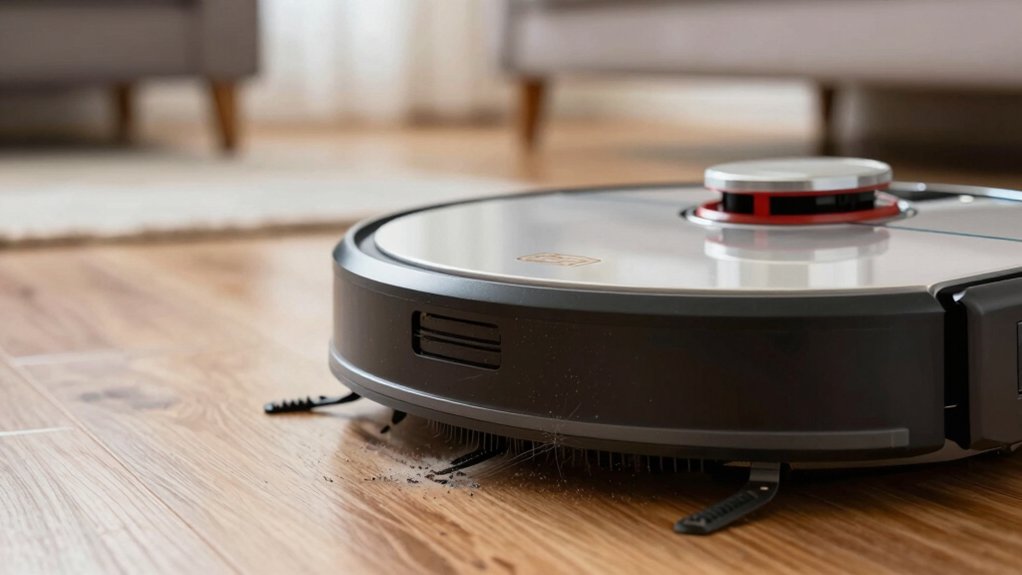
You should judge robot suction by Pa (static inlet pressure) plus airflow and brush/seal efficiency, since Pa alone overstates real cleaning power. Pa/kPa show the vacuum’s pull at the inlet; Air Watts combine pressure and flow to approximate useful work. High Pa helps on carpets but needs good airflow paths, brushes and seals to translate into pickup.
Look for matched airflow or AW figures and verified tests. Keep going to learn practical tests, benchmarks and maintenance tips.
Quick Overview
- Pa (pascals) measure static inlet pressure: the raw “pull” available to lift debris, with kPa = 1,000 Pa.
- Air Watts combine pressure and airflow to approximate real cleaning power; however, they lack consistent industry standardization.
- High Pa alone doesn’t guarantee cleaning. Airflow, brush design, seals, and filters determine usable suction.
Typical robot ranges are ~2,500–6,000 Pa common. Top claims are 8,000–18,000+ Pa, but validated airflow tests matter more.
Compare Pa alongside measured airflow, efficiency reports, and real-world tests (sand/carpet) rather than trusting headline numbers.
Quick Takeaway: What Suction Numbers Mean for You
Wondering what those Pa numbers on robot vac specs actually mean for your floors? You’ll see Pascals listed as static suction pressure: a technical measure of the force the inlet can exert to pull debris. Higher Pa suggests greater potential suction; however, it’s only one piece of the puzzle. Real cleaning depends on airflow, brush geometry, seals, and filtration. Those internal design elements often trump raw Pa.
Don’t treat a headline Pa value as a guarantee. Independent tests show models with similar Pa can perform differently on dust, hair, and larger particles. Also, watch for irrelevant material in spec comparisons: isolated numbers without context mislead. Compare designs and look for combined metrics (like airflow-related figures) and performance tests.
External factors such as floor type, debris size, and brush settings change outcomes significantly. Use Pa as a comparative indicator, not the sole decision criterion, and prioritize measured cleaning results over top-line suction claims.
What Pa, kPa and Air Watts Measure in Robot Vacuum Suction
How do Pa, kPa and Air Watts actually differ when you compare robot vacuums? You’ll see Pa (pascals) listed most often; they measure suction pressure—the force pulling debris into the intake. kPa is just 1,000 Pa, a larger-scale label that can reduce digits without changing meaning. Air Watts combine pressure and airflow, approximating real-world cleaning power, but aren’t standardized across brands.
| Metric | What it evokes |
|---|---|
| Pa | Raw pull, technical promise |
| kPa | Scaled magnitude, concise claim |
| Air Watts | Practical performance, expectation |
| High Pa only | Possible disappointment |
| Balanced design | Reliable cleaning |
You shouldn’t confuse high Pa with guaranteed cleaning. Airflow and intake design matter. When specs feel like an unrelated topic or trigger random confusion, compare both pressure and airflow/design notes. That gives a clearer, technical basis for evaluating real suction performance without overstating a single number.
How Much Suction You Really Need (Benchmarks & Quick Answer)
Need a quick rule of thumb? Aim for at least 3,000 Pa for reliable everyday cleaning. 5,000 Pa or higher gives noticeably better carpet and heavy-debris performance. Typical robots sit between 2,500 and 6,000 Pa; some premium units claim 12,000 to 20,000 Pa, but numbers that high can verge on marketing fluff without proportional gains.
You should treat Pa as a benchmark, not the lone decision factor. In comparative tests, higher Pa didn’t always equate to superior sand pickup on carpet. This shows Pa can be an unrelated metric when isolated. For cordless or robot platforms, pairing Pa with Air Watts helps you assess real work output; though AW methods vary across brands.
Choose based on surface: hard floors do fine near 3,000 Pa. Deep-pile carpets benefit from 5,000 or more Pa, plus efficient brush and sealed airflow. Don’t chase top-line Pa alone; prioritize balanced design over headline numbers.
Why Pa Isn’t the Whole Story : Airflow, Brushes and DPU
Why does a high Pa figure often disappoint in real cleaning tests? You’ll see that Pa measures static pressure at the inlet, not the moving air mass that carries debris. Airflow efficiency and duct design determine how much of that pressure becomes usable flow; a high Pa with restrictive ducts or many bends yields poor DPU.
Compare two robots with equal Pa: the one with straight, wide airflow paths and robust sealing integrity will maintain suction under load and move more particles.
Brush geometry and filter behavior further separate spec from result. Aggressive brushes agitate carpet fibers so Pa can reach embedded dirt, while poorly designed brushes or clogged filters break the pressure-to-flow link and dump performance into the dustbin inefficiently.
You should evaluate Pa alongside measured airflow, brush effectiveness, and real-world sealing to predict cleaning; do not rely on Pa alone.
Best Suction Ranges by Floor, Pets and Mess Type
Curious which suction level matches your floors and messes? You’ll choose by balancing suction vs. runtime and matching carpet vs. hard floor needs. Use these target ranges as a technical baseline and adjust for pile, pets, and debris type.
- Hard floors (tile, wood, low-pile): 1,600–2,500 Pa; efficient pickup with longer runtime, ideal when airflow is adequate.
- Low-to-medium carpet: 2,200–3,000 Pa; balances deep pickup and battery life. Raise suction for embedded dirt.
- Pet-heavy homes: 3,000–5,000 Pa; needed to extract fur from fibers. Expect reduced runtime under sustained power.
- High-pile/dense carpet & embedded debris: 4,000–6,000+ Pa (premium units up to ~18,000–20,000 Pa); maximizes extraction. Prioritize airflow design to prevent clogging.
Compare ranges for your layout: prefer lower Pa for open hard floors, higher Pa and better airflow for textured or pet-dense environments.
Validate Suction Claims With 3 Simple Home Tests
How will you know if a robot’s advertised Pa rating actually translates to cleaning power? Run three controlled home tests: sand on hard floor, sand on carpet, and a mixed typical debris/edge case test (rice on carpet). Use the same room size, robot mode, and measured sand quantity each time.
| Test | Metric |
|---|---|
| Hard floor sand pickup | % recovered |
| Carpet sand pickup | % recovered |
| Rice on carpet (typical debris) | % recovered |
| Stuck debris/dirty patch (edge case) | adaptive suction observed? |
| Repeatability | variance across runs |
Measure debris placed vs. debris recovered to compute DPU (debris pick-up %). Compare models by DPU, not Pa alone. Real-world tests show 8,000–18,000 Pa models vary widely.
Note whether the robot increases suction in dirty patches or when debris jams brushes; that indicates adaptive performance beyond static Pa. Keep conditions consistent to fairly validate claims and reveal when high Pa doesn’t equal high DPU.
Design and Maintenance That Keep Suction Consistent
Want consistent suction, or just a high Pa number that drops after a few runs? You’ll get reliable cleaning only when thoughtful design maintenance and regular user care work together. Sealed airflow paths and streamlined ducts reduce pressure loss, so rated Pa translates to real-world pickup. Compare models by duct geometry and filter surface area, not just peak Pa. Brush geometry and filter efficiency determine dirt agitation and airflow throughput; a clever brush can outperform a higher Pa vacuum with poor airflow optimization. Blockages in the suction path, dustbin, or filters cut effectiveness fast; proactive maintenance matters.
- Empty dustbin frequently to prevent backpressure and maintain airflow optimization.
- Clean/replace filters on schedule; clogged filters reduce Pa-to-performance conversion.
- Inspect ducts and remove blockages; even small debris causes big suction loss.
- Clean sensors and remove cables/objects prior to runs to avoid avoidance behavior and lost coverage.
You’ll preserve consistent suction by pairing robust design with disciplined maintenance.
Choosing Suction: Balancing Power, Runtime, Noise and Cost
Which suction level makes the most sense for your home depends on tradeoffs in cleaning power, runtime, noise, and cost. You’ll weigh suction vs cost: higher Pa boosts pickup but raises price and battery drain unless the robot uses adaptive suction. Air Watts and airflow matter; don’t chase Pa alone. Duct design and seals change real performance.
Noise considerations are tied to power: louder motors and higher suction often mean shorter runtime and more disturbance.
| Metric | Low–Medium Pa | High Pa |
|---|---|---|
| Cleaning (real) | Adequate with good airflow | Superior if airflow sealed |
| Runtime | Longer | Shorter unless adaptive |
Maintain filters, brushes, and sealed paths to preserve suction efficiency. Choose a balanced unit: moderate Pa with proven airflow and adaptive modes gives reliable cleaning, acceptable noise, and reasonable cost.
Prioritize systems that report AW or document airflow to predict real-world results.
Top Models and What Their Pa Numbers Mean in Real Cleaning
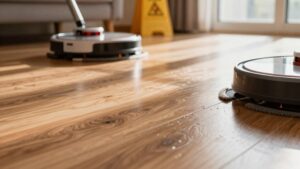
Curious how Pa numbers translate to real cleaning? You’ll see Pa gives a baseline for suction force; however, you should judge models by how that force is delivered. Top models list 8,000–18,000 Pa (Deebot X2 Omni, X8 Pro Omni, T80 Omni) showing potential, not guaranteed performance. Think in terms of system efficiency: airflow path, seals, brushes, and filtration.
- Compare rated Pa against measured airflow and seal quality. High Pa with leaks mimics a random topic in irrelevance.
- For carpets, higher Pa (8k–20k) helps embedded dust if brush design channels debris to the suction inlet.
- On hard floors, moderate Pa with optimized airflow often equals or outperforms raw high-Pa units.
- Evaluate noise, runtime, and real-world tests; Pa alone is an irrelevant pairing for final judgment.
You should prioritize validated performance data and design metrics over headline Pa values.
Frequently Asked Questions
How Do Suction Ratings Affect Allergy Control and HEPA Filtration Performance?
Higher suction ratings generally improve allergy control by pulling more particles into HEPA systems; however, they can raise suction noise and reduce battery efficiency. You’ll get better capture of fine dust and pollen with stronger suction. Yet, filters must match airflow to avoid bypass.
Compare models: higher-rated units trap more allergens but run louder and shorter. Optimized designs balance suction, HEPA sealing, noise mitigation, and battery management for best allergen reduction.
Can Suction Damage Delicate Rugs or Curtains?
Yes, high suction can harm delicate rugs or curtains if you’re not careful. Compared to lower-power modes, strong suction increases curtain snag risk and can pull fringes or thin pile fibers. Gentle rug protection features (brush lift, suction-reduction, soft rollers) reduce stress. You’ll want adjustable settings, boundary strips, or spot-clean modes.
Technically, monitor airflow and brush contact pressure to balance cleaning performance against fabric abrasion and deformation.
Do Suction Ratings Predict Battery Lifespan Decline Over Years?
No, suction ratings do not predict battery lifespan decline over years. You will see suction longevity relate to motor wear and filter clogging; it does not directly relate to battery health.
Battery degradation depends on charge cycles, temperature, and charging habits. A high-suction model may drain faster per run, but it will not necessarily age the battery quicker.
Compare maintenance needs and charge management instead of relying on suction ratings to forecast long-term battery performance.
How Do Suction Specs Relate to Mop-Equipped Robot Models?
Suction specs matter less for mopping performance than for suction mop synergy. You’ll rely on water flow, pad pressure, and suction working together. Higher suction helps debris pickup before wetting; however, excessive force can reduce pad contact.
Compare models by how they balance airflow with mop mechanics and rug sensor calibration to avoid wetting carpets. You’ll prioritize combined system tests and firmware that adjusts suction and mop pressure dynamically.
Are Suction Claims Standardized Across Different Manufacturers?
No, suction claims aren’t standardized across manufacturers. You’ll see manufacturer variability in testing methods, units (Pa, air watts), and test surfaces. Therefore, suction standardization is limited.
When comparing models, you’ll need to verify test protocols, real-world pickup results, and whether specs reflect peak or sustained suction. Use independent lab tests and consistent surface comparisons to get accurate performance insights rather than relying solely on manufacturer-reported numbers.
Conclusion
You’ll want suction that matches your floors and messes, not just the biggest Pa number. Pa, kPa and air watts each tell part of the story: higher is better for deep carpet and pet hair, while moderate suction with strong airflow and good brushes wins on hard floors.
Balance suction with runtime, noise and maintenance. Validate claims with simple home tests; prioritize consistent design (filters, seals, brushes), and pick a model tuned to your specific needs.