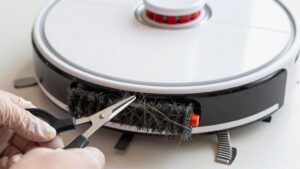
Robot Vacuum Side Brush Compatibility Chart by Brand
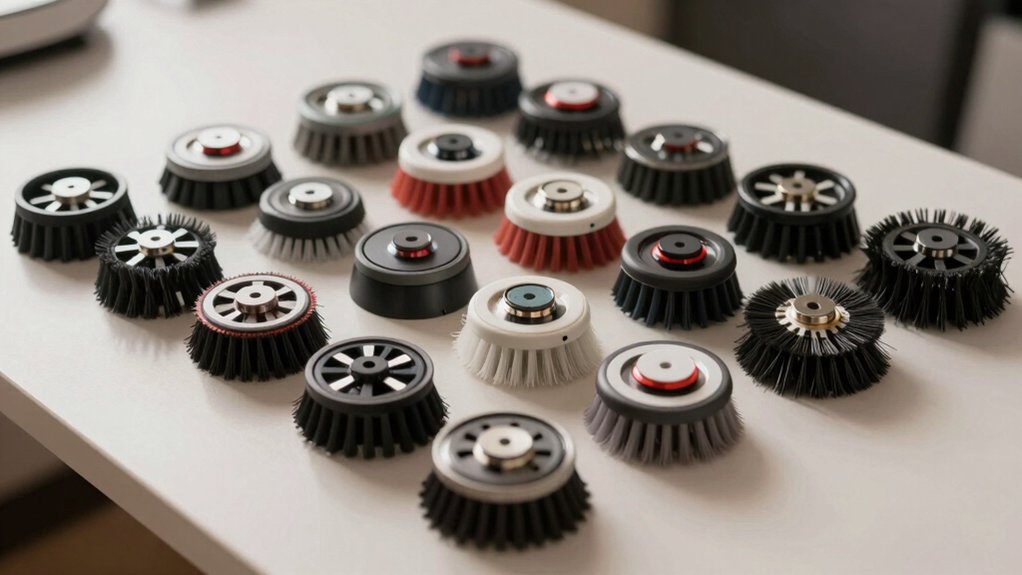
You can confirm side brush fit in three quick steps: Find your exact model on the base or app, match it to the brand compatibility chart, and verify shaft diameter, tab alignment, and bristle/roller variant before ordering.
Shark uses Part#102KY1000 for many RV/AV series (packs of 14, ~9.7×3.6 cm); Roborock A1 and A2 use distinct mounts. Cross-brand fits vary, so check negatives carefully. Continue for model-by-model specs, measurements, and replacement timing.
Quick Overview
- Identify your exact vacuum model number from the base, app, or manual before checking compatibility.
- Use a brand-specific compatibility chart to match model rows to the correct side-brush part number.
- Verify physical fit: side-brush diameter, shaft diameter, exposed length, and end-tab alignment.
- Note brand-specific variants (e.g., Roborock A1 vs A2) are not universally interchangeable.
- Replace brushes every 1 to 2 months or when bristles deform; follow chart recommendations for part packs.
Find Your Side‑Brush Fit in 3 Steps
Looking for the right side brush? You’ll follow a clear 3-step process to confirm fit and protect side brush safety.
First, identify your vacuum’s exact model number: check the base, app, or manual. Compatibility varies by brand and model; that code prevents costly mismatches.
Second, consult the brand chart: find your model row and match the listed part type (for example, Roborock A1 vs A2 distinctions and Q5 A2/B1 notes). Note bristle and roller configurations; they determine which variant fits.
Third, verify accessory category and order the specified spare part: don’t substitute across brands. While installing, inspect mounts for wear and follow replacement timing guidelines. Replace when bristles fray or rotation falters to maintain performance and avoid damage.
This method gives you a precise, safe selection path without guessing; it ensures you get the correct side brush the first time.
Shark Side‑Brush Compatibility (Models & Part Numbers)
Which Shark model do you have? You’ll want to confirm model numbers: IQ EZ Robot AV2501AE, RV2502AE, R101AE (RV1001AE), AV1002AE, AV911S, RV1000 series, RV2000WD, UR1000SR, UR1005AE, QR1000SB/SG/SW and AV2501AE variants are listed for a specific replacement. The designated part is Part#102KY1000 (14 pieces per pack). Each side brush measures ~9.7 cm x 3.6 cm (3.8 x 1.4 in); it is designed to reach narrow edges.
| Model family | Fits part# |
|---|---|
| Ion Robot (RV1000, RV2000) | 102KY1000 |
| AV/UR/QR series (listed variants) | 102KY1000 |
Check your exact model before ordering to assure shark compatibility. Names and codes vary across regions. For reliable performance, follow the recommended replacement cadence of every 1–2 months depending on use and debris levels. Replace sooner if bristles deform or cleaning drops.
Roborock A1 vs A2: Which Fits Which Models
If you’ve just checked your Shark side brush fit, you’ll also want to verify which Roborock side brush style your model uses: A1 and A2 are distinct generations and aren’t universally interchangeable. You should identify the A1 (older) versus A2 (newer) designation before ordering replacements because Roborock’s listings separate them explicitly. That separation reflects mechanical differences in mounting and spindle design that affect Roborock compatibility and proper side brush fit.
Check your vacuum’s user manual, part label, or manufacturer accessory page for the A1/A2 callout. Note that some models follow unexpected rules; for example, the Roborock Q5 uses a main roller similar to A2 but remains compatible with the B1 brush. Therefore, model-specific verification matters. Don’t assume generational similarity implies interchangeability. Confirming the exact brush style prevents poor performance and fitting issues. This ensures you get the correct replacement for reliable cleaning and long-term wear.
Eufy, Roomba, Goovi, ONSON: Cross‑Compatibility Tips
Wondering whether brushes and parts from Eufy, Roomba, Goovi, or ONSON will work interchangeably on your robot? You can often mix within certain lines, but watch for negative compatibility notes and inconsistent labeling. The chart flags DBS02 as suitable for DBS02 compatibility while marking DBS01 R500+ as unsuitable for R500 DBS01. This is a clear example of model-specific restrictions.
Goovi and ONSON listings show broader cross-brand use within the Goovi family: D380 and D382 (Goovi 1600PA) and ONSON-labeled F007C (Goovi 2000PA) and J10C (Goovi 2100PA) are explicitly compatible. That means you’ll likely swap parts across Goovi series, but not universally across brands.
- Check the chart for explicit compatibility entries before buying.
- Treat labels skeptically when you see inconsistent labeling or generic part names.
- Respect negative compatibility flags to avoid fit or dropout issues.
Use model-specific entries as your primary guide. Don’t assume one-brand parts fit another without confirmation.
Measure Shaft & Fit: Dimensions, Shapes, and Replacement Timing
How do you know a replacement side brush will actually fit your robot? Measure the shaft and compare dimensions: Roomba notes list a 5.2 cm (2.1 in) side brush length, while individual kit brushes run about 9.7 x 3.6 cm (3.8 x 1.4 in). For reliable shaft fit, you’ll match diameter and exposed length to the motor post. Additionally, check end tab alignment so the tab seats in the vacuum’s slot without rocking.
Inspect shaft shapes: round, D-flat, or keyed posts require corresponding holes or adapters. Bent brushes can often be rescued by soaking in warm water to restore shape. This keeps the shaft fit functional a bit longer. Follow a replacement cadence of every 1–2 months under normal use to maintain performance; measure wear each change.
Record shaft dimensions and tab orientation before buying replacements to avoid misfits. This ensures smooth installation.
Frequently Asked Questions
Are Aftermarket Brushes Safe for Robot Warranty Coverage?
Yes, using aftermarket brushes can be safe, but you’ll want to consider warranty implications carefully. Are aftermarket parts explicitly allowed by your manufacturer? Official parts usually avoid disputes and ensure compatibility across brands.
Aftermarket options often work and save money; however, keep receipts and follow replacement schedules to show proper maintenance. If warranty language forbids third-party parts, stick with official replacements to protect coverage.
Can Side Brushes Be Cleaned Rather Than Replaced?
Yes, you can usually clean side brushes instead of replacing them. You’ll remove hair, debris, and gunk with tweezers and mild soap. Rinse, dry fully, and inspect for wear.
Regular brush maintenance prolongs life; however, compatibility testing matters if you swap aftermarket parts. Mismatched brushes can stress motors or void warranties. Check manufacturer specs, test performance after cleaning, and replace if bristles are bent, missing, or brittle.
Do Different Brush Colors Indicate Stiffness/Material?
Yes, different brush colors often indicate color coded stiffness and material differences. You’ll find manufacturers use colors to mark soft, medium, or stiff bristles; sometimes synthetic versus mixed-fiber construction.
That coding helps you pick brushes for hard floors, carpets, or pet hair. Check your model’s guide so you’re using the right combination. Using incorrect stiffness or material can reduce cleaning efficiency and increase wear.
How Do Brushes Affect Suction or Battery Life?
Brushes indirectly affect suction and battery life by changing brush effectiveness and maintenance implications. You’ll see reduced suction if worn or clogged brushes push debris poorly into the intake; this forces the motor to work harder.
Heavier or damaged brushes increase load, shortening run time. Regular cleaning and timely replacement preserve airflow and efficiency. Therefore, schedule inspections, remove hair and debris, and swap brushes per manufacturer guidance to maintain peak performance.
Are There Universal Adapters for Mismatched Shafts?
Yes, you can use universal adapters to fit mismatched shafts, but choose carefully. You’ll find silicone collars, stepped bushings, and clip-on couplers that bridge diameter and spline differences.
Match inner/outer diameters, rotational fit, and material hardness to avoid wobble or wear. Test for clearance and secure attachment; a slightly snug press-fit usually works.
Poorly chosen adapters can increase vibration, reduce brush lifespan, or stress the motor.
Conclusion
You’ve now got the know-how to pick the right side brush quickly and confidently. Use the three-step approach: check your model, verify part numbers, and measure the shaft. Match shapes and tabs, and note when wear shows: frayed bristles, wobble, or thinning.
For cross-brand swaps, confirm dimensions and locking style before buying. Replace proactively every 6–12 months or sooner with heavy use to keep edge cleaning efficient and protect your suction system.