Robot Vacuum Battery Capacity and Runtime Explained
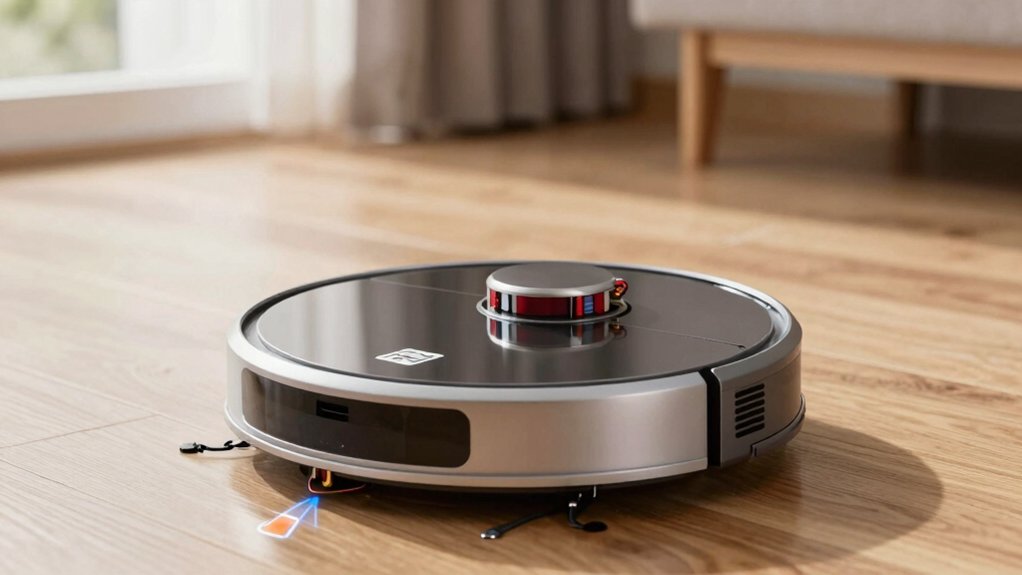
You’ll get realistic runtime by matching battery capacity (mAh or Wh), cleaning mode, and home layout; not by trusting a single-charge claim.
Bigger Wh usually means more minutes; however, Turbo suction, carpets, and clutter cut that time sharply. Eco modes and hard floors extend runtime. Recharge‑and‑resume lets a job span multiple charges.
Batteries age over years and cycles, lowering minutes. Keep modes and paths efficient for longer runs.
Continue for practical tips and selection guidance.
Quick Overview
- Battery capacity (mAh or Wh) indicates stored energy; Wh is best for comparing batteries across voltages.
- Runtime varies widely: typically 60–180 minutes depending on model, mode, and real-world conditions. Higher suction modes and carpeted floors significantly reduce runtime compared with Eco/Standard modes on hard floors.
- Manufacturer runtimes are optimistic. Expect roughly 20–30% less in real homes due to navigation and obstacles.
- Recharge-and-resume or larger Wh batteries are key for covering bigger homes or multi-room cleaning in one session.
Typical Runtimes : What “Single Charge” Means
Wondering how long a robot vacuum will actually run on a “single charge”? You’ll typically see 60 to 180 minutes listed: older or budget models sit near 60 minutes, while newer high-end machines can reach about 180 minutes in low-power modes.
Don’t expect box claims to match your home experience; carpets, clutter, and using higher suction shorten real runtimes. You can prolong cleaning by choosing Eco or Standard modes. Max or Turbo will drain the battery faster but tackle stubborn dirt better.
Some robots use recharge-and-resume, so even if a single charge doesn’t finish the job, the device can top up and continue; this effectively extends a cleaning session beyond the listed single-charge time. Charging itself usually takes 3 to 6 hours depending on battery size and model.
Keep two word discussion idea1 and two word discussion idea2 in mind when weighing runtime claims against your floor plan and cleaning habits.
Battery Capacity (mAh/Wh): What Those Numbers Mean in Minutes
You’ve seen how runtime varies by mode and home layout, but battery capacity is the raw number that underpins those runtimes. Capacity appears as mAh or Wh: Wh = volts × (mAh/1000) and gives a practical sense of minutes you can expect per charge. A typical robot uses 2,000–4,000 mAh (roughly 20–60 Wh). Higher Wh usually means longer single-charge cleaning sessions on the same device.
Don’t treat mAh/Wh as a fixed minutes-per-unit rule, though. Real-world runtime depends on factors like floor type, navigation, and cleaning intensity. Therefore, two batteries with similar Wh can deliver different minutes. Manufacturers often list Wh to compare across different voltages.
Also, factor battery chemistry and the number of charging cycles: capacity degrades over time, so nominal mAh/Wh stays the same while effective minutes fall. Use Wh for apples-to-apples comparisons and expect gradual runtime loss as the pack ages.
Cleaning Modes & Suction: How They Affect Runtime
How much power you pick for each cleaning session directly changes how long the robot runs. Higher suction settings (Turbo/Max) and active mopping modes use noticeably more energy than Eco or Standard; thus, they cut single‑charge runtime. You’ll notice high suction shortens runtime sharply because the brush and fan motors draw more current. Similarly, water pumping for mopping adds steady load during wet passes.
Use Eco/Standard on light dirt and reserve Turbo/Max for embedded debris. If coverage exceeds a single charge, models with recharge and resume will return to base, recharge, then continue. Expect real-world runtimes to be roughly 25% below manufacturer claims due to extra work and navigation.
| Mode | Energy Use | Typical Effect |
|---|---|---|
| Eco | Low | Longest runtime |
| Standard | Moderate | Balanced |
| Turbo/Max | High | Shorter runtime |
| Mopping (water pumping) | Moderate–High | Further reduces runtime |
Floor Type, Layout, and Obstacles: Real‑World Runtime Impact
What happens to runtime when your robot moves from hardwood into carpet? You’ll see a measurable drop: carpets and high-suction modes draw more power than hard floors, so runtime per charge falls. Good floor planning reduces surprises. Grouping carpeted rooms or scheduling high-suction passes separately limits unnecessary mode switching.
Layout matters. Wide open hard-floor spaces let the robot cover more area per charge. Dense rooms with narrow passages force frequent turning, wall-to-wall cleaning, and more travel distance; all of which increase energy use. Cluttered layouts trigger extra obstacle avoidance maneuvers and repeated passes, lowering effective area cleaned between charges.
Larger or complex-shaped areas with deep recesses also shorten runtime because the robot spends more time reaching and exiting corners. To maximize real-world runtime, clear pathways, minimize obstacles, and optimize floor planning so the robot can clean efficiently with fewer starts, stops, and mode changes.
Recharge-and-Resume and Total Session Dynamics
Curious how a robot with a modest single-charge runtime still finishes a big job? You’ll rely on recharge mechanics and sensible session dynamics. Many robots return to the dock mid-clean, top up, then resume exactly where they left off, letting a single cleaning session span multiple charges.
- Recharge mechanics: The robot senses low battery, navigates home, charges just enough, then restarts without re-cleaning finished areas. That minimizes wasted time and preserves coverage.
- Session dynamics in practice: Total session time can exceed single-charge runtime because pauses for charging are included. Plan for longer elapsed time even though active cleaning is continuous across charges.
- Coverage vs runtime: A shorter single-charge runtime doesn’t always mean less coverage. Recharge-and-resume lets machines complete larger homes or longer jobs by stitching partial runs into one efficient session.
This approach keeps cleaning efficient over larger areas while avoiding unnecessary repeat passes.
Battery Aging: Signs, Timelines, and When to Replace
When did your robot last lose noticeable runtime? If you’ve noticed shorter runs, slower charging, or it won’t hold a charge, those are classic signs of lithium-ion battery aging. Typical lifespans run 2–5 years; however, cycles matter more: many packs reach 300–500 cycles. This can mean 1–1.5 years with daily use or 2–3 years with moderate use. Track runtime and charging behavior to judge decline rather than calendar age alone.
When replacement becomes necessary, check battery warranty before buying. Some manufacturers cover premature capacity loss. Many models use user-accessible packs or OEM parts; costs typically fall around $120–$180. If you’re unsure, explore repair options: manufacturer service, authorized centers, or reputable third-party technicians. Keep documentation and serial numbers handy for warranty claims.
Replacing the pack restores runtime and is often simpler and cheaper than replacing the whole robot. This is provided repair options and parts are available for your model.
7 Practical Steps to Extend Daily Runtime and Battery Life
If your battery has started to show wear, you can still get more useful runtime each day by changing how and when you run the robot. Focus on preserving battery health with a simple maintenance schedule and smarter operation. Clean brushes and filters regularly so motors don’t work harder than necessary. Clear the docking area so the robot recharges quickly between passes.
- Use eco or standard modes on hard floors and save turbo for spots that need it; lower power settings substantially extend runtime.
- Enable recharge-and-resume for large jobs so the robot can finish a full session across multiple charges rather than draining one deep cycle.
- Recharge before the battery falls below ~20%; always use the manufacturer-approved charger to avoid harmful deep discharges and protect long-term battery health.
Follow these steps consistently and you’ll lengthen daily runtime. You will reduce strain on the battery and get more reliable cleaning without premature replacements.
Choosing a Robot: Match Runtime and Battery Life to Your Home
How big is your home and what kind of floors do you have? You’ll match runtime and battery life to your needs by balancing honest runtime numbers against layout and floor type. Most robots run for 60 to 120 minutes on a charge; eco or standard modes often hit around 90 minutes. High-end models can reach 3 to 4 hours on bare floors in ideal tests; however, real-world runtimes drop with carpets, clutter, and mopping. Recharge and resume helps cover larger homes without needing huge single-charge times.
| Home size | Typical runtime needed | Best feature to look for |
|---|---|---|
| Studio / 1BR | 30 to 60 min | Compact, short runtime |
| 2 to 3BR | 60 to 120 min | Longer battery or resume |
| Large / multi-level | 120+ min | Recharge and resume |
| Carpeted | More power use | High runtime, strong suction |
Avoid marketing fluff and non-technical jargon. Focus on realistic runtime, floor match, and recharge behavior to choose wisely.
Frequently Asked Questions
Can I Use Third‑Party Batteries for My Robot Vacuum?
Yes, you can sometimes use third-party batteries for your robot vacuum, but you should be careful. Third-party batteries may save money; yet, they can cause safety concerns like overheating, poor fit, reduced runtime, or voided warranty.
You should buy from reputable makers, check compatibility, read reviews, and verify certifications (UL, CE). If you’re unsure, stick with the manufacturer’s battery or consult a certified technician before swapping.
How Does Cold or Hot Weather Affect Battery Performance?
Cold weather effects: You’ll see reduced runtime because cold raises internal resistance and slows chemical reactions. As a result, the battery can’t deliver full capacity.
Hot weather effects: You’ll get temporary higher output; however, there is accelerated degradation, swelling, and risk of thermal runaway if extreme.
You should store and operate the vacuum in moderate temperatures. Additionally, avoid charging in very cold or hot conditions and follow manufacturer limits to preserve battery life and ensure safe operation.
Do Software Updates Change Battery Runtime Noticeably?
Yes, software updates can change battery runtime noticeably. You’ll see improvements when updates include battery optimization, better motor scheduling, or sleep-mode fixes; these reduce wasted power and extend runtime.
Occasionally, an update adds features that use more power, which shortens runtime until further optimization arrives. Always read update notes, apply patches, and enable battery-optimization settings so your robot maintains the best possible runtime after each software update.
Is Battery Capacity Affected by Frequent Full‑Speed Boosts?
Yes, frequent full-speed boosts can reduce battery capacity over time. You’ll stress the battery chemistry with repeated boost spikes that increase temperature and current draw; this accelerates wear and capacity loss.
Lithium cells handle occasional peaks, but continual high-power bursts shorten cycle life and lower usable capacity. To prolong runtime, you should limit prolonged boosts, allow cool-downs, and follow manufacturer guidance on charging and firmware that manages power delivery.
Can I Leave the Robot Docked Always Without Harming the Battery?
Yes, you can leave the robot docked most of the time without immediately harming the battery, but you should follow manufacturer guidance. It will usually manage charging and stops to reduce battery aging. However, occasional calibration routines and full discharge cycles help preserve charge accuracy.
If you leave it docked continuously, check settings for maintenance charging; update firmware and run periodic cleaning sessions to keep the battery healthy and reporting capacity correctly.
Conclusion
You’ve learned what battery ratings and runtimes actually mean; how suction, floors, and layout change real-world performance; and why recharge-and-resume plus battery aging matter. Use the seven practical steps to squeeze more daily runtime and prolong battery life. Pick a robot whose stated runtime matches your home’s needs rather than marketing claims.
Do routine maintenance; choose eco or auto modes when possible; and plan for eventual battery replacement to keep cleaning reliable.