Robot Mop Cleaning Solution Dilution Guide
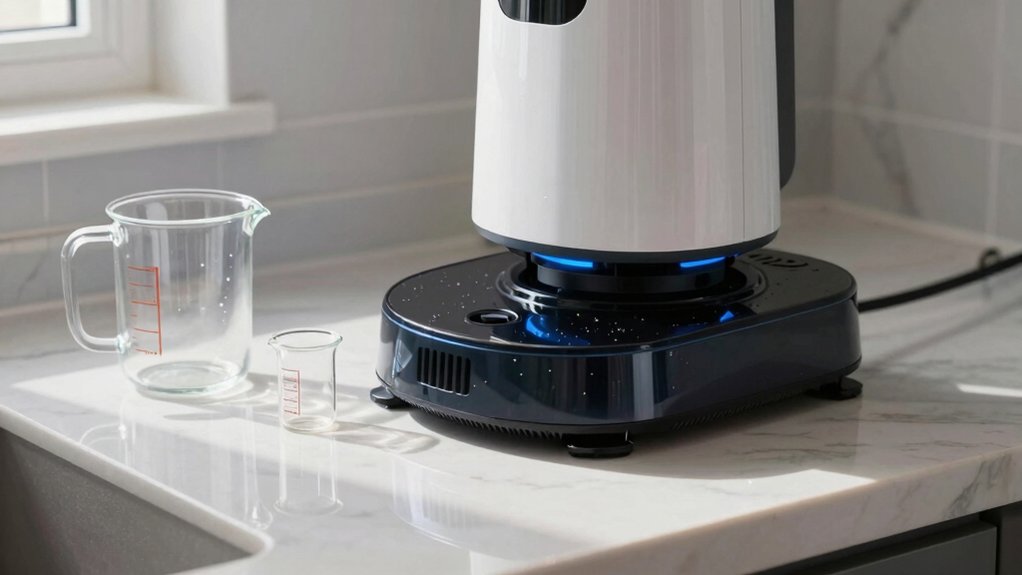
You should only use manufacturer-approved, low-foam cleaners at specified dilutions to protect sensors, seals, and pumps. Never mix different concentrates or use bleach, vinegar, or hot water. Match the method to your model: reservoir fill vs auto-mix. Dilute in cold water — typically about 1:200 (≈10 ml per 2 L) or follow model recipes.
Add concentrate to filled tank, then close and gently invert. Follow safety and troubleshooting steps below to learn specific recipes and fixes.
Quick Overview
- Use only manufacturer-approved, low-foam, residue-free cleaners to protect sensors, seals, and pumps.
- Dilute concentrates with cold water at approximately 1:200 (about 10 ml per 2 L) unless model-specific instructions differ.
- For reservoir dilution, fill the tank with water first. Then, add measured concentrate, close, and gently invert once to mix.
- Follow model-specific recipes (e.g., Braava Jet two capfuls per load; Roomba AutoWash options) and never mix different cleaners.
- If excessive suds or performance issues occur, stop. Drain, rinse with plain water, and consult the compatibility list or manufacturer.
Quick Safety Rules and When to Use a Cleaning Solution (Robot-Mop Dilution Essentials)
When should you use a cleaning solution in your robot mop? Use a solution only when your model’s manual lists approved products; doing otherwise risks warranty voiding and internal damage. Check reagent compatibility: only use solutions specified for sensors, seals, and pump materials. Prefer low-foam, residue-free formulas to maintain foam control and prevent sensor obstruction or pump cavitation.
Follow dilution safety: many systems need a small concentrate dose (for example, ~10 ml per 2 liters) to clean effectively without excess foam. Always dilute with cold water; never use hot water, vinegar, or bleach. For models that accept concentrate, add the cleaner to the empty tank before filling. Others require pre-mixed ready-to-use fluids—adhere to model instructions.
Inspect seals and filters after initial runs for residue. If you detect foaming, stop operation, flush the system with plain cold water, and reassess reagent compatibility before resuming.
Choose a Dilution Method: Reservoir vs. Auto‑Mix (Compatibility Checklist)
Because your robot’s design determines how cleaning fluids are handled, pick the dilution method that matches the model’s specifications and approved reagents to avoid damage or voided warranties. You must verify whether your unit supports auto-dispense compatibility or requires reservoir dilution. Mixing methods or using unapproved reagents risks foaming, sensor contamination, and warranty loss.
For reservoir dilution, add solution at 1:200 with cold water; cap the bottle, and shake to mix before filling the tank. Don’t blend with other cleaners. For robots with integrated auto-mix systems, only load manufacturer-approved concentrate into the designated compartment and follow fill-level indicators and service intervals.
Check the manual for model-specific steps, error codes related to fluid delivery, and whether firmware enforces dispense limits. Never switch between reservoir and auto-mix on the same device. Prioritize the method the manufacturer certifies to maintain dosing accuracy, reduce user handling errors, and prevent mechanical or chemical failure.
Exact Dilution Recipes for Popular Models and Approved Solutions
Now that you’ve confirmed the correct dilution method for your unit, follow model-specific recipes to prevent pump damage, sensor fouling, or warranty issues. For iRobot Braava Jet, add two capfuls of Braava Jet Fresh Liquid Floor Cleaner per load, then water. Otherwise, use Just Water only. Do not use hot water or Water + Vinegar.
For Roomba Plus 400/500 AutoWash Dock, you have three approved options: StayClean Mopping Concentrate (2 caps, then fill with water to indicated level; do not overfill), Braava Jet Fresh Liquid Floor Cleaner (400 mL bottle, fill to the dock line), or Just Water.
For Roomba Max 700 Series, use StayClean poured into the reservoir then water. You can also use Braava Jet Hard Floor Cleaning Solution (400 mL, fill to line) or Just Water. Bona Hard-Surface and Hardwood Cleaners are pre-mixed—no dilution is required.
Follow manufacturer-approved solutions only. Different testing protocols have shown deviations can cause corrosion or foaming; therefore, avoid unnecessary speculation when choosing replacements.
How to Mix and Fill Your Robot Mop Without Suds or Overflow (Step‑by‑Step)
How do you mix and fill your robot mop to avoid suds or overflow? Follow this step-by-step, safety-focused procedure for reliable DIY dilution and suds prevention.
First, remove the bottle seal to ensure accurate dispensing. Fill the mop water tank with cold water only; do not use hot water. Measure 10 ml (one capful) of cleaning solution per 2 L (68 fl oz) of water to achieve a 1:200 ratio.
Add the measured cleaner to the filled tank. Never pour concentrate directly into an empty tank. Close the tank and gently shake or invert once to mix; avoid vigorous agitation that creates foam.
Check for leaks and confirm tank seating before reinstalling. Use only approved, low-foam cleaners. Don’t mix with non-eufy products or add undiluted concentrate, as that raises suds and overflow risk.
Store remaining solution upright and labeled, and dispose per manufacturer guidance.
Troubleshooting Stains, Excessive Suds, Streaks, and Corrosion Risks
After you’ve mixed and filled the tank properly, you’ll want to check for performance issues that indicate misuse or incompatibility rather than mechanical failure. If you see excessive suds, stop operation and drain the system: high-concentration cleaners or incompatible mixes will clog pumps and sensor channels. Rinse with plain water and run a rinse cycle to clear foam and residual chemistry.
For persistent stains, identify the soil type. Grease requires enzymatic or solvent-compatible agents; mineral deposits need acidic descalers only if the manufacturer permits. If a cleaner can’t break down the soil or you haven’t allowed sufficient dwell time, stains will reappear.
Streak prevention depends on using approved low-foam formulas at specified dilutions and ensuring no residual cleaning agent remains on the floor. Avoid acidic or vinegar-based products near metal and rubber; corrosion risk increases with those chemistries. When in doubt, consult the robot’s materials compatibility list and revert to manufacturer-approved solutions.
Frequently Asked Questions
Can I Use Homemade Vinegar Solutions With My Robot Mop?
You shouldn’t use homemade vinegar solutions with your robot mop; they can corrode seals, strip coatings, and void warranties. Use water only when the manufacturer specifies “dishwash safe” plastics or components. Never exceed recommended concentrations.
If you must mix, follow precise dilution, test on a small area, and inspect seals after use. Prioritize manufacturer-approved fluids to maintain pump integrity, sensors, and safe operation.
Will Essential Oils Harm Seals or Electronics?
Yes, essential oils can harm seals and electronics. You should avoid undiluted essential oils because their solvents and concentrated compounds can degrade rubber and plastic seals. They can also penetrate housings, risking electronic safety and corrosion.
Use only manufacturer-approved, water-based solutions at recommended dilutions. Ensure reservoirs and wicks are compatible with oils. If you suspect exposure, power off the device, dry it thoroughly, and consult a technician to prevent seal failure and electrical shorts.
How Often Should I Replace the Cleaning Solution Bottle?
You should replace the cleaning solution bottle every 6–12 months based on usage and manufacturer recommendations. For a precise replacement schedule, log fill dates, run cycles, and exposure to contaminants. Replace sooner if you detect clouding, odors, or diminished cleaning performance.
Always follow expiration codes and dispose of residues per safety datasheets. Regular replacement prevents microbial growth, chemical degradation, and potential damage to seals or electronics; this maintains optimal and safe operation.
Is It Safe to Store Mixed Solution in the Robot Overnight?
Yes, you can store mixed solution in the robot overnight if you follow precautions. You’ll guarantee safe storage by using manufacturer-recommended dilution, sealing the reservoir, and keeping the unit upright in a cool, ventilated area.
Overnight durability depends on solution chemistry; avoid mixtures with volatile solvents or peroxides. Rinse and replace daily if unclear, and inspect seals and sensors before reuse to prevent corrosion, microbial growth, or odor buildup.
Do Cleaning Pods or Tablets Work With My Model?
Yes, pods or tablets can work if your model’s manufacturer lists pod compatibility and you follow dosage specs. You’ll confirm tablet effectiveness by checking dissolution rate, residue profile, and pH limits against your robot’s reservoir materials and seals.
Don’t use unapproved formulations; they can clog pumps, degrade sensors, or corrode parts. Always follow the manual, use manufacturer-recommended products, and run a short test cycle after first use to verify safe operation.
Conclusion
You’ve got the essentials: pick manufacturer-approved solutions, follow reservoir or auto-mix dilution rates, and never exceed recommended concentrations. Always dilute with clean water, measure precisely, and avoid soaps, bleach, or oils that cause suds, streaks, or corrosion.
Rinse and dry reservoirs between solutions. Run a brief test cycle, and wear gloves and eye protection when handling concentrates. Proper dilution and careful filling keep your robot mop safe, effective, and long-lived.