Low Foam Floor Cleaner for Robot Mops Explained
You should use a manufacturer-approved low-foam floor cleaner formulated with non-foaming surfactants, antifoams, and hydrotropes to protect pumps, seals, sensors, and tubing. Low-foam solutions minimize suds that clog nozzles; they also trigger flow sensors, foul pads, and leave residue that causes streaks and odor.
Always add water first if instructed, dose sparingly, never mix cleaners, and rinse the fluid path regularly. Keep following guidance to learn specific dosing, compatible ingredients, and troubleshooting steps.
Quick Overview
- Low-foam cleaners use non-foaming surfactants and solvents to minimize suds that obstruct flow and sensors in robot mops. Foam buildup can clog tubing, mis-trigger flow sensors, and damage seals. Therefore, manufacturers require low-foam formulas.
- Add water first (unless manual says otherwise), then pour the manufacturer-recommended dose. Never mix different cleaners.
- Choose manufacturer-approved, residue-free low-foam solutions with nonionic surfactants and antifoam agents to avoid streaks.
- Maintain and rinse the tank, hoses, spray ports, and pads regularly to prevent foam-related deposits and sensor faults.
What Is a Low-Foam Floor Cleaner and Why It Matters for Robot Mops
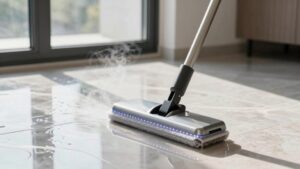
What makes a cleaner “low-foam”? You’re looking at a formulation engineered to minimize sudsing by using non-foaming surfactants and balanced solvent systems so bubbles don’t form in the tank, tubing, or dispensing valves. For a robot mop, low foam prevents foam from obstructing liquid flow, fouling sensors, and compromising seals. If foam accumulates, you’ll see incorrect dispensing, clogged narrow tubing, and flow-control sensors misreading cleaning cycles. All of these degrade robot mop performance.
You’ll also reduce residue deposition on internal components and mop pads. This preserves consistent fluid dynamics and mechanical contact over repeated cycles. Manufacturers often require low-foam, residue-free cleaners in manuals to protect warranties; using high-foam alternatives can void coverage and force extra rinsing or maintenance to clear tanks and ducts. Choose cleaners specified for automated systems to maintain calibrated flow rates, sensor reliability, and long-term cleaning consistency.
Add and Dose Low-Foam Cleaner: Step-by-Step
Before you begin, confirm the tank is empty and the model-specific instructions are at hand. Then add water first (unless your manual specifies otherwise) and pour in only the approved low-foam cleaner in the manufacturer’s recommended quantity. You’ll follow precise dosing steps: use one solution, never mix cleaners, and start minimal — about two dabs or the smallest recommended dose.
For automatic dispensers, place solution in the detergent compartment and follow refill water guidance. For manual tanks, add water then cleaner to avoid dilution errors. Test a short run; watch for suds and sensor issues. Increase incrementally if residue-free performance requires it. Keep compatibility with floor type and robot model in mind. Incompatible fluids can impair flow or sensors.
| Action | Note |
|---|---|
| Tank check | Empty, clean |
| Water first | Unless manual states otherwise |
| Add cleaner | Approved low-foam only |
| Initial dose | ~two dabs |
| Test run | Monitor suds, adjust |
Use two word discussion ideas to label tests and record dosing steps.
Choose a Low-Foam Solution for Your Robot Model
Why choose a manufacturer-approved low-foam solution for your robot mop? You’ll prevent pump clogging, sensor errors, and pad fouling by using a cleaner explicitly formulated for automated mopping and your model’s materials. Confirm non-foam compatibility and model-specific approval in the manual before adding anything to the reservoir. Universals and DIY mixes can void warranties and degrade seals.
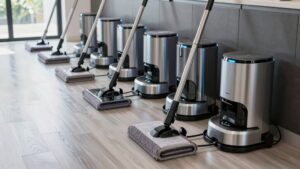
Prioritize manufacturer-approved fluids designed for your robot’s pumps, valves, and dispensing system. If your unit has an automatic dispenser, only use the detergent compartment and follow exact dosing to maintain consistent flow rates. This avoids air entrainment that produces foam. Avoid high-foam, oil-based, or residue-forming products; they compromise pad pickup, leave streaks, and cause odors.
When in doubt, contact support or check the approved-cleaner list. Using the specified low-foam, residue-free solution preserves mechanical reliability, maintains sensor accuracy, and extends service intervals without risking warranty coverage.
Low-Foam Ingredients That Prevent Residue
Curious which ingredients keep foam and residue to a minimum? You should look for low foam ingredients formulated for sealed dispensing, because they control foam generation and support residue prevention in tanks, pumps, and on floors. Focus on these functional classes:
- Silicone-based antifoams that collapse bubbles quickly, minimizing suds formation and downstream buildup.
- Low-foaming nonionic surfactants that provide wetting and soil suspension without persistent foam or film.
- Hydrotropes and solvent blends that improve rinseability, reduce micelle-bound soils, and prevent deposits.
- Polymer dispersants that keep particulates suspended, avoiding redeposition and tank sediment.
Choose manufacturer-approved products with explicit foam profiles on labels or manuals to ensure compatibility with automated dosing and consistent concentration. That specificity preserves flow, prevents overflow triggers, and reduces the need for frequent mechanical cleaning. This keeps your robot mop’s liquid system reliable and clean.
Prevent Foam, Residue, Streaks, and Sensor Errors (Maintenance & Troubleshooting)
Having chosen low-foam, residue-free ingredients, you now need a maintenance and troubleshooting routine that prevents foam, residue, streaks, and sensor errors from undoing those benefits. Use only manufacturer-approved, low-foam cleaning solutions to minimize foam buildup that can clog pumps and obscure optical and capacitive sensors.
Rinse and dry the entire water path: tank, hoses, spray ports, and pads, on a scheduled basis to remove lingering residue that causes streaks and odor. Inspect spray ports and wipe deposits immediately; even small residues produce uneven dispensing and streaky patterns.
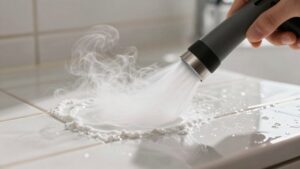
Never mix cleaners or introduce household detergents; stick to one approved solution to reduce chemical interactions that trigger foam and sensor errors. If foaming persists during operation, lower solution concentration or fill with plain water and run a dedicated rinse cycle until foaming stops.
Log maintenance actions and observed faults so you can correlate procedures with reduced streaking and fewer sensor-related failures over time.
Safe Alternatives and Things to Avoid (Vinegar, Dish Soap, DIY Mixes)
Wondering what you can safely use instead of household cleaners? You should choose tested, low-foam, residue-free solutions labeled as safe alternatives for robot mops. Manufacturers formulate these to protect seals, tubing, sensors, and finishes. Using them reduces corrosion, clogging, and warranty risk.
- Use manufacturer-approved low-foam cleaners designed for automated systems.
- Choose pH-neutral, residue-free commercial solutions for your specific floor type.
- Replace pads and filters per schedule to avoid buildup that DIY mixes can exacerbate.
- Verify compatibility and warranty coverage before trying any new product.
Things to avoid are clear: vinegar’s acidity corrodes rubber seals and can cause leaks. Dish soap produces foam that clogs seals and tubing. DIY cleaning mixes lack manufacturer testing and may leave sensor-obscuring residues. Don’t mix cleaners or use unapproved substances; they’ll increase malfunction risk and may void your warranty.
Frequently Asked Questions
Do Low-Foam Cleaners Affect Floor Finish Warranty?
Generally, no; low foam effects typically won’t void your floor finish warranty if the cleaner is compatible with the finish type and manufacturer guidelines. You should check the finish’s technical datasheet and warranty terms. Many warranties require pH-neutral, non-abrasive products.
Document product labels and manufacturer recommendations to prove compliance. If you use an approved low-foam formula and follow dilution and application instructions, you’ll preserve the floor finish warranty.
Can I Use Scented Low-Foam Cleaners With Pets?
Yes, you can use scented low-foam cleaners with pets if you choose formulations tested for pet safety and labeled non-toxic. Check ingredients for volatile solvents, phenols, or essential oil concentrations that can irritate animals.
Dilute per manufacturer instructions, ventilate during and after cleaning, and keep pets away until surfaces are dry. If your pet has respiratory sensitivity, opt for unscented, veterinary-recommended products to minimize risk.
How Often Should I Deep-Clean the Robot Mop’s Tank?
You should deep-clean the robot mop’s tank every 2–4 weeks, or immediately after heavy soiling. Use warm water and a mild, low-foam solution. Disassemble removable parts and inspect seals and filters. Rinse thoroughly and dry before reassembly to prevent mold and sensor fouling.
Maintain a log for condition checks. two word discussion idea1, two word discussion idea2
Are Low-Foam Cleaners Safe on Heated Floors?
Yes, low-foam cleaners generally are safe on heated floors when you choose safe alternatives formulated for temperature exposure. You’ll want products labeled non-corrosive, low-residue, and compatible with radiant or electric underfloor systems.
Avoid solvents, waxes, or high-alkaline formulations. Test a small area first; use recommended dilution; and prevent excess moisture sitting on the surface. Follow manufacturer guidelines for both the floor and your robot mop to ensure heated floors safety.
Can I Mix Different Low-Foam Brands in the Tank?
You shouldn’t mix different low-foam brands in the tank. Mixing foaming and non-foaming cleaning formulas can alter pH, surfactant balance, and viscosity; this can impair dosing, streaking, or damage seals. If you must blend, test a small ratio and monitor residue and mop function.
Also, confirm “Safe with pets” on each label—combined residues can increase toxicity. Follow manufacturer specs for compatibility and dilution to avoid warranty or performance issues.
Conclusion
Using low-foam floor cleaner keeps your robot mop working reliably; it prevents suds from clogging pumps, gumming pads, and triggering sensor errors while leaving minimal residue. Dose precisely per manufacturer instructions. Pick formulations labeled low-foam or robot-safe, and avoid high-surfactant or acidic DIY mixes that damage seals or flooring.
Regularly clean pads, tanks, and sensors to stop buildup. Follow these technical precautions, and you’ll maintain optimal cleaning performance and extend your robot’s lifespan.