Laminate Floor Cleaning Precautions With Robot Mops
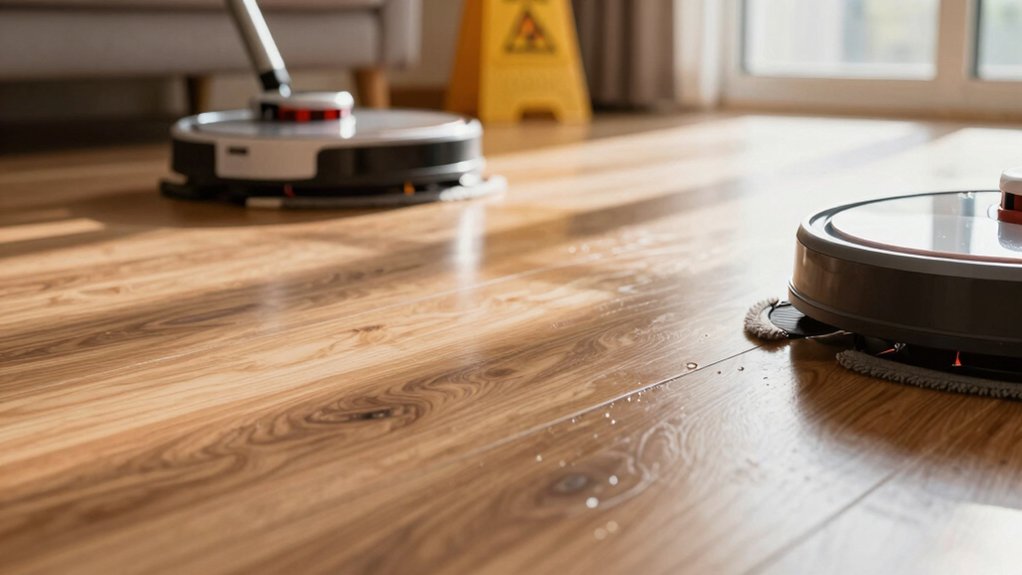
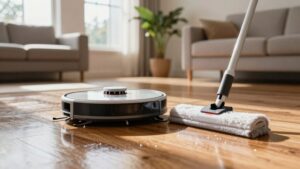
You can use a robot mop on laminate, but pick models labeled safe for laminate and those that control moisture. Clear grit and large debris first so wheels and pads don’t scratch the wear layer.
Use sealed reservoirs, low-foam residue-free cleaners approved for laminate, and the gentlest moisture setting. Avoid heavy sprays and fast side brushes; map moisture-prone areas and inspect pads and wheels after each run.
Keep going to learn specific setup and maintenance steps.
Quick Overview
- Use robot mops explicitly labeled safe for laminate and with a sealed, controllable water reservoir.
- Choose low-foam, residue-free cleaners approved for sealed laminate; avoid DIY or harsh chemicals.
- Run very light moisture modes and avoid continuous spray to prevent seam seepage and swelling.
- Clear large debris and vacuum first to prevent grit scratches and brush or wheel jams.
- Use mapping, virtual boundaries, soft brushes, and post-cycle inspection to protect seams and sensors.
Quick Answer: Can You Use a Robot Mop on Laminate Floors?
Yes, you can use a robot mop on laminate floors, but you need to pick the right model and use it carefully. You should choose a unit with mapping and edge-cleaning; this helps avoid missed spots and minimizes moisture exposure near seams.
Use very light moisture only. Many laminates are sealed, but excess water can seep in and cause swelling. Pick machines with soft brushes or suction-focused cleaning to reduce wear on the laminate wear layer; avoid models that spray large amounts of liquid.
Use low-foam, residue-free cleaners approved for laminate to prevent buildup and protect the mop’s sensors. Don’t use DIY or unapproved solutions; that can cause damage to both floor and device and create warranty implications if the manufacturer specifies compatible cleaners.
Always follow the manual for compatible cleaners and maintenance. If you do, a robot mop can be a safe, practical option compared with alternative floor types that tolerate more moisture.
Choose the Right Robot Mop for Laminate Floors
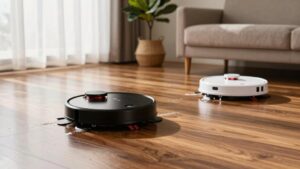
Which robot mop should you pick for laminate floors? Pick a model explicitly labeled safe for laminate and with a sealed water reservoir that uses low-foam, residue-free cleaning solutions to prevent sensor and flow issues.
Check for mapping and precise edge-cleaning so the robot covers planks without over-wetting seams. Prefer soft brushes or no rotating brushes to reduce wear on the laminate wear layer; harsh agitation can damage finish or reveal gaps.
Choose units that offer controlled moisture settings and avoid ones that auto-dispense unless they’re proven consistent with laminate-safe fluids. Use only manufacturer-approved cleaners; avoid DIY mixes that foam or leave residues that clog systems.
Don’t confuse robot mop features with non-mop topics like vacuum-only sensors or unrelated coatings claims. Verify the product literature for laminate-specific testing. Prioritize safety over bells-and-whistles to protect finish, seams, and warranty.
Prep Floors: Clear Grit and Remove Debris First
After you’ve picked a laminate-safe robot mop, clear the floor of grit and large debris before you run it so the machine doesn’t drag or grind particles across the wear layer. You should pick up gravel, cereal, leaves, and toys by hand first, and remove sharp or hard items that could scratch planks or jam the robot.
Vacuum or sweep in dry conditions to lift fine dust, pet dander, and dust mites that would otherwise be spread by wet mopping. Use the robot’s mapping and obstacle-avoidance to clean in sections along plank directions; this protects edges and furniture. Keeping the floor debris-free also reduces trapped moisture that can seep into seams and promote mold growth.
Do a final visual check for missed bits, and ensure the surface is dry enough for the robot’s setting you’ll choose next.
| Task | Tool | Why it matters |
|---|---|---|
| Pick up large debris | Hands/broom | Prevents scratching |
| Sweep/vacuum | Vacuum/sweep | Removes grit, dust mites |
| Check seams | Visual | Limits mold growth |
| Remove hazards | Hand | Avoids robot damage |
Set Safe Water and Cleaning-Solution Levels
How much cleaner should you add to your robot mop’s tank? Use only the manufacturer-recommended, low-foam, residue-free cleaner and follow the dilution instructions exactly. If your model has automatic dispensing, pour the designated cleaning product into the detergent reservoir and top the water tank with safe water per the manual’s fill lines.
Don’t mix cleaners or add extra concentrate; combining products or overfilling creates foam and residue that can clog sensors and flow paths.
If your robot doesn’t support dispensing, use plain safe water in the tank to minimize foam and over-wetting. Add a pre-measured amount of approved solution only when the manual specifies. For laminate, confirm the cleaner is compatible with sealed surfaces and formulated for low moisture use.
Check cleaning solution levels before each run and rinse tanks periodically. Maintaining correct water and cleaning solution levels prevents damage to the mop, protects laminate finish, and keeps cleaning performance reliable and safe.
Select Gentle Modes, Suction, and Brush Settings
Want to protect your laminate finish while still getting a thorough clean? Choose gentle modes that prioritize suction before any mopping action. Keep moisture low to prevent seam seepage. Set suction settings to a moderate level; strong enough to pick up grit but not so powerful that the robot drags or stresses the floor finish.
Pick models with soft brushes and mapping navigation so the robot avoids repeated passes that increase wear. Disable or limit high-speed spinning side brushes on laminate; they can fling grit and cause micro-scratches. Rely on soft brushes and proper navigation for edge cleaning rather than aggressive edge brushes that rub the plank edges.
Use approved, low-foam, residue-free solutions so the robot’s sensors and floor finish stay clear of buildup. Test settings on a small area. Then schedule regular gentle cycles. That combination protects the wear layer while keeping your laminate clean and safe.
Prevent Scratches: Wheels, Brushes, and Edge Brushes
Now that you’ve set gentle modes and low-moisture mopping, pay attention to the parts that actually touch the floor: wheels, main brushes, and edge brushes. You can prevent micro-scratches by removing grit before the robot runs and by choosing soft-contact components.
- Inspect and clean wheels: Rubberized wheels can pick up sand-like grit that acts like sandpaper. Wipe and rotate them often to avoid wheels abrasives wearing the finish.
- Limit mechanical agitation: Favor suction over high-RPM brushes. High-speed side brushes may fling or press grit into plank edges and baseboards; therefore, reduce RPM or disable if possible.
- Use soft edge brushes: Replace stiff edge and corner brushes with soft, non-abrasive types. Pre-clean corners with a soft-bristle brush to remove loose debris.
Make these checks part of routine maintenance. That keeps the laminate wear layer intact and reduces swirl marks, scuffs, and finish damage over time.
Use Boundaries, Mapping, and a Maintenance Checklist
Curious where robot mops should and shouldn’t go? Use mapping and boundary boundaries to control routes and protect laminate seams, moisture-prone areas, and puddles. Enable the mop’s mapping (AIVI-style or equivalent) so it learns room layouts, avoids repeated passes along edges, and steers clear from under low furniture where it might snag.
Set virtual walls or no-go zones around sensitive spots. Schedule runs for after you remove large debris. Prefer models with motion mapping and edge-cleaning capabilities to minimize missed areas while preventing over-wetting edges.
Follow a strict maintenance checklist after every cycle: empty the dustbin, rinse and clean mop pads, wipe sensors, and verify there’s no standing water left on the floor. Regularly inspect wheels and brushes for trapped grit that can scratch.
Combining thoughtful boundaries, accurate mapping, and a concise maintenance checklist keeps your laminate safe, dry, and clean without unnecessary risk.
Frequently Asked Questions
Can Robot Mops Damage Laminate Finish Over Time?
Yes, over time a robot mop can contribute to laminate finish wear if you don’t manage it. You should check robot mop durability ratings, use recommended cleaning pads and gentle solutions, and avoid excessive water or abrasive pads.
Keep wheels and brushes clean; set soft navigation routines, and spot-test. With proper maintenance and cautious use, you’ll minimize abrasion and moisture damage and protect the laminate finish longer.
Are Certain Cleaning Solutions Voiding My Laminate Warranty?
Yes, certain cleaning chemicals can void your laminate warranty. You should check the manufacturer’s care instructions and avoid strong solvents, abrasive cleaners, or oil-based products that can damage the wear layer. Use only approved or mild pH-neutral cleaners, and keep records of products you use to show compliance if needed.
Prioritize safety: Test cleaners on a hidden spot first and stop use immediately if you see dulling, swelling, or residue.
How Often Should I Replace Robot Mop Pads on Laminate?
You should replace robot mop pads every 3–6 months for typical use, or sooner if they show wear. Inspect replaceable pads weekly. Heavy traffic or pets can shorten pad lifespan to 1–2 months.
Swap pads when fabric thins, odors persist, or cleaning performance drops. Always follow manufacturer guidance and wash reusable pads between uses with mild detergent. Avoid soaking that could harm laminate and ensure pads dry fully before reuse.
Can Robot Mops Reach Under Low-Clearance Furniture?
Yes, many robot mops can reach under low clearance furniture, but it depends on their height. You should measure your furniture clearance and compare it to the robot’s profile. If it’s lower, it won’t fit and could get stuck.
Use boundary strips or virtual barriers for tight areas; remove obstacles beforehand, and check the pad after passes for trapped debris. Prioritize safety to avoid damage to both furniture and the robot.
Is Using a Robot Mop Safe on Textured or Embossed Laminate?
Yes, you can usually use a robot mop on textured or embossed laminate if you take precautions. You’ll want to test a small area first and use settings or pads made for delicate surfaces to ensure safe operation.
Avoid excess water; choose gentle cleaning solutions and go slow over seams. These steps help protect the durable finish and prevent swelling, warping, or abrasion so your floor stays safe and attractive.
Conclusion
You can use a robot mop on laminate floors if you choose and use it carefully. Pick a model with low-moisture cleaning, soft brushes, and rubber wheels. Always sweep or vacuum first. Set the water/solution to the gentlest level and enable delicate or low-suction modes.
Block off sensitive areas, check edge brushes, and dry any damp spots quickly. Maintain the robot and flooring regularly to prevent warping, scratches, and long-term damage.