How to Prevent Hair Tangles in Robot Vacuum Brushes
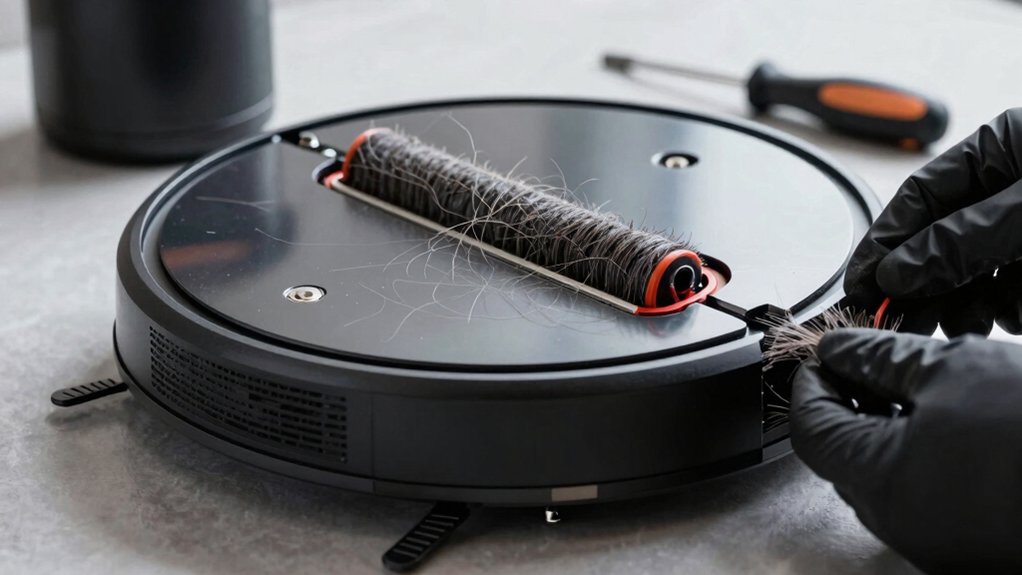
You can stop hair tangles by combining quick habits and the right hardware: run a 60-second pre-pass over high-shed zones, clear visible strands from the roller and intake, and use a comb or tweezers to remove fibers from the axle.
Prefer rubber or V-shaped brush rolls with internal combs and guided airflow to reduce wraparound. Do a daily quick wipe and a weekly deep-roll removal for combing.
Keep going to learn step-by-step detangling and tech choices.
Quick Overview
- Choose tangle-resistant brush rolls (rubber or V-shaped bristles) and models with internal combs.
- Run a 60-second pre-clean over high-hair zones and remove visible strands before full operation.
- Use daily quick wipes and weekly comb-throughs of the roller to prevent hair accumulation.
- Enable or use self-cleaning/detangling cycles and airflow-optimization features if available.
- Remove the brush assembly for periodic deep cleans. Use tweezers or a fine-tooth comb to free wrapped hair.
Why Do Vacuum Brushes Tangle?
Why do vacuum brushes tangle? You see tangles when long hair and pet hair wrap around rotating bristles, forming loops that resist the designed suction path. The primary tangle causes are mechanical: hair contacts dense, straight bristles and, under rotation, slides inward toward the central axis. That inward migration winds fibers into knots, increasing torque load and reducing brush roll RPM and cleaning efficiency.
Rigid brush designs without detangling geometry or airflow guidance exacerbate the process by failing to redirect hair into the suction stream. Sticky or dust-coated strands adhere to bristles, shortening the distance before winding begins. High-particle environments, such as pets, long hair, and dusty floors, raise encounter probability. Infrequent maintenance lets small accumulations become problem-scale tangles.
You can predict tangle risk by assessing bristle density, rigidity, and local particle load; these parameters determine how quickly loops form and how severe the resulting knot will be.
Fast Fix: Prevent Brush Tangles in 60 Seconds
Want a quick fix? Use tangle free concepts and quick clean techniques to stop brush wrap in 60 seconds. First, switch to a tangle-free vacuum with rubber brush rolls and internal combs; as the roll spins, the combs actively detangle hair, preventing wrap-around in under a minute.
Next, engage any self-cleaning or detangling side brushes; these whisk away loose hairs before they reach the main roll. If your model has airflow optimization, enable it to direct hair into the suction path and away from the brush shaft.
Perform a 60-second pre-clean: set low power and run a short pass over high-hair zones to pull free strands. Finally, use quick-release or detachable brush heads to snap off the assembly and remove collected hair in seconds; then reattach.
These methodical steps let you implement reliable quick clean techniques and maintain tangle free concepts without dismantling the vacuum or interrupting scheduled cleans.
Daily & Weekly Routines to Stop Hair Wrapping
Quick, routine actions keep hair from turning into a stubborn mess on your robot’s brushes: after each run, remove visible strands from the roller and intake to prevent buildup that can spiral into tangles. Once a week, perform a systematic check with a comb or detangler tool to clear bristles and side brushes; pay special attention around the central roller where wrap begins.
Do a daily quick clean: swipe the intake, lift the roller hatch, and extract loose hair before it winds into tight wraps. Weekly, perform a methodical inspection: remove the roller, use a fine-tooth comb or detangler pick to free wrapped fibers, and spin the roller to confirm smooth rotation.
Track shedding cycles for pets and add an extra brushing session during high-shed days to cut incoming hair load. Log maintenance tasks and test small hardware tweaks like tension adjustments or brush re-seating after cleaning. These theme ideas and targeted hardware tweaks reduce recurrence and extend brush life.
Tangle-Free Tech to Look For (Brushes, Combs, Airflow)
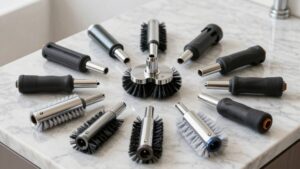
Curious which hardware actually stops hair before it becomes a problem? Look for brush mechanics that channel hair: V-shaped or angled bristles guide strands toward the suction path instead of wrapping around the roll.
Prefer rubber brush rolls with smooth surfaces so hair slides off rather than catching on bristles. Inspect for an internal comb mechanism positioned near or inside the brush assembly; it scrapes and detangles hair as the brush spins. This reduces build-up between scheduled maintenance routines.
Evaluate airflow optimization features that steer lifted hair into the suction path, lowering the chance of tangles forming at all.
Also check side brush design: models with arms shaped to release wrapped hair and feed debris into the main suction minimize wrapping around the central roll. When comparing units, weigh brush mechanics, internal comb efficacy, and airflow routing together. These elements work in concert to reduce hair entanglement and complement your daily and weekly maintenance routines without replacing them.
Step-by-Step Detangling and Deep-Clean Maintenance
Anyone can keep a robot vacuum’s brush train running tangle-free by following a consistent detangling and deep-clean routine that leverages the Narwal’s tangle-free features. Start by running the built-in self-cleaning cycle; it detaches and ejects loose hair before it wraps the roller. Power off and remove the brush assembly.
Engage the internal comb mechanism while you rotate the brush to cut and separate any remaining strands. Use tweezers or a precision pick to extract cut hair from comb teeth, side brushes, and suction inlet. Inspect the floating roller brush for wrapped fibers and clear them from end caps.
Check side brushes and manually remove accumulated hair to prevent re-tangling on the next run. Wipe the brush housing and suction path with a lint-free cloth. Periodically replace rubber brush rolls with smooth-surface models to repel hair and maintain consistent suction.
Reassemble, then run a verification cleaning cycle.
Choose the Right Tangle-Free Vacuum for Heavy Shedders
Which features matter most when you need a robot that handles heavy shedding? You’ll want a machine with a tangle free design: zero-tangle or anti-tangle tech, side brushes that detangle, and internal comb mechanisms to stop wraparound on the brush roll. Prefer rubber brush rolls or V-shaped/angled bristles that channel hair into the suction path instead of around the axle.
Select models with auto-detangling systems and enhanced airflow to keep suction steady under heavy loads. Check suction ratings; aim for 8,500–20,000 Pa combined with the tangle free design to maintain performance on hard floors and carpets. Look for pet friendly brushes and self-cleaning brush systems. Units like the Narwal Freo Z10 or Freo Z Ultra include self-cleaning and edge-cleaning features that reduce manual maintenance.
Finally, verify real-world reviews for long-hair pets. Confirm replaceable brush components and clear service access so you can maintain peak performance with minimal downtime.
Frequently Asked Questions
Can Hair Wraps Damage Brush Bearings?
Yes, hair wraps can damage brush bearings. You’ll find that wrapped hair creates uneven loading and friction on brush bearings; this accelerates wear and causes binding. Over time, bearings can corrode or seize, which increases motor strain and reduces cleaning efficiency.
You should routinely clear hair wraps, inspect bearings for play or noise, lubricate per manufacturer guidance, and replace worn bearings promptly to prevent further mechanical failure and protect the drive system.
Can I Prevent Tangles on Hardwood Vs Carpet Differently?
Yes, you can prevent tangles on hardwood vs carpet differently.
On hardwood tangles, use smooth roller covers, lower suction, and rubberized brushes to guide hair into the bin without snagging. Sweep or mop first.
For carpet tangles, raise suction, use bristled or hybrid brushes, and run shorter, frequent passes to avoid deep entanglement. Routinely clear brush bearings and trim visible fibers after each session to reduce buildup.
Do Pet Grooming Schedules Reduce Vacuum Tangles?
Yes, regular pet grooming lowers vacuum tangles by reducing loose hair entering brushes. You should schedule brushing sessions: daily for heavy shedders, twice weekly otherwise. Use deshedding tools to capture undercoat.
Combine grooming with targeted bathing and coat maintenance to cut shedding. This methodical approach reduces accumulated fur, improves suction efficiency, and extends brush life. As a result, your robot spends less time tangled and more time cleaning.
Are Replacement Brush Costs High Long-Term?
Yes, replacing brushes can add notable long-term costs, especially with heavy use or pets. You’ll assess frequency, unit price, and compatibility to quantify expense.
Choose modular designs and durable materials to lower replacement rates. Schedule inspections and cleanings to extend brush life. Track part prices and expected service intervals to forecast cumulative costs. Then compare those projections with alternative models or professional maintenance plans for cost-effective decisions.
Can Vacuum Storage Position Affect Hair Buildup?
Yes, storage positioning can influence hair buildup. If you store the vacuum with brushes touching carpet or upholstery, loose hair transfers and coils around rollers.
Position the unit on a hard, elevated surface or dock so brushes clear fabrics and air can circulate. Rotation-free stands or wall mounts keep bristles suspended; this reduces static attraction and residue accumulation.
Regularly clean the storage area to minimize deposited hair and dust.
Conclusion
You can largely stop brush tangles by using preventive, repeatable steps: trim long hair, run a quick 60-second check before each job, and adopt daily spot-cleaning plus a weekly deep-clean.
Prefer rollers with combs or rubber blades and straight, high-velocity airflow. When detangling, power down, remove the brush, cut and pull hair along bristles, then lubricate bearings and reassemble.
Consistent, methodical maintenance prevents clogs, preserves suction, and extends brush life.