Carpet Cleaner Machine Maintenance Checklist
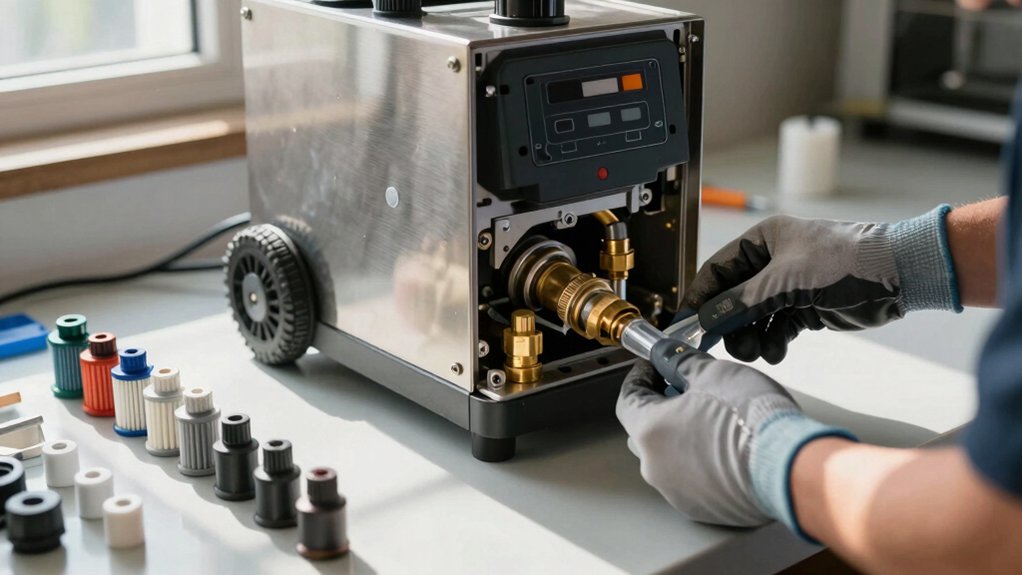
You’ll empty, rinse and dry solution and recovery tanks after each use. You will scrub corners and log time and initials. Rinse brushes and rollers, remove hair and debris, and rotate worn parts. Test briefly.
Flush spray nozzles and empty collection trays; descale weekly. Clean or replace pump inlet strainers, vacuum filters and recovery screens, and verify suction. Inspect hoses, seals and clamps for leaks; pressure-test weekly.
Perform monthly lubrication and electrical checks. Follow storage and seasonal protection—keep going for full checklists and procedures.
Quick Overview
- Empty, rinse, and spray tanks with antimicrobial after each use. Fully drain the recovery tank and scrub corners and seams.
- Rinse pump inlet strainers and vacuum filters daily until runoff is clear. Dry before reinstalling.
- Remove debris from brushes and rollers, rinse with warm water, and inspect wear. Rotate after each use and replace if worn.
- Flush spray lines and nozzles with clean water for 10 to 20 seconds after each job. Descale nozzles weekly.
- Inspect hoses, seals, and electrical connections weekly. Perform monthly lubrication and document all maintenance in the log.
Carpet Cleaner Daily Checklist: Empty, Rinse & Dry Tanks
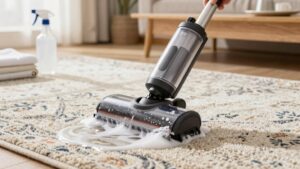
Begin each shift by emptying and rinsing all tanks: drain the recovery tank fully, scrub corners and seams, and spray with an antimicrobial to remove debris and odor-causing bacteria. Then, rinse the solution tank with clean hot water to dissolve residues and prevent chemical buildup.
Next, inspect and clean all filters daily. Remove pump inlet strainers and vacuum filters, rinse until runoff is clear, and dry completely before reinstalling. Keep spare filters on hand to minimize downtime and adhere to maintenance scheduling requirements.
Check hoses and connections for cuts, kinks, or loose clamps. Wipe connection points, run a brief test, and watch for leaks. If you find damage, tag the machine out of service and replace parts immediately to preserve operator safety and equipment integrity.
Log each action in the maintenance record with time, operator initials, and parts used. Follow this routine every shift to ensure compliance, consistent performance, and to prevent water damage or chemical contamination.
Clean, Inspect, and Rotate Brushes & Rollers
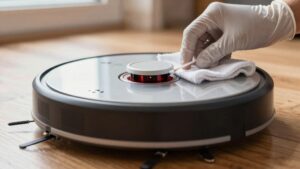
Want your brushes and rollers to keep cutting cleaning time instead of motor life? Rinse brushes and rollers with warm water after each use to remove residues and prevent motor strain. Manually remove fibers, hair, and debris. Use compressed air to clear fine dust if needed.
Inspect for excess brush wear and verify roller alignment before storage. Rotate brushes after each use to promote even wear and extend lifespan. Wipe and wind the power cable after cleaning to prevent tangling and damage.
| Task | Action |
|---|---|
| Rinse | Warm water after each use |
| Debris removal | Manually pull fibers, hair |
| Fine dust | Use compressed air |
| Rotation | Rotate brushes every use |
| Inspection | Check brush wear & roller alignment |
Procedure: Stop machine, disconnect power, remove brush housing, perform tasks in table order, reassemble, test briefly. Record findings and replace components showing excessive brush wear or misaligned rollers. Follow this sequence to ensure compliance and reliable operation.
Flush Spray Nozzles & Empty Collection Trays
How often you flush the spray nozzles and empty the collection tray directly affects spray consistency and hygiene. Flush the nozzles immediately after each cleaning cycle and empty the tray every time to prevent mineral buildup, clogs, overflow, and odor. After each job, run clear water through the spray lines for 10 to 20 seconds to flush spray passages. Visually inspect nozzle openings; remove visible debris with compressed air or a thin, non-metallic tool to avoid damage. Record any partial blockages and recheck after flushing.
Weekly, perform descaling maintenance: remove nozzles and soak them in a manufacturer-approved descaler for the recommended time to dissolve mineral buildup. While nozzles soak, empty trays, discard liquids, and rinse trays thoroughly with clean water to remove residues. Dry trays before reinstallation.
Log all actions—flushes, inspections, descaling, and tray emptying—to meet routine maintenance compliance and ensure consistent spray performance and sanitary operation.
Clean or Replace Filters, Vacuum Fans & Recovery Screens
After flushing nozzles and emptying collection trays, move on to cleaning and inspecting filters, vacuum fans, and recovery screens to maintain airflow and suction performance. You’ll inspect and clean all filters daily: rinse pump inlet strainers and vacuum filters until runoff is clear. Then dry completely before reinstalling. Replace spare filters as needed to avoid reduced vacuum airflow and lost suction.
Clean vacuum heads and recovery screens to remove fiber buildup and debris. Flush recovery screens to prevent clogs and to keep spray and suction consistent. Ensure filters are securely seated after maintenance and document replacements for compliance records.
| Task | Frequency | Acceptance Criteria |
|---|---|---|
| Rinse pump inlet strainers | Daily | Runoff clear, dry |
| Vacuum filter cleaning | Daily | No residue, seated |
| Recovery screen flush | Daily | Free-flow, no clog |
Follow filter maintenance protocols precisely. Log actions and confirm restored suction before returning the machine to service.
Inspect Hoses, Seals & Connections for Leaks Weekly
When did you last pressure-test the hose assemblies? You should inspect hoses, seals, and connections weekly, following a strict procedure: check for cracks, bulges, wear, wet spots, and drips; test assemblies under pressure; and document results to close formulation gaps and identify training needs. Treat any damaged hose or seal as immediate replacement to preserve system integrity and suction.
- Visually examine fittings, clamps, and quick-connects for corrosion, looseness, or leaks; tighten or replace per torque/specs.
- Pressure-test assemblies, observe for unseen leaks that could contaminate floors or reduce efficiency, and record test parameters and outcomes.
- Log all findings and replacements in the maintenance record, noting corrective actions and any training needs or procedural formulation gaps.
Follow calibrated test equipment, use PPE, and enforce compliance with your maintenance schedule to prevent service interruptions and liability from undetected leaks.
Monthly Lubrication & Electrical Checks
Why not schedule a dedicated monthly slot to perform lubrication and electrical checks so your machine stays reliable and compliant? Begin by following your lubrication schedule: apply manufacturer-recommended lubricants to pivot points, bearings, vacuum motor bearings, and pump drive systems. Record each action in a log noting date, lubricant type, and technician initials to meet compliance and track wear patterns.
Next, perform electrical corrosion checks: isolate power, inspect and tighten all electrical connections, and look for corrosion, heat damage, or insulation breakdown on contacts and wiring. Clean corroded terminals per manufacturer guidance and replace compromised connectors immediately.
While powered down, inspect brushes, vacuum heads, gaskets, and seals for matting, fraying, compression loss, or uneven wear. Replace components that threaten fiber care or suction performance. Finish by verifying system operation and updating maintenance records. Repeat monthly and escalate recurring issues to prevent downtime and ensure documented compliance.
Chemicals & Water: Safe Dilution, Softening & Descaling
Start by using only manufacturer-recommended cleaning solutions and matching their specified dilution and pH ranges. Set automatic diluters or use calibrated measuring tools to prepare solutions, record concentrations, and test pH before each shift. You’ll follow a written protocol for safe dilution, documenting batch volumes, dilution ratios, and test results. Flush lines between chemistries to prevent cross-contamination and unintended reactions.
Use inline water softeners or portable units sized to flow rate; log softener maintenance and salt/regeneration cycles. Descale pumps and heat exchangers on a scheduled basis using approved descalers at manufacturer-recommended strengths and contact times. Inspect seals and wetted parts after chemical exposure for degradation. Replace parts that show corrosion or residue buildup.
- Verify solution concentration and pH every shift; retain logs for compliance.
- Implement water softening appropriate to local hardness; schedule resin/service intervals.
- Perform controlled descaling procedures with PPE; neutralize and flush thoroughly.
You’ll keep the machine within specifications to prevent seal failure, corrosion, and performance loss.
Storage, Transport & Seasonal Care (Prevent Freeze & Corrosion)
Although stored equipment often sits unused for long stretches, you must keep carpet cleaners in a dry, temperature-controlled space above freezing and out of direct sunlight to prevent corrosion and component degradation. For truck-mounted units, run dehumidifiers in bays and maintain positive heat during cold seasons.
On shutdown, drain tanks and hoses completely, secure hose ends, and use Velcro straps to bundle hoses neatly. Wrap power cords using the over-under technique and hang hoses and cords on elevated hooks to avoid kinks and moisture exposure. Log storage location, date, and inspector initials to ensure storage safety and chain-of-custody.
For transport, secure units to prevent shifting. Never place heavy items atop electrical components, and cover machines with breathable covers to block UV while allowing ventilation. Conduct pre-storage inspections for rust, leaks, and damaged seals; repair or replace compromised parts.
Implement seasonal protection checklists: dehumidifier function, bay heat setpoint, and final-drain verification. Conduct these before long-term storage to maintain compliance and preserve brand reputation.
Frequently Asked Questions
How Often Should Brushes Be Professionally Reconditioned or Replaced?
You should have brushes professionally reconditioned or replaced every 6–12 months depending on wear and usage intensity. Document brush life and set replacement timing by hours of operation, abrasive exposure, and cleaning quality metrics.
Inspect monthly; record bristle length, tuft integrity, and imbalance measurements. If bristle wear exceeds manufacturer thresholds or performance drops, schedule immediate replacement.
Maintain logs for compliance. Include vendor certification dates and enforce corrective actions when limits are reached.
Can Worn Carpet Fibers Be Restored After Machine Use?
Yes, you can partially restore worn carpet fibers after machine use by following targeted steps focused on wear durability and fiber rejuvenation. First, inspect pile direction and fiber type; document damage.
Deep-clean with appropriate solvents. Then, groom fibers with a stiff brush in the nap direction. Apply a professional rejuvenation treatment and allow full drying per manufacturer specs. Reassess and repeat as needed; log actions to maintain compliance and track durability.
Are There Noise-Reduction Upgrades for Older Carpet Cleaner Models?
Yes, you can install noise reduction upgrades on many older models if you check older model compatibility first. Inspect motor mounts, fan housings, and brush bearings. Replace worn mounts with vibration-damping mounts, add acoustic foam panels around housings, and fit quieter impellers or balanced fans.
Verify electrical ratings and clearance specs, document parts and procedures, and test decibel levels post-upgrade to ensure compliance with safety and warranty limitations.
How Do I Dispose of Used Cleaning Chemicals and Rinse Water Legally?
You must follow disposal regulations: segregate chemicals, read labels, and never pour concentrated solutions down drains.
Neutralize or dilute per manufacturer and local rules; collect rinse water in labeled tanks, and transport to permitted wastewater treatment or licensed disposal facilities.
Document volumes, SDS, and chain-of-custody. Obtain necessary permits, notify local authorities if required, and train staff on spill response.
Keep records for inspections and periodic compliance audits.
Can Telemetry or Iot Sensors Be Added for Maintenance Alerts?
Yes, you can add telemetry feasibility and IoT sensor integration to receive maintenance alerts. First, identify critical parameters: fluid levels, pressure, temperature, and vibration. Next, select industrial-grade sensors and a compatible gateway. Ensure secure network protocols and configure alert thresholds.
Then, document calibration, data retention, and access controls to meet compliance. Finally, test end-to-end alerts, train staff on response procedures, and schedule periodic validation and firmware updates.
Conclusion
You’ve covered daily to monthly tasks, chemical handling, and storage steps. Now close the loop. Stick to the schedule: empty, rinse, dry, inspect, lubricate, and test electricals.
Document each action; replace worn parts promptly, and follow dilution and softening specs to prevent damage. Train operators on leak checks and freeze precautions. By enforcing these procedures and logging compliance, you’ll extend machine life, improve cleaning performance, and reduce costly downtime.