Cordless Stick vs Canister Vacuum: A Side-by-Side for Real Households
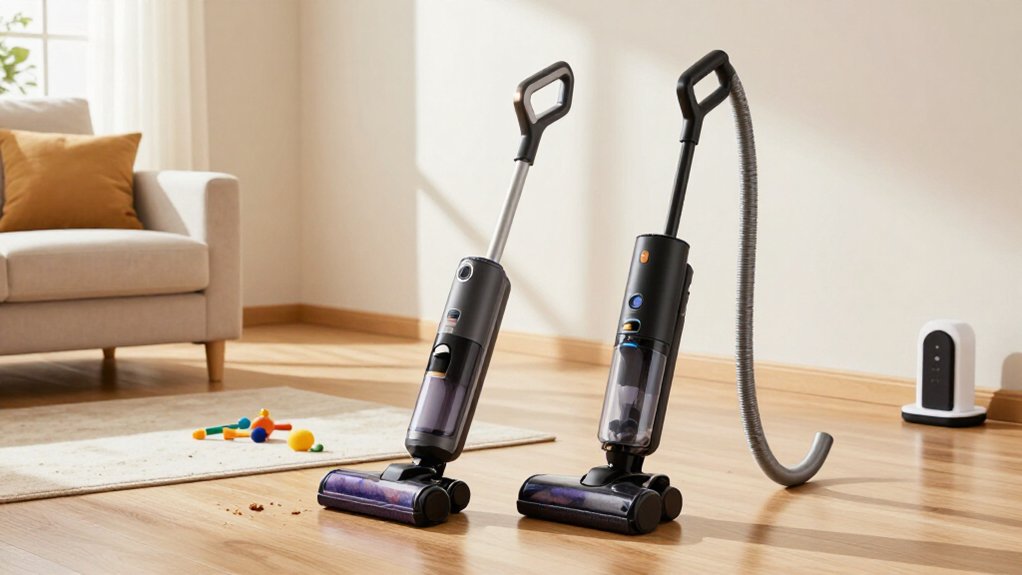
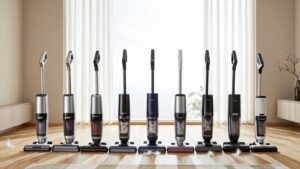
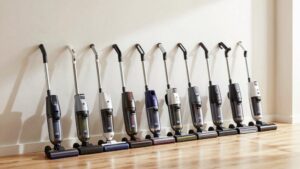
If you want quick fur pickups, choose a cordless stick: expect 20–70 minutes per charge, under 10–20 minutes in Boost, a 0.3–0.7-liter bin, one-handed steering, and docking.
Choose a canister for uninterrupted whole-home cleaning: it runs continuously, holds 1.5 liters or more, and offers longer hoses, stronger sustained suction, and attachments.
For allergies, prioritize sealed HEPA filtration; for split levels, consider stairs and outlet changes. The comparisons below clarify which layout fits you.
Runtime vs. Cord Reach
Cordless stick vacuums typically provide 20–70 minutes of runtime per charge, but high-power Boost modes can cut that to under 10–20 minutes. For a short apartment pass, you’ll likely finish before recharging; for a large home, plan staged cleaning or keep a spare battery ready. A canister runs continuously while plugged in, but its 18–30-foot cord determines your coverage and may force outlet changes. Choose based on session length, room size, and tolerance for interruptions. You’ll spend less time plugging in with a stick, but you’ll spend more time planning when charging interrupts a continuous clean across rooms.
| Factor | Cordless stick |
|---|---|
| Typical runtime | 20–70 minutes |
| Boost runtime | Often under 10–20 minutes |
| Corded coverage | 18–30 feet per outlet |
| Best fit | Short sessions vs. whole-home cleaning |
Brush Rolls and Dustbins
Once you’ve accounted for runtime or cord reach, look at how each vacuum handles debris. Cordless sticks typically hold 0.3–0.7 liters, so you’ll empty them often, especially with pets or kids. Canisters commonly hold 1.5 liters or more, reducing interruptions during larger jobs. Check the floor head, too.
Soft rollers usually seal better on hard floors, capturing fine dust and larger particles; combo heads can snowplow bulky debris when their intake gates are small.
Anti-tangle or active brush rolls help manage pet hair, but designs vary in fine-dust pickup. A dual-roller head can balance carpet and hard-floor cleaning, although it adds weight and requires cleaning behind the front roller. Choose the head that matches your floors, and expect more frequent bin emptying from sticks.
Edge and Crevice Pickup
When dust collects along baseboards or in corners, the vacuum’s attachments and air-path seal matter as much as its headline suction. Choose a cordless stick with a proper crevice tool and a well-sealing floor head for quick edge passes. A soft-roller or sealed combo head can lift fine hard-floor dust, but a small intake gate may snowplow larger debris against the wall. Check whether the head leaves a visible gap at the baseboard, then use the crevice tool for tight joints.
Canister vacuums usually win for detailed trim and corner work. Their longer hoses and dedicated attachments let you reach farther along trim and into corners.
Look for a sealed air path and effective filtration. HEPA captures allergens, but sealing keeps dust from escaping.
One-Handed Steering and Storage
For one-handed steering, a cordless stick’s typical sub-7-pound weight makes quick passes around furniture and stairs easier, though battery and motor placement can affect balance. You can guide it with one hand during spot cleaning, and handheld mode improves wrist articulation for baseboards, counters, and upholstery. A trigger may tire your hand, while button controls support longer sessions.
Canisters typically weigh 9–26 pounds overall, but you don’t lift that mass continuously; the lightweight nozzle and pipe pull behind you. You can steer one-handed on floors if hose reach suffices, though you’ll manage the canister and attachments. For storage, a stick needs less space and offers grab-and-go access. A canister requires room for its body, hose, and tools, complicating setup and return after each use.
HEPA Filtration for Allergies
If allergies are a concern, choose a vacuum with true HEPA filtration and sealed airflow, often called complete-seal filtration. A HEPA filter alone can’t prevent microscopic particles from escaping through gaps. Many premium cordless sticks claim to capture up to 99.97% of pet dander and allergens, but sealed construction determines what reaches your room’s air.
Budget and midrange models vary, so verify the model’s complete-seal claim rather than trusting “HEPA” on the box.
Corded canisters often suit allergy-focused cleaning because their sealed systems support strong, sustained suction during sessions. Whichever type you choose, clean or replace filters on schedule; loaded filters can reduce airflow and air-cleaning performance. Check exhaust vents for dust and empty the bin or bag to limit re-release.
Battery Replacement Expenses
Battery costs can affect a cordless stick vacuum’s total ownership price just as much as filtration and maintenance. You may see about 60–70 minutes on low, but medium use often delivers roughly 30 minutes and max power about 10.
Frequent carpet or pet-hair cleaning uses higher modes, shortening battery life and accelerating replacement.
Check whether the pack is removable and replacements are available from the manufacturer. A second battery spreads the expense and extends coverage, but it still raises ownership costs. A corded canister avoids battery replacement entirely; you’ll generally budget instead for routine bags and filters. If you clean often, include one likely battery replacement in your five-year estimate. That comparison can make a cheaper-looking stick less economical than a canister over time.
Noise During Family Cleanup
Noise depends more on a vacuum’s design and operating mode than on whether it’s cordless or corded. You can’t assume a stick sounds quieter than a canister without checking its sound rating. Premium canisters often use insulated, noise-damped motors, and place that motor away from your hand, making cleanup more tolerable.
For everyday crumbs, you may run a cordless stick on low power, reducing motor noise. A canister may stay comfortable in a quieter deep-clean setting, including around children or pets. Compare ratings under matching test conditions, then listen for pitch and vibration.
Choose the model that cleans effectively without repeated passes at its quieter setting. In practice, your option is whichever vacuum keeps conversation disruption lowest, not simply the cordless or corded category.
Charging Dock Convenience
A cordless stick’s charging dock gives you easy grab-and-go storage, keeping the vacuum ready for quick messes. Since many models run about 15–67 minutes per charge, you’ll reduce plug-and-unplug steps between rooms and stairs.
A canister skips docking, so you’ll manage cord reach and outlet changes instead.
Easy Grab-and-Go Storage
With a wall mount or drop-in charging cradle, a cordless stick can stay upright, charged, and ready for quick cleanups without cord winding or unplugging. A dock keeps the longer floorhead-and-hose combination off the floor, reducing visual clutter in a closet or utility area.
Compare the storage setup this way:
- Cordless stick: wall-mounted storage uses vertical space and leaves the floor clear.
- Drop-in cradle: it keeps the vacuum upright and contains its footprint.
- Canister: you store the heavier unit centrally, but you’ll still pull out the hose and cord for each session.
- Fit check: measure cabinet clearance and outlet access before mounting a dock.
Confirm outlet access and whether roughly 60–70 minutes on low suits your daily grab-and-go routine.
Always Ready to Clean
Once the dock has a dedicated spot and accessible outlet, you can lift the cordless stick off its cradle and start cleaning immediately, no cord to find or plug in. This suits frequent crumbs, pet hair, or muddy paw prints: you can handle them early. The dock keeps your battery topped up. Check the charging indicator, because runtime can reach 60–70 minutes only on low power.
Canister vacuums usually offer no comparable charging convenience: they wait for you to unwind the cord and connect a plug. That arrangement works well when you plan a full cleaning pass, but it discourages rapid in-between pickups. Use the stick dock for consistent daily maintenance, then choose the canister when you need longer, uninterrupted cleaning or deeper carpet work.
Best for Pet-Hair Cleanup
For daily fur, you’ll get convenient pickup from a cordless stick’s motorized pet tool and anti-tangle brush roll, especially on hard floors. For heavy shedding or thick carpet, you’ll usually get stronger, sustained results from a corded canister’s powered head.
Compare dustbin capacity, hair removal, filter care, and brush-roll cleaning before you choose.
Fur Pickup Performance
Pet-hair cleanup depends less on the vacuum’s category than on its floor head, brushroll, and filtration. For daily shedding, a cordless stick works well on hard floors and offers upholstery access, but its roughly 0.3–0.7-liter bin may fill quickly in a multi-pet home. During shedding season, a corded canister gives you 1.5 liters or more and steady suction without battery fade.
Prioritize these four checks:
- Choose a motorized pet tool for carpet and upholstery.
- Select a soft roller for fine hair and dust on hard floors.
- Look for sealed, HEPA-based filtration to contain dander.
- Confirm the bin or bag capacity matches your cleaning area.
You’ll empty a stick more often, while a canister suits whole-home sessions. Compare pickup on your flooring before deciding.
Brush Roll Effectiveness
The floor head, not the vacuum category, usually determines how well a vacuum removes pet hair. If you mostly have hardwood, choose a cordless stick with a soft-roller head. Its tight seal captures fine fur and dust instead of scattering them. On carpet, prioritize a sealed combo head that maintains suction around embedded hair.
Some combo heads use a front gate, but that gate can snowplow larger crumbs across hard floors.
A dual-roller design pairing a soft roller with a traditional brush roll can cover more surfaces, though the added hardware usually increases weight. Canisters can deliver strong results when you attach a motorized tool and use effective filtration, but their category alone doesn’t guarantee better pickup. Match the head to your floors, then test several passes over rugs and high-traffic areas.
Emptying And Maintenance
Once you’ve matched the brush roll to your floors, check how much debris the vacuum can hold and how easily you can service it. For pet-hair cleanup, a cordless stick typically holds 0.3–0.7 liters, while a canister often offers 1.5 liters or more, reducing interruptions during long shedding sessions.
- Choose anti-tangle brush rolls and strong suction to limit hair wrapping.
- Empty a stick’s bin frequently; packed debris can reduce airflow.
- Wash or replace filters as directed and inspect them more often with daily pet use.
- Prefer a canister’s replaceable bag or serviceable filter for lower long-term hassle.
For allergy-sensitive homes, prioritize sealed filtration: HEPA performance matters only when the housing prevents dust escaping while you vacuum or empty the bin without dust leakage.
Best for Split-Level Homes
For most split-level homes, a cordless stick is the practical choice: at under 7 pounds, it’s easier to carry between floors and use for frequent quick pickups, including on stairs. Choose a model with sealed HEPA filtration if you’re managing allergens or pet dander; the enclosure matters as much as the filter label. A soft-roller head suits hard floors on landings, while a combo head offers more balanced carpet coverage.
However, if your layout includes long stretches of wall-to-wall carpet, a corded canister may serve you better. Its suction continues without battery limits, supporting sustained deep cleaning. You’ll need to move the heavier body, but a hose and attachments can handle stairs without lifting the canister repeatedly. Check real runtime before choosing a model.
Conclusion
Your best choice depends on how you’ll clean, not on a single headline feature. Choose a cordless stick if you value quick, quiet pickups, easy steering, and dock-ready storage, while accepting limited runtime and dustbin capacity.
Choose a canister if you need sustained power, longer reach, stronger filtration, or reliable pet-hair and split-level performance. Compare measured runtime, cord length, noise, and tool access, then match those results to your rooms, floors, and cleanup schedule today.