How to Choose Microfiber Mop Pads for Hard Floors
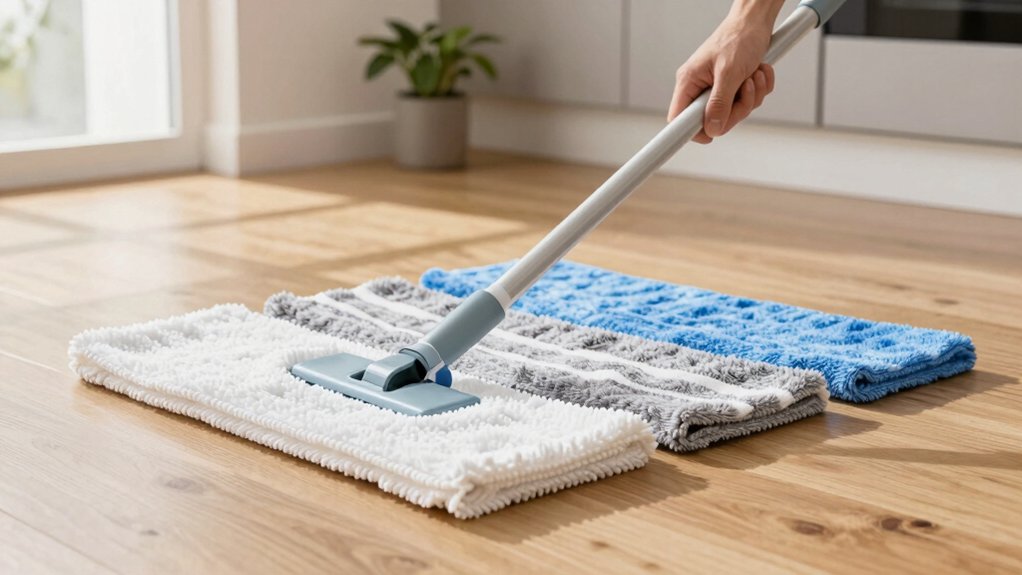
Pick pads that match task and finish: Use low‑friction microfiber (about 80/20 polyester/polyamide) for routine dusting. A balanced scrub‑and‑absorb pad is suitable for light damp mopping, and a chenille or scrubber pad should be used only for heavy spills or stuck soil.
Choose hook‑and‑loop backing sized to your Bona head; avoid over‑wetting, and dust first to prevent haze. Wash per label; skip bleach/softener, and rotate pads. Keep going for details on pad blends, technique, and care.
Quick Overview
- Match pad size and backing to your mop head (Bona ~18″×5″, hook-and-loop preferred) so pads attach securely without overhang.
- Choose fiber blend: microfiber-dominant (~80% polyester/20% polyamide) for balanced scrubbing and absorption on hardwood.
- Use scrubber pads (abrasive polyester strips + microfiber rows) for adhered soils. Use chenille or high-absorbency pads for spills and moisture control.
- Prevent wood-haze by dry-dusting first; use lightly wrung wet pads; rinse or replace pads before they saturate.
- Check back-coating quality, washability, and manufacturer lifespan (machine-washable). Avoid bleach or softener to protect floors and extend pad life.
Quick Decision Guide: Which Microfiber Mop Pad for Hardwood?
Wondering which pad will actually protect your hardwood while getting it clean? You’ll prioritize scrubbing power and absorbency: the ideal single pad lifts grime and soaks up dirty liquid without leaving haze.
Evaluate Bona Replacement Mop Pads for balanced scrubbing, strong absorbency, and durability. Note that newer versions may be shorter in length; confirm pad size for full head coverage.
Consider Mr. Floor Micro-Fiber Mop Pads when you need aggressive wet grab. Their fiber blend balances scrubbing and moisture pickup.
For tougher grime, Microfiber Wholesale 20 Microfiber Scrubber Mop offers top scrubbing but only moderate absorbency and durability. Use it where residue is heavy.
You can pair a dry absorbent pad with a wet scrubbing pad in a two-mop workflow, but aim to select one pad that handles both tasks when efficiency matters.
Also, check back coating quality for secure attachment and even wear to protect finishes and extend pad life.
Pad Construction: Scrubbing vs. Absorption (Microfiber, Polyester, Chenille, Scrubber)
Having picked the right pad type for hardwood cleaning tasks, you should next compare how construction affects scrubbing versus absorption. You’ll evaluate fiber makeup and geometry: microfiber-dominant pads (approximately 80% polyester / 20% polyamide) give balanced scrubbing versus absorption because polyester provides friction while polyamide boosts liquid uptake.
Scrubber pads place abrasive polyester strips alongside microfiber rows to loosen dried grime and absorb loosened residue immediately; this is useful when you need one-pass cleaning. Pure chenille pads maximize soaking capacity; their pile increases surface area and holds larger volumes of liquid. They excel at heavy moisture and big spills but offer less mechanical abrasion.
Scrubbing pads incorporate abrasive rows specifically to break bonds on adhered soils. Microfiber rows adjacent to abrasives capture and retain the dislodged particles. For dry dusting, you’ll prefer low-friction microfiber composition that captures fine particles without scouring.
Match pad construction to the soil type and moisture level to optimize cleaning efficiency.
Which Pad Type to Use (Dust, Wet/Twist, Chenille, Scrubber) : By Mess and Floor
Which pad should you reach for depends on the mess and the floor surface: pick dust pads for dry particulate and delicate finishes. Use wet/twist pads when you need low-friction wet scrubbing on resilient or sealed surfaces. Choose chenille pads for high-capacity liquid pickup or deliberate moistening. Use scrubber pads to break and capture adhered soils on tougher floors.
For routine dry maintenance on hardwood, vinyl or laminate, use dust pads; their finer microfiber and fringe reach corners without abrading finishes. On sealed resilient floors that need wet agitation but minimal drag, choose wet/twist pads. Their alternating microfiber/polyester twist-loop pad construction reduces friction while offering mild scrubbing action.
When you must remove large spills or apply moisture uniformly, select chenille pads for maximum absorption and controlled release. For baked-on residues on tile or concrete, use microfiber scrubber pads: abrasive rows dislodge soils and adjacent microfiber rows capture loosened material. Match pad construction and moisture level to the spill and surface to avoid damage and maximize cleaning efficiency.
Preventing Wood‑Floor Haze: Technique, Cleaner Choice, and Pad Tips
How do you prevent that cloudy residue that sometimes appears after cleaning wood floors? Start with a disciplined dusting technique: Use a dry microfiber dust pad to capture loose particles before any moisture touches the surface. That prevents trapped grit from smearing and forming haze.
Next, control moisture and cleaner selection. Dilute a pH-neutral cleaner per manufacturer instructions and avoid overloading the pad; Excess cleaner is a common haze source. Use a high-quality wet microfiber pad with balanced polyester (scrub) and polyamide (absorb) content so fibers lift soil and retain dirty solution without re-depositing it.
Adopt a two-step method: Dry-dust first, then damp-mop with a lightly wrung pad, working in overlapping passes and rinsing or replacing pads frequently. Avoid overly abrasive pads that push dirty water into the grain. Inspect and change pads when saturated.
This combination of dusting technique, careful cleaner selection, appropriate microfiber composition, and controlled moisture minimizes cloudy residue on wood floors.
Buying & Care: Size, Backing, Washability, Lifespan, and Compatibility
Now that you’ve locked in technique, cleaner choice, and pad type to prevent haze, pick pads that fit your mop, fasten securely, and stand up to repeated laundering. Prioritize size compatibility for a Bona mop that’s typically 18–18.3 inches long by ~5 inches wide, so edges don’t miss or overhang. Confirm backings compatibility with your mop system. Hook-and-loop (Velcro) backings give fast, secure attachment and easy removal during cleaning.
Choose polyester/nylon blends with soft, non-scratch fibers to protect hardwood and engineered wood. Prefer two-surface designs: darker fibers for debris pickup and lighter fibers for absorbing dirty water. Select machine-washable pads rated for 500+ uses to minimize replacement costs. Follow manufacturer wash instructions: no bleach, low heat, and avoid fabric softener to preserve fiber loft and cleaning ability.
Finally, verify overall compatibility with your mop head and floor finish before bulk purchase to ensure consistent performance and maximum lifespan.
Frequently Asked Questions
Can Microfiber Pads Be Used on Oiled Hardwood Floors?
Yes, you can use microfiber pads on oiled hardwood floors if you ensure microfiber compatibility and follow oiled hardwood care. You’ll choose low-abrasion, lint-free pads. Avoid pads with harsh scrubbing textures and use minimal moisture with a pH-neutral cleaner specified for oiled finishes.
Wring pads thoroughly to damp, not wet. Test a hidden area first and replace pads when soiled. Follow manufacturer drying and re-oiling intervals.
Do Scented or Treated Pads Leave Residues or Allergies?
Yes, scented or treated pads can leave scented residues and trigger allergy concerns. You’ll notice residue as a tacky film or lingering odor. Chemical treatments (fragrances, antimicrobials) increase that risk.
For sensitive occupants, choose unscented, hypoallergenic pads and rinse new pads before use. Check product specs for VOCs and treatment types; perform a small floor test. Replace pads frequently and launder with fragrance-free detergent to minimize exposure.
How Long After Mopping Should Floors Dry Before Replacing Rugs?
You should wait until the floor surface is fully mopping drying before rug replacement timing begins. Typically, this takes 30–60 minutes under normal ventilation and ambient temperature. If humidity is high or ventilation poor, extend to 2–4 hours to prevent moisture trapping and odor.
Check by touching multiple spots; if cool or damp, delay. For thick or padded rugs, wait longer and ensure both the floor and rug underside are dry before reinstalling.
Are Microfiber Pads Effective on Textured or Hand-Scraped Floors?
Yes, you’ll find microfiber pads effective on textured surfaces and hand scraped textures when used correctly. Choose densely woven, high-pile pads that reach into grooves without abrading floor finishing. Use minimal water and compatible cleaning agents to avoid residue or finish damage.
Work along the grain and apply moderate pressure, rinsing pads often to prevent trapped grit. Replace pads when fibers mat to maintain cleaning performance and protect finishes.
Can Pets’ Hair Clog Microfiber and Reduce Pad Lifespan?
Yes, pet hair can clog microfiber and shorten pad life. You’ll reduce buildup by increasing cleaning frequency and removing hair before mopping. Use a vacuum or lint roller, shake and comb pads after use, and rinse in cold water to dislodge fibers.
Avoid fabric softener; wash separately, and inspect for embedded fur. These maintenance tips preserve absorption and abrasion resistance. This extends pad life and maintains cleaning performance.
Conclusion
Choose the pad that matches the task and floor: low-nap dust pads or electrostatic disposables for daily dry pickup, low-pile microfiber or wet/twist pads for finish-safe damp mopping, chenille for textured grime, and scrubber-strip pads for stuck-on spills.
Use a neutral, pH-balanced cleaner. Wring pads to avoid over-wetting, and rinse/air-dry pads promptly. Match pad size and backing to your mop head. Launder per instructions, and replace when fibers thin or performance drops.
Related reading: Streak-Free Floor Cleaners covers this topic in detail.