Robot Vacuum Threshold and Carpet Transition Guide
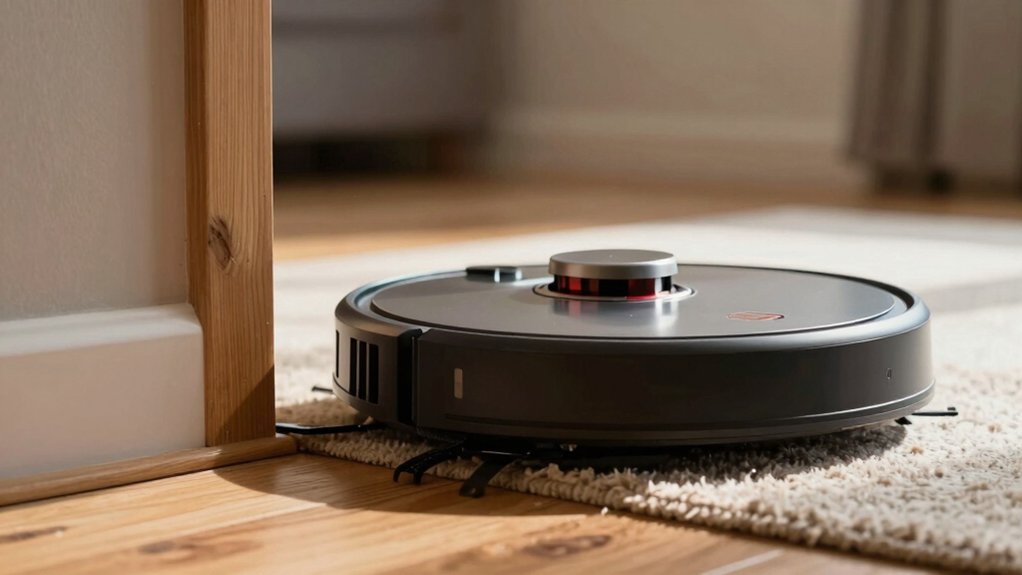
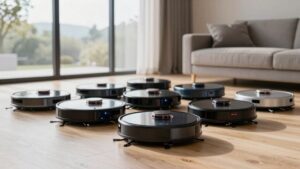
Most robot vacuums handle thresholds around 1.5–2.0 cm (0.6–0.8″), with mid-to-high-end models managing slightly higher or beveled edges. Anything above ~2.5 cm usually stops them. Look for large rubberized wheels, higher clearance, and active traversal or lift features to improve success.
Test your doorways with straight approaches and low/high-pile rug samples to predict problems. Simple fixes like small ramps, alignment, or manual placement often work. The guide that follows shows how to test, choose, and fix transitions.
Quick Overview
- Measure the tallest doorway, rug edge, or metal divider in your home before buying a robot vacuum.
- Look for models with documented 15–25 mm (0.6–1.0 in) clearance or active lift for reliable single-step crossing.
- Prefer large, rubber-treaded wheels, higher ground clearance, and balanced chassis to reduce high-centering and improve traction.
- Test approach angle and edge shape: rounded or beveled thresholds are easier than sharp metal dividers.
- Use ramps, align straight approaches, or manually place the robot on problem zones as quick fixes.
How High Can Most Robot Vacuums Climb? (Real-World Limits)
How high can most robot vacuums actually climb? You’ll find real-world limits near 2 cm (0.8 inches) for most models. In tests, thresholds between 1.5–2.0 cm produce model-dependent results: entry-level units often stall while mid-to-high-end robots usually manage the step.
Heights above about 2.5 cm rarely get crossed unless you add ramps or buy a unit with active traversal systems. Don’t just consider height; edge shape matters: rounded bevels and gentle ramps help, while sharp, abrupt edges defeat many machines. You’ll also run into failures caused by low ground clearance, poor traction, or sensor misreads on dark, high-contrast surfaces.
Think of your home’s threshold tributaries: doorways, sliding-track lips, and transitions to rugs; check each one. Corduroy thresholds (deep-ribbed strips) can snag wheels and reduce traction. Test your robot on a small patch before relying on it to cross every threshold in the house.
Which Robot Design Features Help Cross Thresholds and Rugs
Want your robot to handle thresholds and rugs reliably? Choose models with larger, deeply treaded wheels and rubberized traction so they grip edges and climb lip heights instead of slipping. Look for higher ground clearance combined with a lightweight, balanced chassis to reduce high-centering on raised transitions.
Check front bumper geometry and actuated front-wheel lift (MX/DEEPT-like actuation); these let the robot straddle lips by slightly raising the front to clear a threshold design with a pronounced lip. Prioritize active sensing and true path planning (Real-time Path Planning, TrueMapping) so the vacuum anticipates an approach, adjusts speed and angle, and applies extra torque only when needed.
If you use mops or have low-pile rugs, mop-lift and rug detection features will raise the mop or change suction to avoid dragging while crossing. Together, these mechanical and sensing features give you predictable, reliable crossings across common thresholds and rug edges.
How Threshold Shape and Flooring Affect Crossing : Quick Tests
You’ve picked a robot with the right wheels and sensors. Now test how different threshold shapes and floor types affect real-world crossings. You’ll run short, focused checks to judge threshold shape and flooring impact on your model’s ability to pass in one motion.
- Place a rounded wooden strip ~2 cm high and note if it climbs smoothly.
- Swap to a sharp metal divider at 2 cm and observe hesitation or failure.
- Try a 2.5 cm beveled threshold and record whether the robot needs a second pass or stalls.
- Lay low-pile and high-pile rug sections over the same threshold to compare speed and traction.
Measure outcomes: success, slow pass, or failure. Log how flat vs. sloped edges change traction and whether hard floor before the threshold helps momentum.
These quick tests tell you whether you need ramps, replacements, or a higher-spec model.
Test Your Doorways and Rugs at Home to Predict Performance
Curious whether your doorways and rugs will stop a robot before it even reaches the next room? Start by measuring the highest threshold in your home, including door sills and rug transitions, so you can match real dimensions to manufacturer claims.
For doorways, run a straight-approach test: place the robot a few feet out, let it drive toward the lip, and note whether it climbs smoothly or stalls at the edge. For rugs, try low-pile and high-pile samples: observe if the robot maintains traction or if thick backing slows or blocks the wheels.
Create a simple protocol—position the robot at multiple distances, record whether it initiates ascent, keeps traction, and completes the crossing without help. Use these testing thresholds to compare to specs; many list 0.79–0.98 inch. Prioritize models proven to cross heights equal to or higher than your measurements, especially in layouts with frequent rug transitions.
Choose the Right Robot: Models and Specs for Threshold Success
How do you pick a robot that won’t get stuck at your thresholds? Focus on specs and real-world proof. Look for documented single-threshold clearance around 0.79–1.0 inches (20–25 mm), or up to 1.6 inches (40 mm) with active lifting legs. Premium models (Dreame, MOVA/Z60 Ultra) report 44–51 mm in tests; this is useful if your threshold design is tall or beveled.
- Large rubberized wheels with deep treads: imagine strong grip climbing a rug edge.
- Higher ground clearance: picture clearance preventing belly-outs on door jambs.
- Active traversal or retractable-leg systems: visualize the robot lifting to meet a raised carpet transition.
- Real-time path planning / TrueMapping sensors: see the robot slow, assess, then tackle the rise.
When choosing, verify lab specs against your home’s door jambs, rug edges, and beveled transitions. This ensures reliable crossing without frequent interventions.
Quick Fixes for Threshold Problems (Ramps, Placement, Settings)
Need a quick fix? Start by testing the highest threshold in your home first. That tells you if your robot has the threshold compatibility you need. If your vacuum stalls or loses traction, try a short rubber or wooden ramp with a gentle incline. Ramps reduce effective slope; many models cross much better with them.
Place ramps so the transition is smooth in plan and aligned with the robot’s approach path. Misalignment causes misreads and stalls. For thresholds around 2 cm, most robots manage on hard floors. However, 2.1–2.5 cm often needs a premium model or a ramp; that’s your upgrade rationale if you don’t want manual intervention.
If a spot still causes repeated trouble, use a bevel-edged rug, a dedicated threshold ramp, or move the robot manually over that zone to ensure coverage. Test after each change and log problem locations so you know which fixes worked.
When to Accept Limits vs. Upgrade: Cost, Convenience, and Trade-Offs
When should you accept your robot’s threshold limits and when should you upgrade? You’ll weigh threshold cost against convenience and feature trade-offs. If your home has consistent 20–25 mm (0.79–1 inch) transitions, a mid-range model or simple ramps often solves it. You’ll save money and avoid extra maintenance.
If you face frequent 40–51 mm sills, upgrading to a model with active traversal (MOVA Z60 Ultra tested to 51 mm) makes sense despite a higher price and possible battery or agility compromises.
- Visualize your thresholds: measure common heights and count daily transitions.
- Compare outcomes: small thresholds + flat layout = accept limits and save threshold cost.
- Consider extras: mapping, auto-empty docks add convenience but aren’t necessary for crossing alone; feature trade-offs matter.
- Decide by failure rate: if stuck incidents exceed tolerable hassle, upgrade. If occasional bumps are affordable, use ramps or placement adjustments.
Frequently Asked Questions
Can Robot Vacuums Damage Door Thresholds or Trim?
Yes, they can. You should inspect door thresholds and trim regularly because abrasive wheels or repeated bumps can scuff finishes, loosen paint, or wear soft wood. This is especially true with trapped pet hair collecting grit. Seasonal humidity can raise thresholds, which increases impacts.
Keep firmware updates current so sensors and bump routines stay optimized. Adjust suction or travel settings; you’ll reduce damage by trimming hair, adding low ramps, and checking seals and fasteners often.
Do Pets or Pet Hair Affect Threshold Crossing Ability?
Yes, pets and pet hair can affect threshold crossing ability. You’ll find loose pet hair can clog brushes and reduce threshold grip; this makes slips or stalled crossings more likely. Shed fur around edges builds up. You should clean rollers and side brushes often, trim long fur near floor edges, and clear hair from threshold seams.
Regular maintenance and occasional manual clearing improve performance and prevent repeated failures.
How Do Seasonal Humidity or Temperature Changes Impact Performance?
Seasonal humidity and temperature changes can affect performance impact by altering wheel traction, sensor accuracy, and battery efficiency. You’ll notice reduced suction or shorter run times in extreme heat or cold. Swollen thresholds or warped carpets in humid seasons can make crossings harder.
Keep batteries at room temperature, wipe sensors, and check seals. Adjust schedules during seasonal shifts and test transitions after weather extremes to maintain reliable operation.
Can Firmware Updates Improve Threshold-Climbing Over Time?
Yes, firmware improvements and software updates can boost threshold-climbing over time. You’ll get refined motor control, smarter obstacle sensing, and updated traction algorithms that adjust power and wheel behavior.
Install official updates promptly, follow release notes, and recalibrate when advised. If performance lags after updates, reset settings, clean sensors/wheels, and contact support with logs.
Regular updates plus maintenance keep climbing reliability at its best.
Are There Accessories to Protect Decorative Tassels or Fringe?
Yes, you can use accessories to protect decor tassels and fringe. You’ll want fringe protection like rug clips, weighted tassel bands, or clear vinyl guards that keep tassels tucked and secure.
Attach low-profile clips under the rug or wrap tassels with soft bands so the robot won’t catch them. Test placement to ensure sensors and brushes aren’t obstructed. Remove or adjust pieces before heavy cleaning for best long-term results.
Conclusion
You’ve now got the practical tools to judge whether your doorways and rugs will slow a robot vacuum. Test thresholds and rug edges, note clearance and lip shape, and compare with robot specs like wheel diameter, ground clearance, and climbing angle.
Try simple fixes: small ramps, repositioning, or different cleaning schedules before upgrading. Match model features to your home’s problem spots, and you’ll save time, money, and hassle while keeping floors cleaner.
You may also like: Vacuum Height Clearance Measuring Guide — a related guide worth bookmarking.