Hardwood Floor Cleaning Methods for Robot Vacuums and Mops
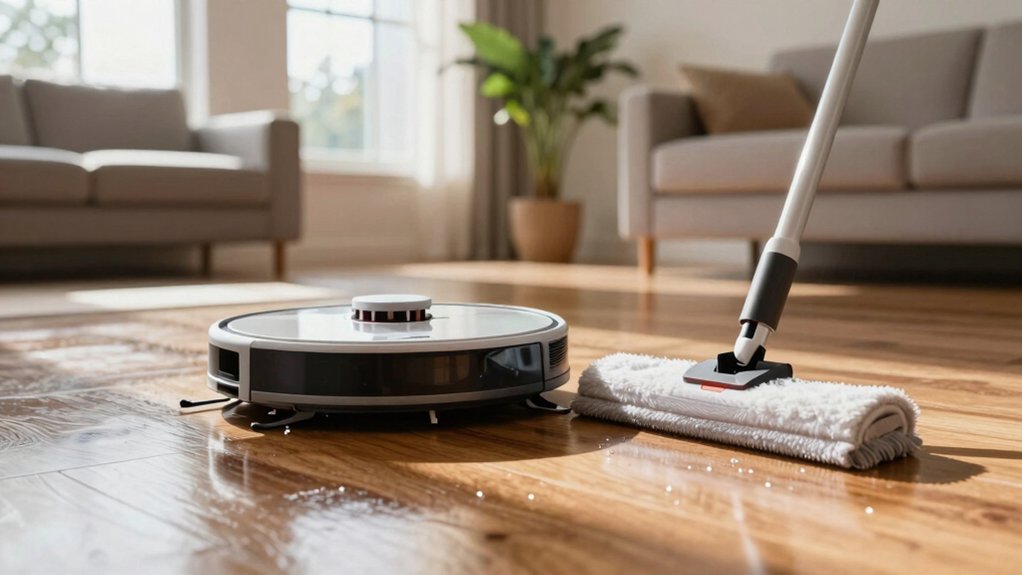
Use a robot with hardwood or low-moisture modes, microfiber pads, and adjustable water flow so you won’t over-wet sealed or engineered floors. Start with a dry vacuum pass. Attach a damp (not dripping) pad, and fill the tank with a pH-neutral, finish-compatible solution diluted per instructions.
Avoid steam on waxed or oil-treated planks. Test cleaners in an inconspicuous spot, and monitor the first run for pooling. Keep pads clean and you’ll protect the finish. More practical steps follow.
Quick Overview
- Use a dry vacuum or dusting pass first to remove grit that can scratch hardwood finishes.
- Select a hardwood or low-moisture mode and use a damp microfiber pad with a pH-neutral, water-based cleaner.
- Adjust water flow and mop pressure to the floor finish; keep pads damp, never soaking wet.
- Avoid steam mops and use dry or finish-specific products for waxed or oil-treated floors.
- Test any cleaner or robot settings in an inconspicuous spot. Monitor the first full run for pooling or streaks.
Quick: Use a Robot to Safely Clean Hardwood Floors
Want a faster way to keep hardwood looking great? You’ll get reliable results by choosing a robot with hardwood-specific modes and by setting it up for robot safety and finish protection. Pick models that adjust cleaning intensity by floor type and lift mop pads when they sense carpet; that prevents unnecessary moisture and abrasion.
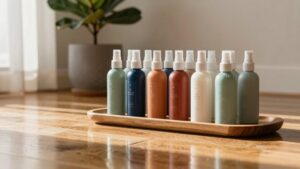
Pair the robot with a pH-neutral, brand-certified wood floor cleaner to avoid finish damage while adding subtle scent and shine. Set water flow to low to moderate and attach a damp microfiber pad so you don’t over-wet seams or cause moisture intrusion. Schedule daily dust removal and light mopping rather than long wet cycles, and avoid prolonged mopping on unsealed or oil-finished floors.
Before full use, test a small inconspicuous area and watch for residue near spray ports or any dulling of the finish. These steps keep cleaning fast without sacrificing surface integrity.
Robot Features That Keep Hardwood Safe
How do robot features actually protect your hardwood floors? You’ll rely on several built-in safeguards that deliver hardwood safety without guessing.
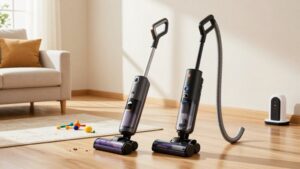
Adaptive cleaning modes, like those in DEEBOT X11 OmniCyclone and AGENT YIKO, detect floor type and adjust suction and mop intensity so you don’t overwork the finish. Systems similar to OZMO ROLLER 2.0 provide high-output scrubbing while controlling pressure and motion to avoid abrasion.
Automatic mop-lift sensors prevent over-wetting by raising pads when rugs or carpets are detected; this eliminates water damage risk. Adjustable water flow gives you precise control for sealed hardwood finishes, so you use only what’s safe.
Finally, stick to brand-certified cleaning solutions to prevent residues, sensor errors, or mechanical faults that could harm wood. When you choose a robot, prioritize these robot features for consistent hardwood safety and predictable, low-risk maintenance of your floors.
Pick Cleaners & Mop Pads Based on Your Floor Finish
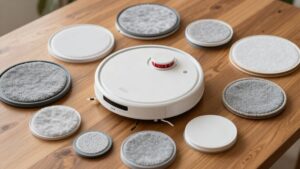
Which cleaner and mop pad you pick depends on the finish on your hardwood. Sealed polyurethane floors can handle a damp microfiber pad and a pH-neutral, water-based cleaner. Waxed or oil-treated floors need dry methods or finish-specific products to avoid stripping or discoloration. You should choose cleaners and mop pads that match floor finish compatibility and robot compatibility recommendations.
Engineered floors with tight seals tolerate minimal damp mopping; however, they still need quick drying. Waxed or oil-finished surfaces require dry dusting or manufacturer-approved formulations.
- For sealed polyurethane: damp microfiber pad, pH-neutral, water-based cleaner.
- For engineered wood: low-moisture approach, finish-compatible solution, quick dry.
- For waxed/oil finishes: dry mop pads or finish-specific cleaners only.
Always confirm robot compatibility and follow manufacturer instructions.
Check product labels for “safe for” finish types. Avoid steam mops and test any new cleaner in an inconspicuous spot before full use to prevent stripping or discoloration.
Step‑By‑Step Robot Cleaning Routine for Hardwood
Ready to get your hardwood cleaned safely with a robot? Start with a dry dusting or vacuuming pass to remove loose debris; choose a hardwood setting if your robot offers one. Next, assemble your routine pieces: microfiber mop pad, water tank, and diluted pH-neutral cleaner. Fill the tank with a damp-dab amount of water or diluted cleaner—don’t overfill.
Test a small, inconspicuous area to confirm no staining or residue. Attach the microfiber pad, set low water flow, and program the robot for a systematic, grain-direction path. Let the robot perform a light, controlled pass without saturating the wood. Monitor the first full run to ensure even coverage and no pooling near seams or edges.
When the robot finishes, remove the pad and inspect the floor. Finish with a dry, energy-efficient wipe or a quick manual dry pass to remove remaining moisture and prevent damage. Repeat this step-by-step routine as needed for regular maintenance.
Robot Settings & Troubleshooting: Streaks, Stains, Moisture
Curious why your robot leaves streaks or damp patches? Start streaks troubleshooting by lowering the water flow or switching to a drier setting. Then finish with a dry microfiber wipe along the grain.
Address fresh stains before an automated cycle: blot spills. Then spot-test a manufacturer-recommended pH-neutral cleaner on an inconspicuous area to confirm finish compatibility.
- Set the mop pad damp, not wet, to prevent pooling and finish damage.
- Run a dry pass or a no-water quick pass to lift residual moisture or haze.
- Test cleaning solutions and robot settings in a small area before full runs.
- Blot stains first; do not let the robot try to scrub fresh spills unattended.
Focus on moisture control: avoid excess moisture, check pad saturation frequently, and empty reservoirs after use.
If streaks persist, repeat a dry pass and reassess pad condition and cleaning solution choice for compatibility with your hardwood finish.
Protect and Maintain Hardwood After Automated Cleaning
How will you keep your hardwood looking its best after a robot mop run? Dry the floor completely with a microfiber cloth or fan, especially on unsealed wood or non-water-safe finishes, to prevent moisture damage. Check the robot’s finish compatibility and use pH-neutral, finish-appropriate cleaners so you don’t strip polyurethane or wax seals.
For ongoing protection, use felt pads under all furniture. Place doormats at entrances to cut down on dust protection needs and grit that cause scratches during automated cycles. Verify humidity control: keep indoor humidity between 35% and 55% to minimize wood expansion or contraction after cleaning.
Schedule regular maintenance on the robot mop. Inspect water flow, pad wear, and spray ports to prevent residue buildup that compromises future cleaning. After each session, empty and rinse tanks and launder pads per manufacturer guidance. These steps preserve finish integrity, reduce repair needs, and help your automated system perform reliably.
Frequently Asked Questions
Can Robots Replace Professional Hardwood Refinishing Services?
No, you shouldn’t expect robots to replace professional hardwood refinishing services. You can improve refinishing longevity with careful DIY touch-ups. However, DIY finishing challenges like surface prep, sanding uniformity, and correct finish selection often exceed casual tools.
You’ll save money on minor wear; yet professionals deliver deeper restoration, color matching, and durable finishes. So use robots for maintenance, not for full refinishing projects that require expertise and heavy equipment.
Can Robotic Mops Damage Antique or Reclaimed Wood Floors?
Yes, robotic mops can damage antique or reclaimed wood floors if you’re not careful. You’ll avoid harm by testing small areas first, using minimal moisture, and choosing soft pads and gentle cleaning solutions suited for antique maintenance and reclaimed wood care.
Adjust settings to limit dwell time, block delicate spots, and inspect seals or loose boards before use. When in doubt, consult a flooring professional to preserve finish and structural integrity.
How Do Pets’ Oils and Dander Affect Long-Term Robot Cleaning?
Pet oils and dander impact long-term robot cleaning by leaving sticky residues and fine particles that build up on sensors, brushes, and mop pads. This buildup reduces efficiency. You will need to clean filters, brushes, and pads more often. Additionally, use enzyme-friendly cleaners for oil removal and inspect sensors for film.
Regular deep cleaning prevents malfunctions and preserves suction and streak-free mopping. It also extends the robot’s lifespan when you stay proactive and consistent.
Are Robot-Cleaning Solutions Safe for Floors With Wax Finishes?
Yes, but you’ve got to be careful. Robot-cleaning solutions can harm a wax finish if they’re abrasive, solvent-based, or leave residue. Use pH-neutral, wax-safe cleaners and avoid automatic water mops that over-wet the floor. Excess moisture can soften or lift wax.
Test any product in an inconspicuous spot first. Wipe up standing liquid promptly; run robots on gentle settings, and reapply wax periodically to maintain protection and appearance.
Can Robot Vacuums Be Scheduled to Avoid Seasonal Humidity Changes?
Yes, you can schedule robot vacuums to account for seasonal humidity. You’ll set regular cleaning times, but adjust them seasonally as a scheduling consideration. Run more during dry periods; reduce runs or avoid wet-mopping during high humidity to prevent wood swelling.
Use seasonal calendar reminders or automated profiles if your robot supports them. Monitor indoor humidity with a hygrometer and tweak schedules monthly to protect floors and optimize performance.
Conclusion
Using a robot to clean hardwood floors saves time and keeps surfaces safe when you choose the right features, cleaners, and mop pads for your finish. Follow the step-by-step routine; tweak settings to avoid streaks and excess moisture. Address stains promptly.
Regular preventive measures—felt pads, humidity control, and periodic deep cleans—extend your floor’s life. Stick to these practical habits, and your hardwood will stay clean, protected, and looking great with minimal effort.
You may also like: Sealed Hardwood Floors From Moisture — a related guide worth bookmarking.