What to Avoid Using in Robot Mops
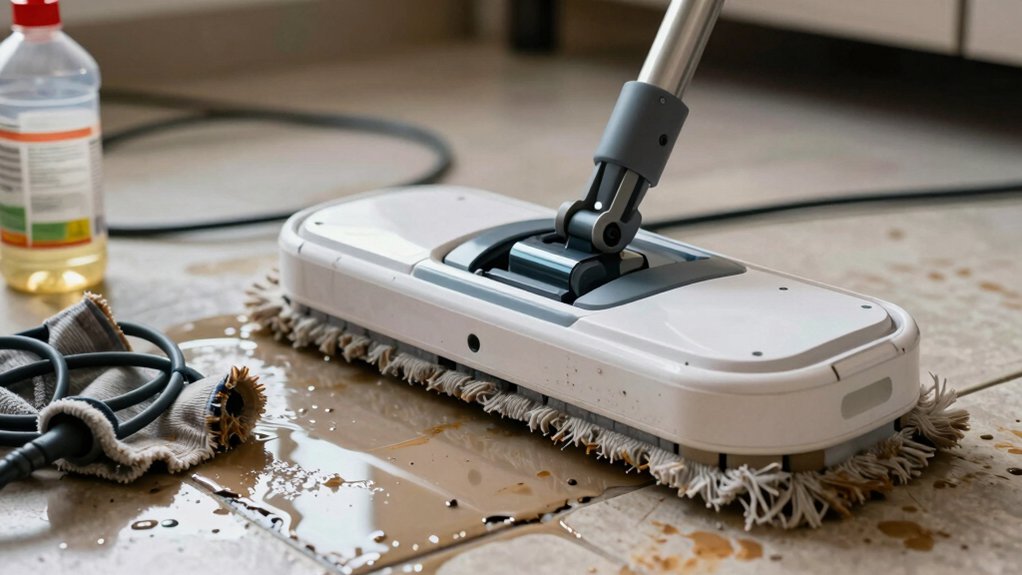
Don’t put harsh or thick cleaners in your robot mop. They’ll clog nozzles, foam up, and corrode seals and sensors. Avoid bleach, ammonia, concentrated vinegar, oil-based solutions, dish soap, baking soda, and DIY mixes that leave residue.
Don’t switch or mix formulas mid-cycle; stick to the maker’s dilution ratios and approved liquids. Using the wrong stuff can void warranties and jam pumps. Follow model guidance to prevent damage. Keep going to see safe alternatives and recovery steps.
Quick Overview
- Avoid bleach, strong acids, and ammonia: they corrode seals, tubing, and sensors.
- Do not use oil-based, solvent, or pine-oil cleaners that can damage plastics and leave residue.
- Never add dish soap, baking soda, or other foaming agents. These can clog nozzles and create excessive foam.
- Don’t mix different cleaners or switch solutions mid-cycle; mixtures can form sludge and block pumps.
- Avoid concentrated or undiluted cleaners and hot water. Follow manufacturer dilution ratios and approved products.
Quick Answer and Top Rules for Robot Mop Cleaners
Want a quick rule of thumb? Don’t put anything in your robot mop that could corrode, clog, or void the warranty. Avoid strong acids, ammonia, oil-based products, bleach, universal cleaners, and DIY mixes that create foam or residue.
Never add baking soda directly to the tank or use thick, concentrated solutions that’ll clog nozzles and sensors. Stick to manufacturer-approved cleaners and dilution ratios (often around 1:200). Don’t switch cleaners mid-cycle or mix solutions.
Follow basic maintenance myths vs. facts: the myth that “more cleaner cleans better” is false; over-concentration damages tubing and lenses. Mop etiquette matters: flush tanks between different liquids, use room-temperature water only, and avoid vinegar combinations that cause corrosion in Roomba/Braava-compatible units. These steps protect internal components and keep sensors accurate.
When in doubt, consult the manual or the maker’s approved list. Practical choices prevent costly repairs and preserve performance.
How Cleaning Liquids Can Break Your Robot Mop
How exactly can the liquids you pour into the tank cripple a robot mop? You’ll clog spray lines, blind sensors, and corrode parts if you use the wrong solutions. Thick or concentrated cleaners foam and block nozzles. Oil-based or strongly acidic liquids erode tubing and lenses.
Mixing cleaners or DIY blends creates sludge and mineral deposits that jam pumps and hoses. Non-approved products leave residue in tanks and filters, degrading reliability and potentially voiding warranty. Avoid hot water and vinegar-based mixes, which accelerate corrosion on many models.
| Problem type | Cause | Outcome |
|---|---|---|
| Foam/clogs | Concentrated cleaners | Sensor errors, poor spray |
| Erosion | Strong acids/oils | Tubing and lens damage |
| Sludge | Mixed cleaners | Pump and hose blockage |
| Corrosion | Unapproved solutions | Tank/filter degradation |
| Heat damage | Hot water use | Warranty risk |
Use manufacturer-approved liquids, follow dilution instructions, and test “two word topic ideas” like “mop solution” only if specified.
Household Cleaners to Avoid (Bleach, Ammonia, Vinegar, Dish Soap)
Having covered how wrong liquids can foul pumps and sensors, let’s look at specific household cleaners you should never put in a robot mop. Bleach pitfalls are real: bleach corrodes internal components, degrades seals, and can interfere with sensors; manufacturers advise against it. Ammonia hazards also matter: ammonia-based cleaners attack plastic parts and finishes and can shorten the machine’s lifespan.
Vinegar, especially concentrated, may seem safe but causes corrosion and leaves residue that clogs pumps and confuses optical sensors. Dish soap and general detergents produce excessive foam, sticky films, and nozzle or tubing blockages that prevent proper spray and mop action. Avoid mixing cleaners or using multi-purpose formulas not intended for robot mops; unpredictable reactions can void warranties and accelerate wear.
Stick to manufacturer-recommended fluids or labeled robot-mop solutions to protect electronics, seals, and moving parts. This will help maintain cleaning performance over time.
DIY Mixes and Dilution Mistakes That Harm Robot Mops
Curious if that DIY cleaner you mixed in the sink will work in your robot mop? Don’t. Mixing hazards are real: combining cleaners can create sludge that clogs spray nozzles, sensors, and tubing. You should never add baking soda to the tank. It won’t fully dissolve and will cause blockages.
DIY mixtures and many household detergents produce foam issues, leaving suds that trip sensors, reduce suction, and leave sticky residues on floors. Avoid strong acids, ammonia, solvents, pine oils, oil-based products, hot water, and vinegar-based cleaners; they corrode components, damage seals, and often void warranties.
If a product isn’t explicitly approved by your mop’s manufacturer, don’t dilute it into the reservoir. Stick to manufacturer-recommended liquids or clear water when instructed. When in doubt, consult the manual or support. A small shortcut in mixing can lead to costly repairs or permanent damage.
Floor and Model-Specific Risks (Sealed Wood, Stone; iRobot, Narwal Notes)
Which floors and models handle cleaning solutions safely depends on both surface finish and your robot’s design. For sealed wood and Stone surfaces, use only manufacturer-approved, low-foam formulas. Concentrated, acidic, oil-based, or DIY mixes can leave residues, strip finishes, or etch stone. Don’t add baking soda or mix cleaners in the tank; insoluble particles form sludge that clogs pumps and seals.
Follow iRobot warnings and Narwal notes: many manufacturers explicitly ban vinegar, hot water, ammonia, and multi-surface products that foam or leave films. Unauthorized cleaners can corrode internal tubing, cloud sensor lenses, and void warranties. Check your model’s guidance before using dispensers or dock-affiliated concentrates. Automated dosing systems are especially sensitive to pH and viscosity.
When in doubt, stick to approved liquids and dilute exactly as instructed. Avoid additives. That keeps seals, pumps, and sensors working and reduces long-term damage to both Sealed wood and Stone surfaces.
Safe Alternatives and How to Recover After a Bad Cleaner
Now that you know which cleaners and behaviors to avoid for sealed wood, stone, and specific models, focus on safe alternatives and quick recovery steps if a bad cleaner was used. Use only manufacturer-approved liquids or plain water when allowed. Do not mix products or add extras. Avoid acids, ammonia, oils, hot water, vinegar, and baking soda to protect seals and sensors.
If you accidentally used a bad cleaner, act fast: power off, drain the tank, rinse washable parts thoroughly, let components air-dry, and replace pads or filters as needed to prevent residue and odor.
| Safe Alternative | When to Use | Recovery Step |
|---|---|---|
| Manufacturer-approved cleaner | Always when recommended | Follow manual rinsing |
| Plain water | For daily light mopping (if allowed) | Drain and dry tank |
| Mild neutral cleaner | For stubborn grime on approved floors | Replace pads after use |
These steps avoid warranty issues and device damage. Do not treat this as an unrelated topic; apply budget tips by replacing pads before odors require costly repairs.
Frequently Asked Questions
Can I Use Essential Oils in the Water Reservoir?
No, you shouldn’t put essential oils in the water reservoir. Essential oils can damage seals, degrade plastics, clog pumps, and void warranties. Their concentrated compounds aren’t designed for appliance use.
For fragrance safety, use manufacturer-approved fragrance pads or diluted, device-specific solutions. If you want scent, add a few drops to a mop pad only if the manual allows, and test a small area first to avoid surface or machine damage.
Will Vinegar Fumes Damage Internal Electronics Over Time?
Yes, vinegar fumes can damage internal electronics over time. You will corrode metal contacts, sensors, and circuit boards if acidic vapors reach them repeatedly. Short, diluted use in well-ventilated spaces and avoiding direct reservoir contact with electronics reduces risk; however, it is not risk-free.
Follow manufacturer guidance, use approved cleaners, and dry components thoroughly after cleaning to protect internal electronics and preserve long-term reliability.
Are Fragrance Beads or Tablets Safe in Robot Mops?
No, you shouldn’t use fragrance beads or tablets in robot mops. They often harm fragrance safety by clogging pumps, degrading seals, or leaving residues that attract dirt.
Check tablet compatibility with your model; most manufacturers advise against additives not specified for the reservoir. To stay practical and evidence-based, use only approved solutions or plain water. Follow the manual and test small amounts if a manufacturer explicitly lists compatible scent tablets.
Can I Run My Robot Mop on Outdoor Surfaces or Concrete?
You can, but you shouldn’t treat most robot mops as outdoor only use devices. Concrete compatibility varies: rough or porous concrete wears pads and seals, can clog suction, and exposes electronics to moisture, dirt, and temperature extremes.
If the manufacturer lists outdoor only use or concrete compatibility, follow that guidance. Use models rated for exterior floors, replace pads often, keep charging docks sheltered, and avoid heavy debris to preserve performance and warranty.
Is It Okay to Store Cleaning Solution in the Robot Between Uses?
No, you shouldn’t store cleaning solution in the robot between uses. Leaving fluid in the tank promotes bacterial growth; it clogs, creates odors, and can degrade seals. Therefore, emptying and rinsing the reservoir after each session preserves reservoir safety and prolongs pump life.
If you need ready-to-go convenience, store sealed solution separately and fill just before use. Alternatively, follow manufacturer guidance for short-term storage and recommended disinfectants.
Conclusion
Don’t pour just any cleaner into your robot mop. Harsh chemicals like bleach, ammonia, vinegar, concentrated acids, and regular dish soap can damage internal seals, sensors, and mopping pads. They may also strip floor finishes.
Avoid overly oily or particulate solutions and never use undiluted concentrates. Stick to manufacturer-approved liquids or mild, pH-neutral cleaners, and follow dilution instructions. If you’ve used a bad cleaner, rinse the tank, run clean-water cycles, and replace affected pads or filters promptly.
You may also like: Robot Mop Streaking Decision Tree — a related guide worth bookmarking.